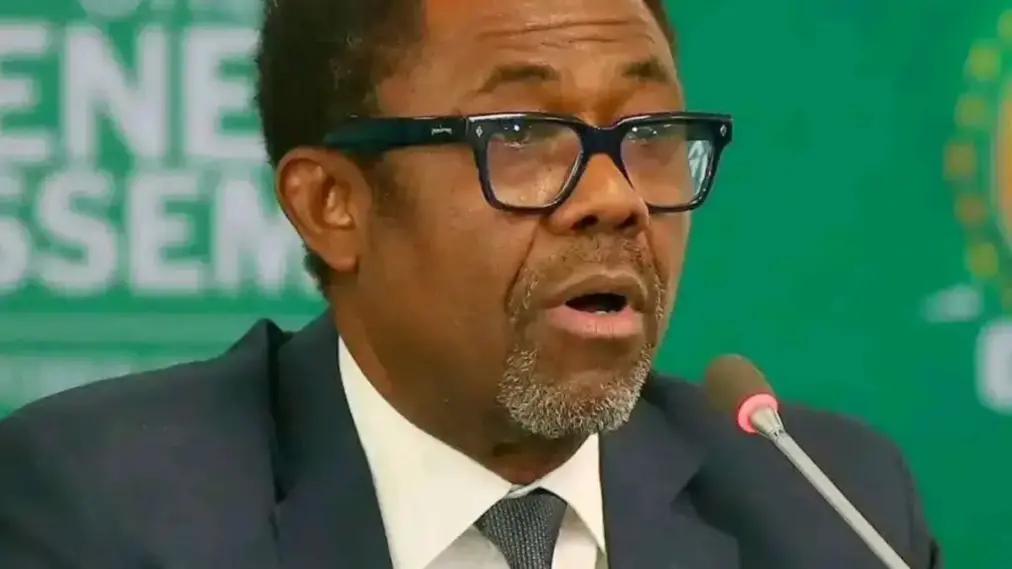
Véron Mosengo has outlined an ambitious reform agenda after submitting his candidacy for the leadership of FECOFA, pledging to restore trust and accountability within Congolese football.
The candidate described his programme as a turning point for the federation, built on a commitment to transparency and ethical governance. Speaking about his vision, he said: ” We have 11 areas of action.
These actions will be carried out within the framework of four governance principles: transparency, integrity, responsibility, and accountability. We must be accountable to the Congolese people .”
Mosengo’s proposals centre on rebuilding confidence in the federation, which he believes can only be achieved through clear structures and responsible leadership.
He has identified governance reform as a priority, alongside the need to stabilise the country’s football ecosystem.
Detailing his roadmap, he added: “ Next, we have four priorities. Our first priority is to restore good governance and the credibility of our football. Second, it is to stabilize our leagues, our clubs, and our national teams. ”
These measures are intended to create a more stable environment for clubs and national teams, with the broader aim of improving performances at continental level. Mosengo sees structural reform as the foundation for long-term progress in the sport.
A key component of his project is the development of youth football across the country. He emphasised the importance of expanding access to training and nurturing talent at grassroots level, stating his intention to focus on ” investing in youth training in all 26 provinces of the country. “
This nationwide approach is designed to ensure that opportunities are not limited to specific regions, but instead reach aspiring players across the Democratic Republic of Congo.
Mosengo also highlighted the importance of infrastructure, while acknowledging the need for collaboration with public authorities. Addressing this aspect of his plan, he said: “ Fourthly, it’s about infrastructure.
It’s not the federations that build the stadiums. It’s done in partnership with the government. We will be persuasive. ”
Through these proposals, Mosengo aims to position FECOFA as a well-governed institution capable of supporting both players and stakeholders, while strengthening the future of football in the country.

 Patson Daka available for Hamburg SV after recovering from thigh injury Oct 22, 2026