World Cup 2026: Algeria return with hopes of recreating their greatest modern achievement
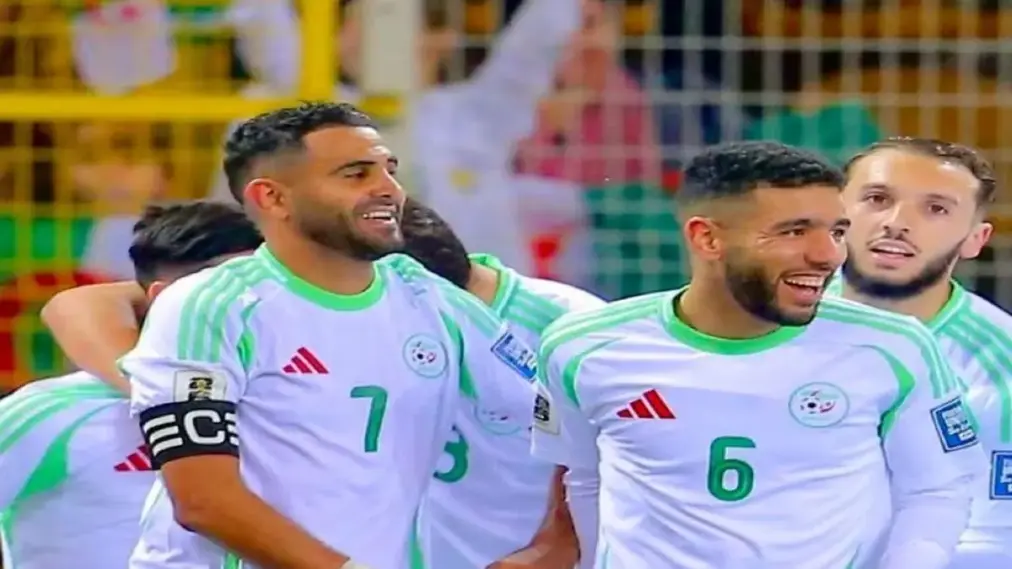
Algeria will step onto the World Cup stage once again in 2026 carrying the ambition of repeating the achievement that defined their modern football history and announced them as one of Africa’s most competitive international sides.
Twelve years after their last appearance at the tournament, the Desert Foxes return with renewed confidence, determined to make their mark against the world’s best teams and revive memories of their impressive campaign in Brazil in 2014.
Although Algeria may not possess the same level of global attention enjoyed by some of Africa’s other representatives, the team arrives in North America with a reputation built on resilience, discipline and an ability to challenge more fancied opponents.
That reputation was strengthened during a successful qualification campaign that secured their place at football’s biggest tournament for the first time since 2014.
Algeria confirmed qualification with a 3-0 victory over Somalia on the ninth matchday of the African qualifiers.
The result capped a consistent campaign in which the North African nation recorded eight victories, one draw and only a single defeat.
The team’s performances throughout qualification reflected a side that combined defensive organisation with attacking efficiency.
At the centre of that success was Mohamed Amoura.
The forward emerged as Algeria’s most influential player during the qualifying campaign, scoring 10 goals and playing a decisive role in helping his country return to the World Cup.
His goals repeatedly provided the difference in important matches and reinforced his growing importance within the national team.
As Algeria prepare for the finals, much of the attention will once again focus on the striker.
Born in 2000, Amoura has established himself as one of the country’s most exciting attacking talents.
His pace, movement and ability to find space in dangerous areas have become key features of Algeria’s attacking play.
The numbers from qualification underline his impact.
Ten goals in the campaign made him Algeria’s leading scorer and one of the most productive forwards in African qualifying.
If he can maintain that level of form on the world stage, he could become one of the standout performers of the tournament.
However, Algeria’s hopes extend beyond the contributions of a single player.
The team is captained by Riyad Mahrez, whose experience remains an important asset for a squad seeking to compete at the highest level.
Around him, a group of players has developed under the guidance of head coach Vladimir Petkovic.
Petkovic took charge of Algeria in February 2024 and quickly introduced a more balanced approach.
The experienced coach previously enjoyed success with Lazio, leading the Italian club to the Coppa Italia title in 2013.
He also built a strong reputation during his years with the Swiss national team.
Since arriving in Algeria, Petkovic has focused on improving the team’s structure, organisation and ability to transition quickly from defence to attack.
The results have been encouraging.
Qualification for the World Cup was achieved with relative comfort, and expectations have steadily grown that Algeria can once again produce a memorable tournament campaign.
The benchmark remains the 2014 World Cup in Brazil.
That tournament delivered Algeria’s finest achievement on football’s biggest stage when they progressed to the Round of 16 for the first time in their history.

Their performances earned widespread praise and demonstrated that African teams could compete strongly against some of the world’s leading football nations.
The achievement remains one of the proudest moments in Algerian football and continues to inspire the current generation.
Yet Algeria’s World Cup story stretches back much further.
The nation first appeared at the tournament in 1982 and immediately made history by defeating West Germany 2-1.
The victory made Algeria the first African country to beat a European nation at a World Cup finals.
That result remains one of the most celebrated upsets in the history of the competition.
Algeria also participated in the 1986 World Cup before returning in 2010 and 2014.
The 2026 edition will therefore represent the country’s fifth appearance at the tournament.
Before arriving at this World Cup, Algeria had played 13 matches in the finals, recording three victories, three draws and seven defeats.
While those figures underline the challenge of competing on the global stage, they also reflect the experience that Algeria has accumulated over several generations.
This year’s squad hopes to add another successful chapter to that history.
Ranked 28th in the FIFA rankings published in April 2026, Algeria enter the tournament as a side capable of causing problems for more established opponents.

Their group-stage campaign begins with one of the toughest tests possible when they face defending champions Argentina on 16 June.
They will then take on Jordan on 22 June before concluding the group phase against Austria on 27 June.
Those matches will determine whether Algeria can progress beyond the opening stage and move closer to matching their achievement from 2014.
For the Desert Foxes, the objective is clear.
After a 12-year absence from the World Cup, they are not travelling simply to participate.
They are returning with belief, momentum and the ambition to show that Algeria remains one of Africa’s most dangerous and determined footballing nations.
Algeria’s 2026 World Cup squad
Goalkeepers
- Melvin Mastil
- Oussama Benbot
- Luca Zidane
Defenders
- Aissa Mandi
- Achraf Abada
- Mohamed Amine Tougai
- Zineddine Belaid
- Jaouen Hadjam
- Rayan Ait-Nouri
- Rafik Belghali
- Ramy Bensebaini
- Samir Chergui
Midfielders
- Ramiz Zerrouki
- Houssem Aouar
- Fares Chaibi
- Hicham Boudaoui
- Nabil Bentaleb
- Ibrahim Maza
- Yassine Titraoui
Forwards
- Riyad Mahrez (Captain)
- Amine Gouiri
- Anis Hadj Moussa
- Nadhir Benbouali
- Mohamed Amoura
- Adil Boulbina
- Fares Ghedjemis
Manager
- Vladimir Petkovic
Popular News

-

AFCON 2025: Fixtures, Results, Scores and Standings
Jan 18, 2026 -

Leadership and long-term vision key to rescuing Zamalek and inspiring Egyptian football – Hany Abou Rida
Nov 5, 2025 -

South African giants Orlando Pirates set to lose influential forward Monnapule Saleng
Mar 19, 2025 -

Full schedule for 2025 Africa Cup of Nations in Morocco confirmed
Feb 12, 2025
-

Mohamed Ouahbi explains Sofiane Boufal omission from Morocco’s World Cup squad and reveals emergency plan
May 27, 2026 -

Jamaica set up Unity Cup final showdown with Nigeria after disciplined win over India
May 28, 2026 -

World Cup 2026: Complete Group C fixture guide, team analysis and qualification predictions
May 27, 2026 -
Morocco begin new World Cup era under Mohamed Ouahbi
May 28, 2026