World Cup 2026: Argentina set their sights on history as defending champions return
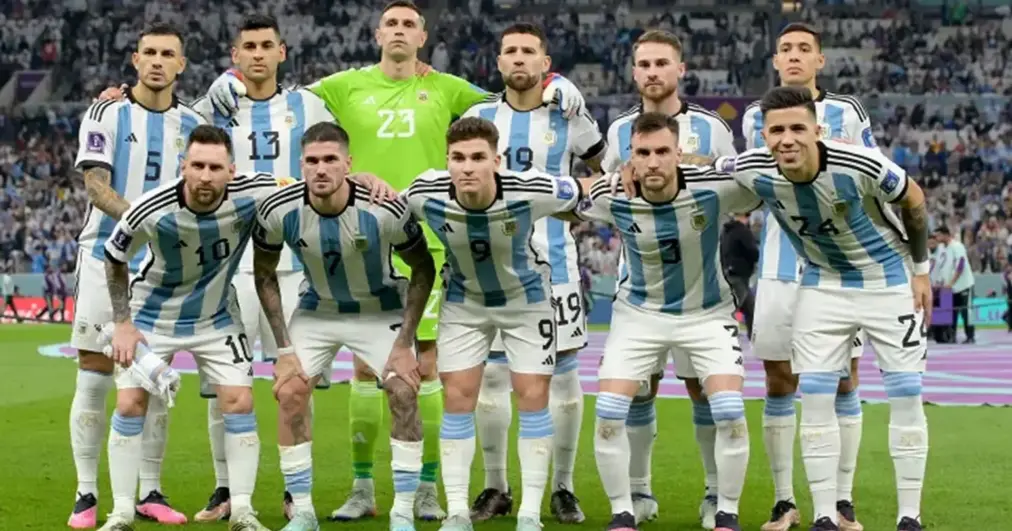
Argentina arrive at the 2026 FIFA World Cup carrying the weight of expectation and the opportunity to achieve something no nation has managed in more than six decades: successfully defend the world title.
The reigning champions head to North America determined to build on the success that delivered a third World Cup crown in Qatar four years ago.
Should they lift the trophy again, Argentina would become the first team since Brazil in 1958 and 1962 to retain football’s most prestigious prize.
For a nation steeped in football tradition, the challenge is immense. Yet the belief surrounding Lionel Scaloni’s side is stronger than ever.
Argentina enter the tournament not only as defending champions but also as one of the most consistent and accomplished teams in international football.
Their triumph in Qatar transformed them from contenders into the team every rival wants to beat.
The 2026 edition, hosted across the United States, Canada and Mexico, will mark Argentina’s 19th appearance at a World Cup.
Few nations can match that level of experience, and even fewer arrive with such recent success behind them.
Since lifting the trophy in 2022, Argentina have continued to strengthen their position at the summit of world football.
The team successfully retained the Copa América title in 2024, reinforcing the impression that the World Cup victory was not an isolated achievement but part of a sustained period of excellence.
That success has been built on more than individual brilliance.
Scaloni has developed a squad that combines tactical discipline, technical quality and a collective mentality capable of overcoming difficult moments.
The result is a team that continues to compete at the highest level regardless of the occasion.
Their dominance was also evident during the South American qualifying campaign.
Argentina finished at the top of the CONMEBOL standings and secured qualification with considerable room to spare.
Even a surprise defeat to Ecuador in the final qualifying match did little to alter the overall picture.
Scaloni’s side accumulated 38 points, finishing nine clear of second-placed Ecuador and underlining their authority throughout the campaign.
Perhaps most significantly, Argentina demonstrated that they are becoming less dependent on one individual.
Lionel Messi remains the team’s captain, inspiration and greatest footballing icon.
Yet during qualification he started only 10 matches and made two further appearances from the bench.
Despite his reduced involvement compared with previous cycles, Argentina continued to win regularly and maintain their high standards.
That evolution highlights one of the team’s greatest strengths heading into the tournament.
While Messi remains irreplaceable in terms of influence and stature, Argentina have developed a squad capable of sharing responsibility across the pitch.

A new generation of players has emerged alongside experienced leaders, creating a balance that few international teams can match.
At the centre of the project stands Scaloni.
When he took charge in August 2018 following Argentina’s disappointing exit from the World Cup in Russia, his appointment was initially viewed as a temporary solution.
Instead, he transformed the national team.
Scaloni introduced fresh faces, entrusted key roles to players such as Giovani Lo Celso, Rodrigo De Paul and Lautaro Martínez, and established a more proactive style of football based on control and initiative.
Perhaps his most significant achievement was rebuilding confidence.
Argentina ended a long wait for major silverware by winning the 2021 Copa América, a victory that changed the mentality surrounding the team.
That success was followed by triumph in the Finalissima, World Cup glory in Qatar and another Copa América title, making this one of the most successful periods in the country’s football history.
The enduring symbol of that success remains Messi.
Now 38 and playing his club football in Miami, the Argentina captain continues to influence matches with remarkable consistency.
Free from the demands of the European club calendar, Messi remains a decisive figure for both goals and assists.
More importantly, he continues to provide leadership and inspiration to teammates who have grown up watching him dominate the sport.
The 2026 tournament will be his sixth World Cup appearance, further extending a remarkable international career.
Argentina’s history at the World Cup is already among the most impressive in football.
The nation has won the competition three times, in 1978, 1986 and 2022, while also finishing as runners-up in 1930, 1990 and 2014.
La Albiceleste have established a reputation for combining technical excellence with fierce competitiveness, qualities that have repeatedly carried them deep into tournaments.
Their record includes six appearances in the semi-finals, winning on every occasion they reached that stage.
Across 88 World Cup matches, Argentina have recorded 47 victories, further underlining their standing among the competition’s elite nations.

This summer presents another opportunity to enhance that legacy.
Argentina begin their campaign against Algeria on 17 June before taking on Austria on 23 June.
Their final group-stage fixture will be against Jordan on 28 June.
The objective is clear. Argentina are no longer a team seeking to reclaim former glory.
They are world champions attempting to extend an era of success and establish themselves among the greatest international sides the game has seen.
For Messi, Scaloni and an ambitious squad, the 2026 World Cup offers the chance to transform an outstanding chapter into a truly historic one.
Argentina’s 2026 World Cup squad
Goalkeepers
- Emiliano Martínez
- Geronimo Rulli
- Juan Musso
Defenders
- Nahuel Molina
- Gonzalo Montiel
- Cristian Romero
- Leonardo Balerdi
- Nicolas Otamendi
- Lisandro Martinez
- Nicolas Tagliafico
- Facundo Medina
Midfielders
- Leandro Paredes
- Alexis Mac Allister
- Rodrigo De Paul
- Giovani Lo Celso
- Exequiel Palacios
- Enzo Fernandez
- Valentin Barco
Forwards
- Lionel Messi (Captain)
- Julian Alvarez
- Lautaro Martinez
- Thiago Almada
- Nicolas Paz
- Nicolas Gonzalez
- Giuliano Simeone
- Jose Manuel Lopez
Popular News




-

AFCON 2025: Fixtures, Results, Scores and Standings
Jan 18, 2026 -
Leadership and long-term vision key to rescuing Zamalek and inspiring Egyptian football – Hany Abou Rida
Nov 5, 2025 -
South African giants Orlando Pirates set to lose influential forward Monnapule Saleng
Mar 19, 2025 -
Full schedule for 2025 Africa Cup of Nations in Morocco confirmed
Feb 12, 2025




-
Mohamed Ouahbi explains Sofiane Boufal omission from Morocco’s World Cup squad and reveals emergency plan
May 27, 2026 -
Jamaica set up Unity Cup final showdown with Nigeria after disciplined win over India
May 28, 2026 -
World Cup 2026: Complete Group C fixture guide, team analysis and qualification predictions
May 27, 2026 -
Morocco begin new World Cup era under Mohamed Ouahbi
May 28, 2026