Netherlands at the 2026 World Cup: Preview, group opponents, squad and team guide
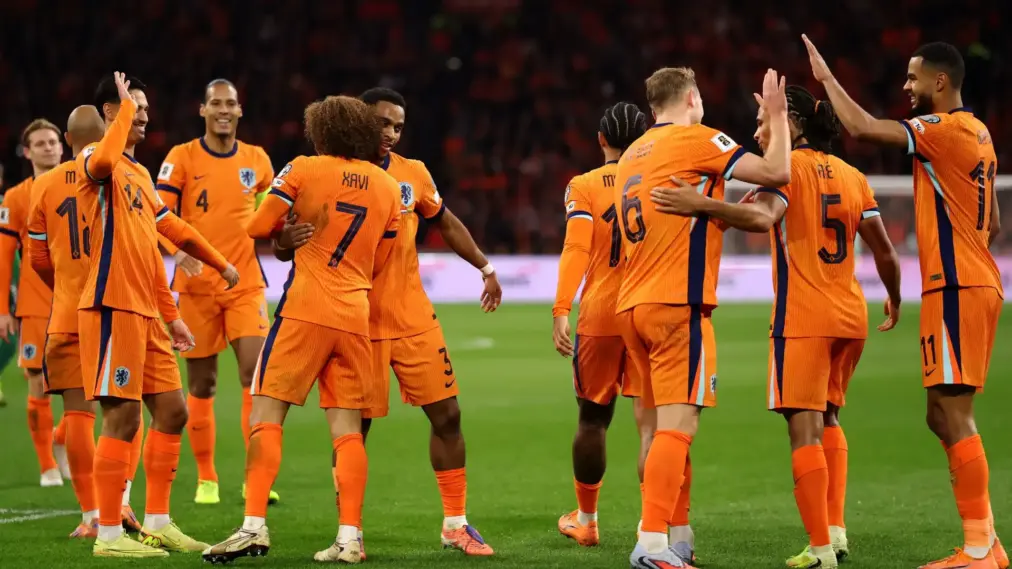
The Netherlands arrive at the 2026 World Cup ranked 7th in the world, carrying both expectation and uncertainty in equal measure.
Long regarded as one of international football’s most gifted yet unpredictable powers, the Oranje once again enter the tournament with a squad rich in quality across every line, but still searching for the consistency required to finally convert potential into a long-awaited global title.
Team profile and identity
The Netherlands remain defined by their footballing tradition of technical excellence, structured possession play, and attacking ambition. Under Ronald Koeman, the side has maintained a balance between tactical organisation and expressive attacking football, built on a spine of elite European-based players.
Despite their strong ranking and squad depth, the central question persists: can this generation sustain peak performance across seven high-pressure matches?
Team profile
- Year of foundation: 1905
- Nickname: Oranje, the Orange Machine
- Coach: Ronald Koeman
- Captain: Virgil van Dijk
- FIFA ranking (April 2026): 7
- World Cup best: Runners-up (1974, 1978, 2010)
- World Cup appearances: 12
Qualification campaign: controlled dominance, lingering doubts
The Netherlands topped UEFA Group G with 20 points from eight matches, finishing ahead of Poland, Finland, Malta, and Lithuania. Their record of six wins and two draws secured direct qualification to North America 2026.
While the numbers suggest authority, the performances were not always convincing. Late concessions and occasional lapses in concentration highlighted a recurring issue in the Dutch system: game management when matches become stretched or emotionally charged.
World Cup history: tradition without the final step
The Netherlands are one of football’s most decorated nations without a World Cup title. They have reached the final three times (1974, 1978, 2010) and finished runners-up on each occasion.
Across 11 previous World Cup appearances, they have consistently reached the knockout stages, including a quarter-final finish in 2022 after elimination by eventual champions Argentina. The pattern is familiar: strong progression, but difficulty in crossing the final threshold.
Coach: Ronald Koeman and the balance equation
Ronald Koeman, in his second spell as national team coach, has brought stability and structure to a squad packed with individual talent. His task remains unchanged: transform technical quality into tournament-winning resilience.
Koeman’s Netherlands are tactically flexible, capable of switching between controlled possession and direct transitions, but their success will depend on eliminating inconsistency in decisive moments.
Group opponents
The Netherlands will compete in Group F at the FIFA World Cup 2026, sharing their group with Japan, Sweden, and Tunisia. They open their tournament campaign against Japan on Sunday, 14 June 2026, playing at the Dallas Stadium in Arlington, Texas, USA.
For their second fixture, the Dutch squad travels south to face Sweden on Saturday, 20 June 2026. This match will be hosted at the Houston Stadium in Houston, Texas.
Oranje concludes the group stage against Tunisia on Thursday, 25 June 2026. This final group encounter takes place at the Kansas City Stadium in Kansas City, Missouri.
Goalkeepers: experience, youth and competition
The goalkeeping department offers both experience and emerging talent.
Bart Verbruggen (Brighton) is widely viewed as the long-term No.1, combining shot-stopping ability with composure in distribution.
Mark Flekken (Bayer Leverkusen) provides experienced backup and reliability at the top level, while
Robin Roefs (Sunderland) represents the developing depth within the squad.
Defenders: elite depth across Europe’s top clubs
The Dutch defensive unit is among the strongest at the tournament, blending leadership, athleticism and tactical versatility.
At the core stands captain Virgil van Dijk (Liverpool), whose presence remains central to organisation and defensive authority. Alongside him, Nathan Aké (Manchester City) provides intelligence and positional flexibility.
Younger talents such as Jorrel Hato (Chelsea), Jurriën Timber (Arsenal) and Micky van de Ven (Spurs) offer pace and modern defensive dynamism, while Denzel Dumfries (Inter) adds attacking thrust from the right flank.
Supporting options like Jan Paul van Hecke (Brighton) and Mats Wieffer (Brighton) enhance squad depth and tactical adaptability.
Midfield: elite control and tactical intelligence
Midfield remains the Netherlands’ strongest area, combining technical precision with physical balance.
Frenkie de Jong (Barcelona) is the creative heartbeat, responsible for dictating tempo and progression through midfield. His partnership with Ryan Gravenberch (Liverpool) adds dynamism and ball-carrying ability.
Tijjani Reijnders (Manchester City) and Teun Koopmeiners (Juventus) provide tactical discipline and goal threat from deeper positions, while Marten de Roon (Atalanta) offers experience and defensive stability.
Further depth comes from Justin Kluivert (Bournemouth), Quinten Timber (Olympique Marseille) and Guus Til (PSV), ensuring multiple stylistic options for Koeman.
Attack: experience, versatility and unpredictability
The Dutch forward line blends established stars with versatile attacking options.
Memphis Depay (Corinthians) remains a key creative and scoring outlet, bringing international experience and technical quality. Cody Gakpo (Liverpool) is central to the attacking structure, offering directness and finishing ability from wide areas.
Brian Brobbey (Sunderland) and Wout Weghorst (Ajax) provide physical presence and penalty-box threat, while Donyell Malen (Roma) adds pace and penetration.
Wide options such as Noa Lang (Galatasaray), Crysencio Summerville (West Ham) and Justin Kluivert offer unpredictability and one-on-one ability, making the Netherlands dangerous in transition.
Netherlands’ full squad
Goalkeepers: Mark Flekken (Bayer Leverkusen), Robin Roefs (Sunderland), Bart Verbruggen (Brighton)
Defenders: Nathan Aké (Manchester City), Denzel Dumfries (Inter),Jorrel Hato (Chelsea), Jurriën Timber (Arsenal), Micky van de Ven (Spurs), Virgil van Dijk (Liverpool), Jan Paul van Hecke (Brighton), Mats Wieffer (Brighton)
Midfielders: Frenkie de Jong (FC Barcelona), Marten de Roon (Atalanta), Ryan Gravenberch (Liverpool), Justin Kluivert (Bournemouth), Teun Koopmeiners (Juventus), Tijjani Reijnders (Manchester City), Guus Til (PSV), Quinten Timber (Olympique Marseille)
Forwards: Brian Brobbey (Sunderland), Memphis Depay (Corinthians), Cody Gakpo (Liverpool), Noa Lang (Galatasaray, on loan from Napoli), Donyell Malen (Roma), Crysencio Summerville (West Ham), Wout Weghorst (Ajax)
Tactical outlook: fluidity meets fragility
Koeman’s Netherlands are expected to operate with tactical flexibility, alternating between controlled possession and fast vertical attacks. The midfield trio, anchored by De Jong, is key to maintaining structure, while wing-backs and wide forwards provide attacking width.
However, defensive concentration and emotional control remain the defining challenges. Matches where the Netherlands lose rhythm or concede momentum have historically proved decisive in tournament exits.
Outlook: elite talent, unfinished business
On paper, the Netherlands possess one of the most complete squads at the 2026 World Cup. Their ranking, depth, and experience suggest genuine contender status. Yet history casts a long shadow.
The Oranje enter once again as a team capable of brilliance, but judged ultimately by whether they can sustain it when the margins narrow. For Koeman and his squad, the objective is clear: move beyond tradition, beyond near-misses, and finally complete the journey.
Popular News


-

AFCON 2025: Fixtures, Results, Scores and Standings
Jan 18, 2026 -
Leadership and long-term vision key to rescuing Zamalek and inspiring Egyptian football – Hany Abou Rida
Nov 5, 2025 -
South African giants Orlando Pirates set to lose influential forward Monnapule Saleng
Mar 19, 2025 -
Full schedule for 2025 Africa Cup of Nations in Morocco confirmed
Feb 12, 2025




-
Mohamed Ouahbi explains Sofiane Boufal omission from Morocco’s World Cup squad and reveals emergency plan
May 27, 2026 -
Jamaica set up Unity Cup final showdown with Nigeria after disciplined win over India
May 28, 2026 -
Morocco begin new World Cup era under Mohamed Ouahbi
May 28, 2026 -
World Cup 2026: Complete Group C fixture guide, team analysis and qualification predictions
May 27, 2026