Ecuador at the 2026 World Cup: Full preview, group analysis, squad list and team guide
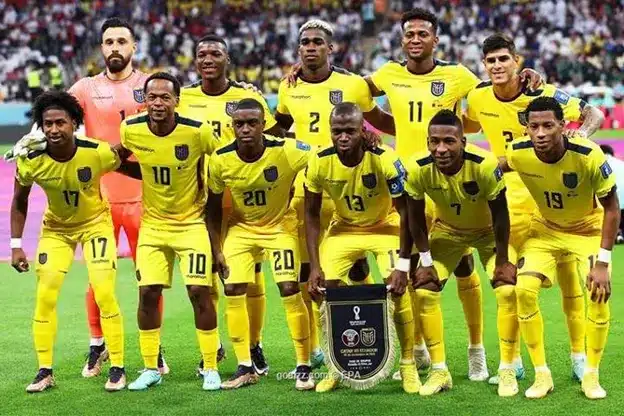
Ecuador arrive at the 2026 World Cup ranked 24th in the world and carrying the quiet confidence of a team that has learned how to compete with South America’s elite.
Built on defensive discipline, youthful energy and a growing technical identity, La Tri enter the tournament as one of the more balanced sides from the region, with genuine ambitions of reaching the knockout stages and beyond.
Team identity and global standing
This Ecuador side has evolved into a tactically disciplined unit capable of absorbing pressure and striking in transition. Their FIFA ranking of 24 reflects steady progress across recent cycles, underpinned by strong qualifying performances and a clear defensive philosophy.
The squad is a blend of Europe-based regulars and emerging South American talents, with increasing depth across all areas of the pitch. While not traditionally considered among the global heavyweights, Ecuador now carry the profile of a side capable of troubling top-ranked opposition.
Team profile
- Year of foundation: 1925
- Most appearances: Iván Hurtado (168 caps)
- Top scorer: Enner Valencia (46 goals)
- Captain: Enner Valencia
- FIFA ranking (April 2026): 24
Qualification campaign: structure and resilience
Ecuador secured their place at the 2026 World Cup by finishing second in South American qualifying, behind Argentina. Despite starting the campaign with a three-point deduction, they still accumulated 29 points, highlighting consistency and resilience over a demanding schedule.
Under Sebastián Beccacece, Ecuador developed into one of the continent’s most defensively organised teams. Across 12 qualifying matches, they conceded just two goals, a remarkable defensive record that became the foundation of their qualification push. However, attacking production remained an area of concern, with only nine goals scored during that period.
World Cup history: growth and unfinished business
Ecuador’s World Cup journey began in 2002, and by 2026 they will have made five appearances (2002, 2006, 2014, 2022 and 2026). Their best performance came in Germany 2006, when they reached the Round of 16.
Across 13 World Cup matches, Ecuador have recorded five wins, two draws and six defeats, scoring and conceding 14 goals each. While historically inconsistent, the current generation is widely viewed as the most structurally sound and tactically mature in the nation’s football history.
Coach: Sebastián Beccacece and the tactical reset
Sebastián Beccacece has been central to Ecuador’s transformation. The Argentine coach, born in 1980, previously worked alongside Jorge Sampaoli with Argentina and Sevilla before establishing his own managerial career.
His tactical identity is built on high-intensity pressing, compact defensive lines and structured build-up play. Under his leadership, Ecuador have become difficult to break down while gradually improving their ability to control possession phases. The challenge at the World Cup will be converting that defensive stability into consistent attacking output against elite opposition.
Goalkeepers: experience and reliability
Ecuador’s goalkeeping department offers a mix of experience and domestic continuity.
Hernán Galíndez (Huracán) remains the likely first-choice, bringing composure and international experience.
Moisés Ramírez (AE Kifisias) provides athleticism and shot-stopping potential, while
Gonzalo Valle (LDU Quito) offers domestic reliability and squad depth.
Defenders: elite European pedigree and balance
Ecuador’s defensive unit is among the strongest components of the squad, combining Champions League-level experience with tactical versatility.
Willian Pacho (PSG) and Piero Hincapié (Arsenal) form the cornerstone of the back line, offering pace, strength and composure under pressure.
Joel Ordóñez (Club Brugge) and Félix Torres (Internacional) provide physical presence and aerial dominance, while
Pervis Estupiñán (AC Milan) adds attacking thrust from full-back.
Full defensive squad:
Willian Pacho (PSG), Piero Hincapié (Arsenal), Joel Ordóñez (Club Brugge), Félix Torres (Internacional), Pervis Estupiñán (AC Milan), Ángelo Preciado (Atlético Mineiro), Jackson Porozo (Club Tijuana)
Midfield: Caicedo at the centre of everything
The midfield is built around one of the Premier League’s most influential players, Moisés Caicedo (Chelsea). His role as a ball-winner, tempo controller and transitional anchor makes him Ecuador’s most important player.
He is supported by a developing supporting cast that blends energy and technical ability. Kendry Páez (River Plate) represents the most exciting long-term prospect in the squad, while Alan Franco (Atlético Mineiro) and Pedro Vite (Pumas UNAM) provide balance and progression.
Midfielders:
Moisés Caicedo (Chelsea), Jordy Alcívar (Independiente), Denil Castillo (Midtjylland), Alan Franco (Atlético Mineiro), Pedro Vite (Pumas UNAM), Kendry Páez (River Plate), Yaimar Medina (KRC Genk)
Attack: experience, pace and emerging depth
Ecuador’s attacking unit blends veteran leadership with a growing pool of dynamic forwards.
Enner Valencia (Pachuca) remains the leader and reference point in attack, bringing experience and historical significance as the nation’s all-time top scorer. Alongside him, Gonzalo Plata (Flamengo) offers flair and unpredictability in wide areas.
Emerging options such as Kevin Rodríguez (Union Saint-Gilloise), Jeremy Arévalo (Stuttgart) and Nilson Angulo (Sunderland) add pace and directness, while John Yeboah (Venezia) provides creativity and versatility.
Forward group:
Kevin Rodríguez (Union Saint-Gilloise), Anthony Valencia (Royal Antwerp), Enner Valencia (Pachuca), Jordy Caicedo (Huracán), Jeremy Arévalo (Stuttgart), Gonzalo Plata (Flamengo), Alan Minda (Atlético Mineiro), John Yeboah (Venezia), Nilson Angulo (Sunderland)
Tactical outlook: defensive control, transitional threat
Ecuador are expected to maintain their established identity: compact defensive organisation, aggressive pressing and quick transitions into attack. Beccacece’s system prioritises structure first, with attacking play built around efficiency rather than volume.
Caicedo’s influence in midfield will be decisive, particularly in matches where Ecuador are forced to defend deep and break quickly. The effectiveness of their wide forwards and set-piece execution may ultimately define their tournament trajectory.
Outlook: ambition grounded in discipline
Ecuador enter the 2026 World Cup as a team with clear identity and realistic ambition. Their defensive record suggests they can frustrate stronger opponents, but progression will depend on whether their attacking unit can match their defensive excellence.
For La Tri, the objective is clear: move beyond past limitations and establish themselves as a consistent knockout-stage contender.
Popular News



-

AFCON 2025: Fixtures, Results, Scores and Standings
Jan 18, 2026 -

Leadership and long-term vision key to rescuing Zamalek and inspiring Egyptian football – Hany Abou Rida
Nov 5, 2025 -

South African giants Orlando Pirates set to lose influential forward Monnapule Saleng
Mar 19, 2025 -

Full schedule for 2025 Africa Cup of Nations in Morocco confirmed
Feb 12, 2025
-

Mohamed Ouahbi explains Sofiane Boufal omission from Morocco’s World Cup squad and reveals emergency plan
May 27, 2026 -

Jamaica set up Unity Cup final showdown with Nigeria after disciplined win over India
May 28, 2026 -
Morocco begin new World Cup era under Mohamed Ouahbi
May 28, 2026 -

World Cup 2026: Complete Group C fixture guide, team analysis and qualification predictions
May 27, 2026