Countries
Côte d’Ivoire
Curacao
Ecuador
FIFA World Cup
Germany
Latest News
WAFU B
World Football
Zonal Bodies
Ivory Coast at 2026 World Cup: Full preview, squad breakdown, group opponents and team guide
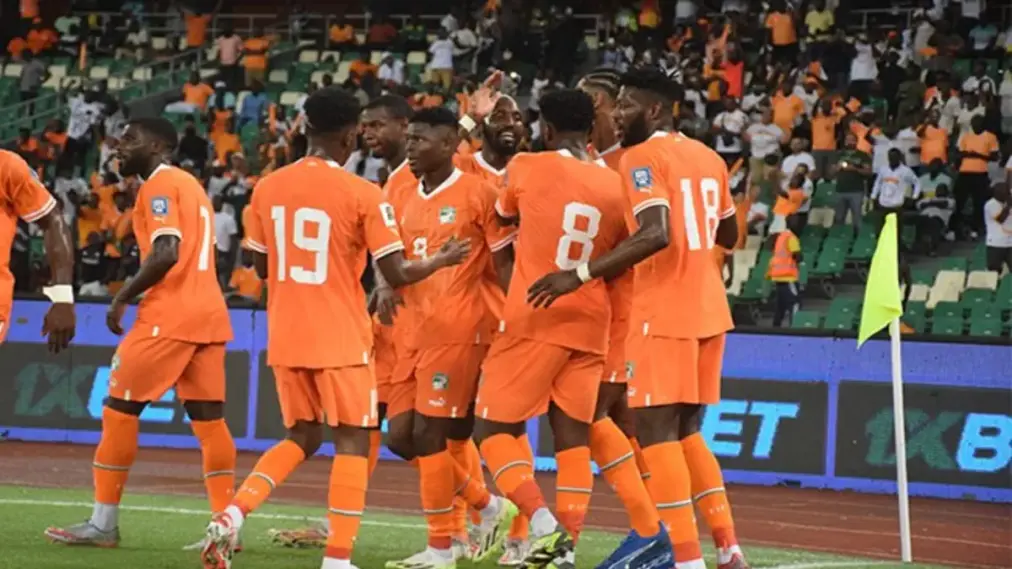
The Ivory Coast enter the 2026 World Cup with renewed confidence, a strengthened identity, and a squad that blends elite European experience with emerging attacking talent.
Ranked 34th in the world, the Elephants arrive as one of Africa’s most balanced sides, carrying both the expectation of past generations and the promise of a refreshed core built to finally move beyond their historical ceiling.
This campaign marks their first World Cup appearance since 2014, a return that has been years in the making and is now framed around one central figure: Amad Diallo. The Manchester United forward represents both present impact and future hope, as the nation seeks its deepest run on football’s biggest stage.
Team profile and identity
The Ivory Coast have long been defined by physical strength, technical quality, and a strong diaspora influence, and this squad continues that tradition. Their current FIFA ranking of 34 reflects a side that has stabilised after transitional years and is once again competing consistently at international level.
Leadership is anchored in experience, with Franck Kessié wearing the captain’s armband, while the spine of the team features players competing across top European leagues in England, Italy, France, and Turkey.
- Year of foundation: 1960
- Most appearances: Didier Zokora (123 caps)
- Top scorer: Didier Drogba (65 goals)
- Captain: Franck Kessié
- FIFA ranking (April 2026): 34
Qualification campaign: control and consistency
The Elephants booked their place at the 2026 finals through a commanding CAF qualifying campaign. Finishing top of their group with 26 points from 10 matches, they combined defensive solidity with efficient attacking output to secure qualification well ahead of their rivals.
It was a campaign defined less by individual brilliance and more by structural maturity, as Ivory Coast showed the ability to manage games, control tempo, and avoid costly lapses that had previously undermined past campaigns.
World Cup history: unfinished business
Ivory Coast have appeared at three consecutive World Cups in 2006, 2010, and 2014, but on each occasion they exited at the group stage. Those tournaments featured a so-called golden generation, headlined by Didier Drogba and Yaya Touré, yet the team were unable to convert potential into knockout-stage progression.
This new generation arrives with fewer global superstars but greater collective balance, aiming to correct that long-standing narrative.
Group opponents
Ivory Coast (Côte d’Ivoire) will compete in Group E at the FIFA World Cup 2026, sharing the group with Germany, Ecuador, and Curaçao.The Elephants kick off their tournament against Ecuador on Sunday, 14 June 2026.
This opening match will take place at the Philadelphia Stadium in Philadelphia, Pennsylvania, USA.For their second group match, the team travels to Canada to face Germany on Saturday, 20 June 2026.
This highly anticipated fixture will be held at the Toronto Stadium in Toronto, Ontario.Ivory Coast will conclude their group stage campaign against Curaçao on Thursday, 25 June 2026.
For this final group game, the team returns to the Philadelphia Stadium in Philadelphia, Pennsylvania.
Coach: Emerse Faé and a winning reset
Emerse Faé’s appointment during the 2023 Africa Cup of Nations proved to be a turning point in the national team’s modern era. Thrown into a crisis situation on home soil, the former Nantes and Reading midfielder guided the team to an unexpected continental triumph.
Since then, Faé has maintained continuity, reinforcing discipline and tactical clarity while preserving the attacking instincts of his squad. His leadership has been central to transforming Ivory Coast from a volatile tournament side into a more structured and adaptable unit.
Goalkeepers: stability and competition
Yahia Fofana (Rizespor), Mohamed Koné (Charleroi) and Alban Lafont (Panathinaikos) form a competitive goalkeeping group. Fofana offers athletic shot-stopping ability, Koné provides depth and reliability, while Lafont brings top-level European experience and composure in high-pressure matches.
Defenders: physicality meets European pedigree
Ivory Coast’s defensive line is built on strength, tactical awareness, and elite club experience.
Emmanuel Agbadou (Wolverhampton Wanderers) anchors the defence with aggression and aerial dominance, while Ousmane Diomande (Sporting) is widely regarded as one of the most promising defenders in Europe.
Odilon Kossonou (Atalanta) and Evan Ndicka (AS Roma) add composure and ball progression from the back, complemented by the versatility of Wilfried Singo (Galatasaray).
Full squad defenders:
Emmanuel Agbadou (Wolverhampton Wanderers), Christopher Operi (Istanbul Basaksehir), Ousmane Diomande (Sporting), Guela Doué (Racing Strasbourg), Ghislain Konan (Gil Vicente), Odilon Kossonou (Atalanta), Evan Ndicka (AS Roma), Wilfried Singo (Galatasaray)
Midfield: engine room of experience and control
The midfield unit is among the most experienced in the tournament, blending leadership with tactical discipline.
Captain Franck Kessié (Al Ahli) remains the heartbeat of the team, supported by Ibrahim Sangaré (Nottingham Forest), whose defensive coverage and ball recovery are crucial to the team’s structure.
Seko Fofana (Stade Rennais) adds power and forward thrust, while Jean-Michaël Seri (NK Maribor) offers passing range and control. Emerging options such as Christ Oulai (Trabzonspor) and Parfait Guiagon (Charleroi) provide depth and energy.
Midfielders:
Seko Fofana (Stade Rennais), Parfait Guiagon (Charleroi), Franck Kessié (Al Ahli), Christ Oulai (Trabzonspor), Ibrahim Sangaré (Nottingham Forest), Jean-Michaël Seri (NK Maribor)
Attack: Diallo and a multi-dimensional forward line
The defining feature of this Ivory Coast side is its attacking depth, with multiple forwards capable of influencing matches in different ways.
At the centre of it all is Amad Diallo (Manchester United), whose creativity, dribbling ability, and increasing tactical responsibility make him the focal point of the team’s offensive structure.
He is supported by a diverse group including Simon Adingra (AS Monaco) and Nicolas Pépé (Villarreal), both capable of stretching defences and creating wide overloads.
Young striker Ange-Yoan Bonny (Inter Milan) and Elye Wahi (Nice) provide finishing presence, while Evann Guessand (Aston Villa) and Oumar Diakité (Cercle Brugge) add mobility and pressing intensity.
Forward options:
Simon Adingra (AS Monaco), Ange-Yoan Bonny (Inter Milan), Amad Diallo (Manchester United), Oumar Diakité (Cercle Brugge), Yan Diomande (RB Leipzig), Evann Guessand (Aston Villa), Nicolas Pépé (Villarreal), Bazoumana Touré (Hoffenheim), Elye Wahi (Nice)
Tactical outlook: balance, transition and control
Ivory Coast are expected to operate with a flexible system that prioritises defensive compactness and rapid transitions. The midfield structure provides stability, while the wide attacking players are designed to exploit space in counter-attacks.
Diallo’s role as a creative hub is central to this approach, linking midfield progression with final-third execution. Set-pieces and wide deliveries are also expected to be key offensive tools.
Outlook: expectation without pressure
Unlike previous generations burdened by “golden era” comparisons, this Ivory Coast squad enters the tournament with a clearer identity and more balanced expectations. Their objective is straightforward: progress beyond the group stage for the first time in their World Cup history.
With experience across Europe’s top leagues and a revitalised coaching structure, the Elephants arrive not as outsiders, but as a side increasingly capable of competing with the tournament’s established powers.
Popular News

-

AFCON 2025: Fixtures, Results, Scores and Standings
Jan 18, 2026 -
Leadership and long-term vision key to rescuing Zamalek and inspiring Egyptian football – Hany Abou Rida
Nov 5, 2025 -
South African giants Orlando Pirates set to lose influential forward Monnapule Saleng
Mar 19, 2025 -
Full schedule for 2025 Africa Cup of Nations in Morocco confirmed
Feb 12, 2025




-
Mohamed Ouahbi explains Sofiane Boufal omission from Morocco’s World Cup squad and reveals emergency plan
May 27, 2026 -
Jamaica set up Unity Cup final showdown with Nigeria after disciplined win over India
May 28, 2026 -
Morocco begin new World Cup era under Mohamed Ouahbi
May 28, 2026 -
World Cup 2026: Complete Group C fixture guide, team analysis and qualification predictions
May 27, 2026