Hossam Hassan reflects on Egypt job, player pressure, and future beyond 2026 World Cup
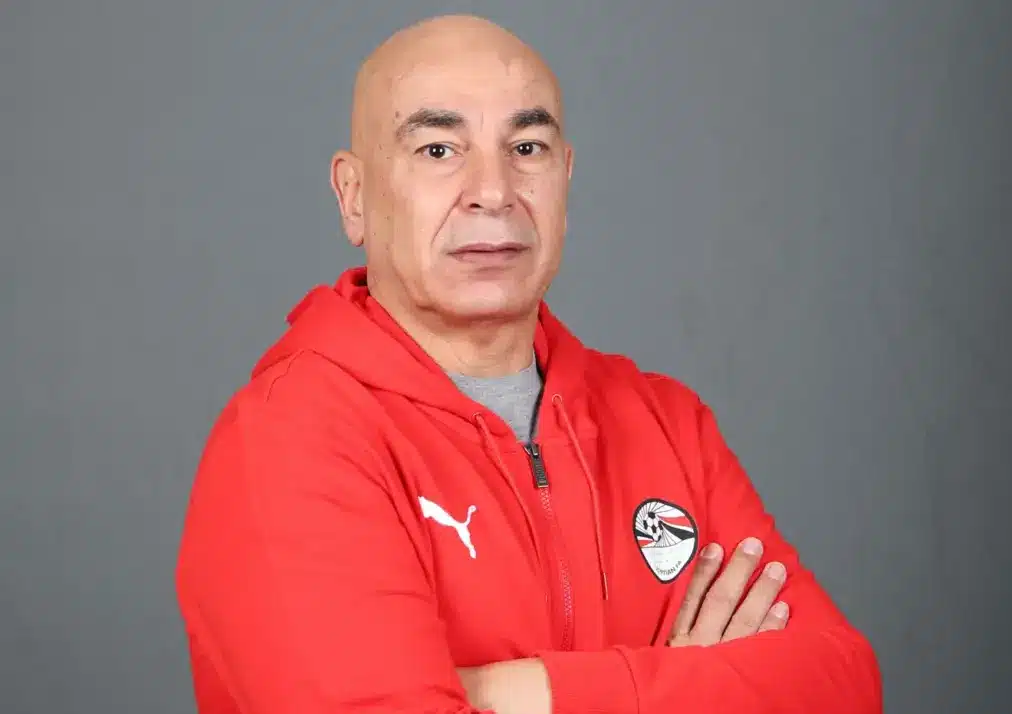
Egypt head coach Hossam Hassan has reflected on his appointment, the expectations surrounding his role, and the mental and physical challenges faced by his squad ahead of the 2026 World Cup.
Speaking to ON Sport, the former Egypt striker described his appointment as one shaped by public expectation and national confidence, stressing that he and his coaching staff were entrusted with leading the team at a crucial moment.
“The public chose us to coach the Egyptian national team, and the President of the Republic was right when he called for giving the national coach a chance,” he said. “We do not want to say that we have succeeded in our mission, but we leave it to the public to judge what we have presented.”
Hassan also addressed his future, admitting that he is unclear about the exact terms of his contract with the Egyptian Football Association, and prefers to focus on daily work rather than long-term speculation.
“Regarding my continuation with the Egyptian national team until the World Cup, I do not know the details of my contract with the Football Association,” he explained. “I am working and leaving the matter to God.”
Despite the uncertainty, he expressed optimism that the team can progress under his leadership and earn the trust of supporters through performance and commitment.
“I hope that the fans will be happy with us and trust us, and we always strive to raise the name of Egypt,” he added.
A key theme of Hassan’s comments was the importance of professionalism in modern football, particularly in relation to fitness levels, experience, and exposure at the highest level.
He pointed to the development of players like Omar Marmoush as examples of the physical and mental demands required to compete internationally, stressing that the national team must continue adapting to global standards.
“Professionalism makes a big difference in terms of physical fitness, experience, and exposure,” he said. “The players who were with us in the African Cup of Nations needed this experience.”
Hassan also emphasized the importance of harmony within the squad, highlighting a working relationship built on mutual respect with senior players, including captain Mohamed Salah.
“There is mutual respect between me and Mohamed Salah, as he is the captain of the national team,” he noted. “We all have the same interests and we work as one team.”
He insisted that the environment within the squad has improved, with players now feeling more secure and supported despite external criticism and pressure.
“The players felt reassured and comfortable with us, and they know that everything we do is for their benefit,” he added.
One of the most striking parts of Hassan’s remarks was his reflection on the psychological strain experienced by several members of the squad during recent competitions.
He suggested that multiple players entered the African Cup of Nations under significant personal and professional pressure, which affected performance levels.
He cited goalkeeper Mohamed El Shenawy and defender Mohamed Hany as players who had struggled with confidence issues, while also highlighting the contrasting impact of coaching support on their national team performances.
“The group that participated in the African Cup of Nations was suffering from many problems before the tournament,” he explained.
He added that some players responded positively when given confidence and responsibility within the national team setup, performing better than at club level as a result of reduced pressure and increased trust.
Hassan also referenced other players dealing with difficult circumstances, including Ahmed Sayed Zizo and Trezeguet, noting that instability, injuries, and external speculation had all contributed to a challenging environment.
He further mentioned Marwan Attia as one of the more focused and consistent performers within the group, highlighting the importance of mental stability in international competition.
Overall, Hossam Hassan’s message was one of controlled realism: acknowledging uncertainty about his long-term future, emphasizing unity within the squad, and underlining the importance of managing pressure in modern international football.
While results and expectations remain high, his comments suggest a coaching approach built on psychological reassurance, collective responsibility, and gradual rebuilding as Egypt continue their journey toward the 2026 World Cup.
-
 Amad Diallo reveals Bruno Fernandes is his trusted adviser at Manchester United Oct 17, 2026
 -
CAF Champions League: CFFA face Young Africans in crucial second-round first leg Oct 17, 2026
-
CAF Champions League: RS Berkane face Star Sport Academy test in Liberia Oct 17, 2026
-
CR Belouizdad’s CAF Confederation Cup tie postponed after CAS ruling Oct 17, 2026




-
AFCON 2025: Fixtures, Results, Scores and Standings Jan 18, 2026
-
Match hero Taiwo Awoniyi reflects on team effort after Chelsea triumph May 5, 2026
-
Leadership and long-term vision key to rescuing Zamalek and inspiring Egyptian football – Hany Abou Rida Nov 5, 2025
-
South African giants Orlando Pirates set to lose influential forward Monnapule Saleng Mar 19, 2025




-
Real Betis v Barcelona: kick-off time, TV details and match preview Oct 16, 2026
-
Roma v Real Madrid: home side tipped to score first in Champions League clash Oct 12, 2026
-
Atletico Madrid v Manchester United: probable line-ups for Champions League clash Oct 12, 2026
-
Celta Vigo v Juventus: Probable line-ups for Europa League encounter Oct 14, 2026