FECOFA presidential election turns one-sided as all candidates withdraw, leaving Mosengo-Omba unopposed
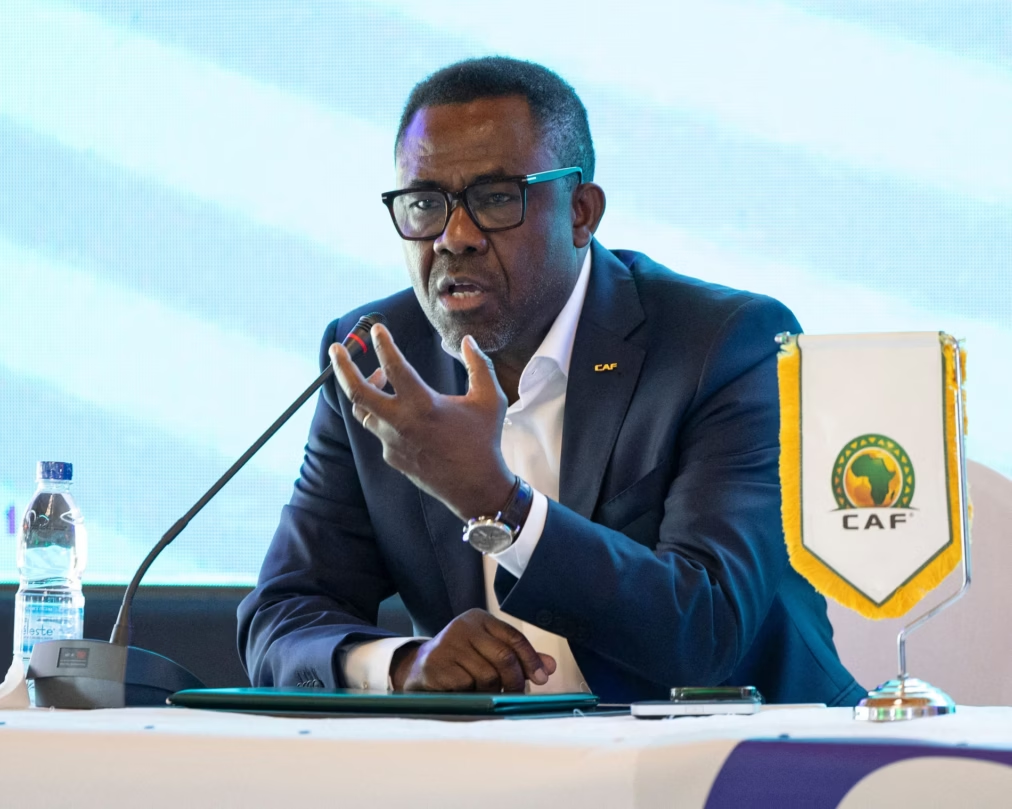
The race for the presidency of the Fédération Congolaise de Football Association (FECOFA) has taken an unexpected turn after all competing candidates reportedly withdrew, leaving Veron Mosengo-Omba as the sole contender for the top job.
The dramatic development effectively clears the path for Mosengo-Omba, the former Secretary General of the Confederation of African Football, to assume leadership without contest.
His unopposed position now raises questions about the competitiveness and credibility of the electoral process within the regional football body.
Claims of external influence spark debate
In the aftermath of the mass withdrawals, allegations have emerged suggesting that the outcome may not have been entirely organic.
Some voices within African football circles have pointed to what they describe as “pressure from above,” with references made to both government-level interests and influence from FIFA.
However, these claims remain unverified, and no official statements have been issued by FIFA, CAF, or any government authority to confirm any form of intervention in the process.
Growing concerns over governance and transparency
The development has reignited longstanding concerns about governance standards in African football administration.
Critics argue that repeated patterns of uncontested elections and late-stage withdrawals undermine democratic principles and weaken institutional credibility.
Some stakeholders have gone further, describing the situation as part of a broader trend in which leadership transitions are increasingly pre-determined rather than decided through competitive elections.
Silence from key stakeholders
As of now, neither the election committee overseeing the FECOFA process nor Mosengo-Omba has publicly addressed the circumstances surrounding the withdrawals. The absence of detailed explanations has left room for speculation and heightened scrutiny.
What happens next
With the electoral field now cleared, attention is expected to shift to the formal confirmation process.
Observers say the outcome, while procedurally straightforward, could have wider implications for how football governance structures across the continent are perceived in the lead-up to future elections.
For many stakeholders, the central question is no longer who will lead FECOFA, but what the episode signals about the state of internal democracy in African football administration.
-
 CAF Champions League: Late ASEC Mimosas equaliser frustrates MAS Fes as Esperance lose in Libya Oct 18, 2026
 -
Angola v Algeria: How to watch the 2026 Futsal Africa Cup of Nations semi-final Oct 18, 2026
-
PSG v Barcelona: fiery attacks set up Champions League classic at Parc des Princes Oct 18, 2026
-
Sinayoko inspires Paris FC to thrilling win over Rennes Oct 18, 2026



-
AFCON 2025: Fixtures, Results, Scores and Standings Jan 18, 2026
-
Match hero Taiwo Awoniyi reflects on team effort after Chelsea triumph May 5, 2026
-
Leadership and long-term vision key to rescuing Zamalek and inspiring Egyptian football – Hany Abou Rida Nov 5, 2025
-
South African giants Orlando Pirates set to lose influential forward Monnapule Saleng Mar 19, 2025




-
Real Betis v Barcelona: kick-off time, TV details and match preview Oct 16, 2026
-
Morocco to face New Zealand as FIFA U-17 Women’s World Cup kicks off in Rabat Oct 16, 2026
-
Roma v Real Madrid: home side tipped to score first in Champions League clash Oct 12, 2026
-
Atletico Madrid v Manchester United: probable line-ups for Champions League clash Oct 12, 2026