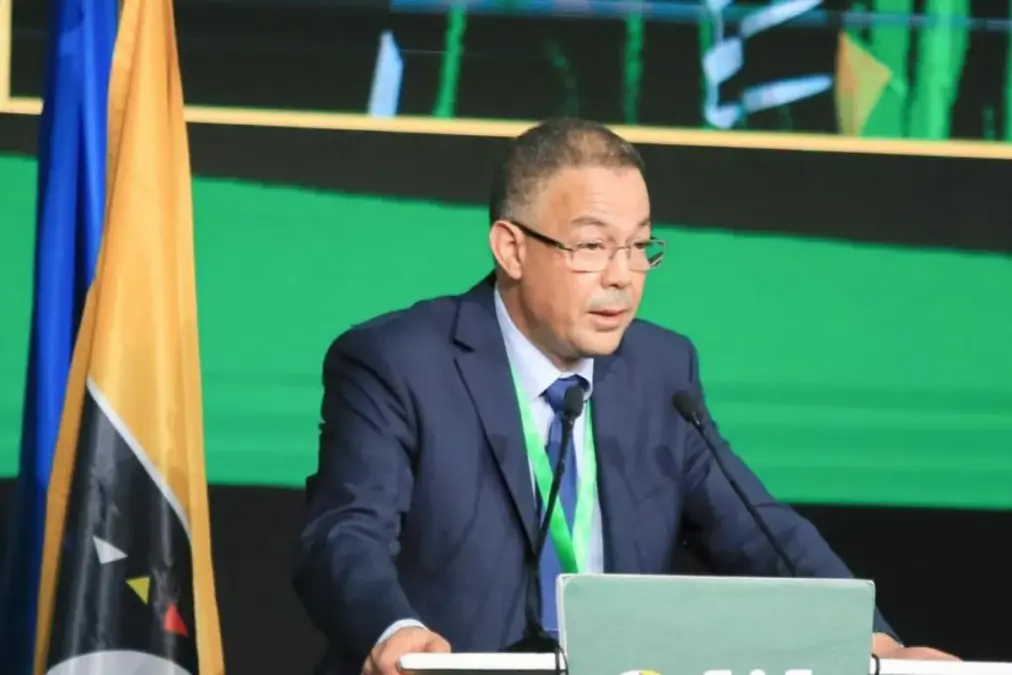
Morocco Football Federation president Fouzi Lekjaa has warned that the country’s impressive recent results on the international stage are masking a worrying decline in the standard and usage of home-based players.
Speaking at a meeting in Rabat with coaches from the first and second tiers of the Botola, Lekjaa highlighted what he sees as a widening gap between footballers playing in the domestic championship and those based in European clubs.
Morocco are currently sixth in the FIFA rankings and reached the quarter-finals of the 2026 World Cup, while continuing to attract a steady flow of dual-nationality players. Yet, according to Lekjaa, this success is increasingly being driven by footballers developed abroad rather than by the domestic system.
Concern over progression of young players
The FA chief stressed that the same imbalance is evident throughout Morocco’s youth national teams.
For both the Under-23s and Under-17s, he noted, the core of the squads is drawn from European academies or from the Mohammed VI Academy, with only a handful of regulars emerging directly from Botola clubs.
Fathi Jamal, the FRMF’s director of technical development, reinforced the warning during the Rabat meeting.
He pointed to the example of the current Morocco Under-18 squad, which is on duty in Spain. The group consists of 20 players who all come through the domestic system, yet Jamal said almost none of them are being given meaningful minutes in the Botola.
According to Jamal, only a few leading clubs – notably Raja and Wydad – occasionally offer short cameos to these youngsters, leaving most of them without consistent competitive experience at senior level.
Union Touarga held up as example
Within this challenging context, Lekjaa and Jamal praised Union Touarga for the way the club is helping to bridge the gap between youth football and the professional game.
Union Touarga have provided opportunities for several graduates of the Mohammed VI Academy to establish themselves in senior football, allowing them to take the step from development to the professional ranks.
One of the most striking recent examples is forward Tawfik Bentayeb. The attacker, who remains under contract with the Rabat club, was the top scorer in France’s Ligue 2 last season with 20 goals while on loan at Troyes.
Bentayeb’s trajectory is being cited internally as proof that Moroccan-based talents can thrive at a high level when given appropriate pathways and playing time. The 24-year-old is expected to secure a permanent move back to Europe in the upcoming summer transfer window.
Financial strain and governance issues
Lekjaa also addressed broader structural problems facing Moroccan clubs.
He acknowledged that many sides are under financial strain, while some are embroiled in disputes that have reached FIFA. At the same time, he underlined the persistent tensions surrounding refereeing and governance in the domestic game.
These off-field issues, he suggested, are further undermining the ability of the Botola to support the national project at a time when Morocco’s profile in world football is rising.
New roadmap before 2030 World Cup
With four years to go before the 2030 World Cup – which Morocco is due to co-host – Lekjaa believes Moroccan football is entering a decisive phase and must embark on a “new cycle”.
The FRMF now plans to draw up a joint roadmap with club presidents and coaches from both divisions. The objective is to ensure that a greater number of young players are established as regulars in the first and second tiers, rather than remaining on the fringes of first-team squads.
Lekjaa’s underlying message was that Morocco’s current golden period at international level cannot be taken for granted.
While the Atlas Lions continue to shine and maintain a strong pull for foreign-based stars, the federation president warned that without a significant upturn in the competitiveness and development role of the domestic championship, the national team risks becoming ever more dependent on talent honed outside the country’s borders.
-
 AJEL Rufisque sign Senegal left-back Stanislas Sarr on free transfer Sep 18, 2026
 -
Djiby Ndoye: Senegalese defender joins AJEL Rufisque on a free transfer Sep 18, 2026
-
Kylian Mbappe ends Nike partnership to join Swiss brand On Sep 18, 2026
-
Bayern Munich thrash Union Berlin 7-0 as Ismael Saibari scores first goal Sep 18, 2026




-
AFCON 2025: Fixtures, Results, Scores and Standings Jan 18, 2026
-
Leadership and long-term vision key to rescuing Zamalek and inspiring Egyptian football – Hany Abou Rida Nov 5, 2025
-
South African giants Orlando Pirates set to lose influential forward Monnapule Saleng Mar 19, 2025
-
Match hero Taiwo Awoniyi reflects on team effort after Chelsea triumph May 5, 2026




-
African Stars choose Botswana’s Lucas Moripe Stadium to host Orlando Pirates in CAF Champions League Sep 16, 2026
-
Europa League: AC Milan, Benfica and Lyon begin new league phase Sep 16, 2026
-
Besiktas and Marseille reveal probable line-ups for Europa League opener Sep 15, 2026
-
Sadio Mané nominated for Ballon d’Or for fifth time Sep 12, 2026