2026 World Cup: A look back at every tournament’s top scorer
As anticipation builds for the 2026 World Cup in the United States, Canada and Mexico, attention is turning once again to one of football’s most celebrated individual prizes: the Golden Boot.
From legendary strikers of the early editions to modern-day superstars, the race to finish as top scorer has always defined World Cup history.
Since the first tournament in 1930, each edition has produced a standout goalscorer whose finishing ability left a lasting mark on the competition.
The upcoming World Cup is expected to continue that tradition, with some of the world’s biggest attacking names aiming to etch their names alongside the sport’s greats.
The first player ever to finish as top scorer at a World Cup was Argentina’s Guillermo Stábile, who struck eight times at Uruguay 1930.
His early mark set the tone for what would become one of the tournament’s most prestigious individual honours.
Over the decades, the Golden Boot has been shared by some of football’s most iconic figures.
One of the most remarkable records still belongs to France’s Just Fontaine, who scored an extraordinary 13 goals at the 1958 World Cup — a tally that remains unmatched in a single edition to this day.
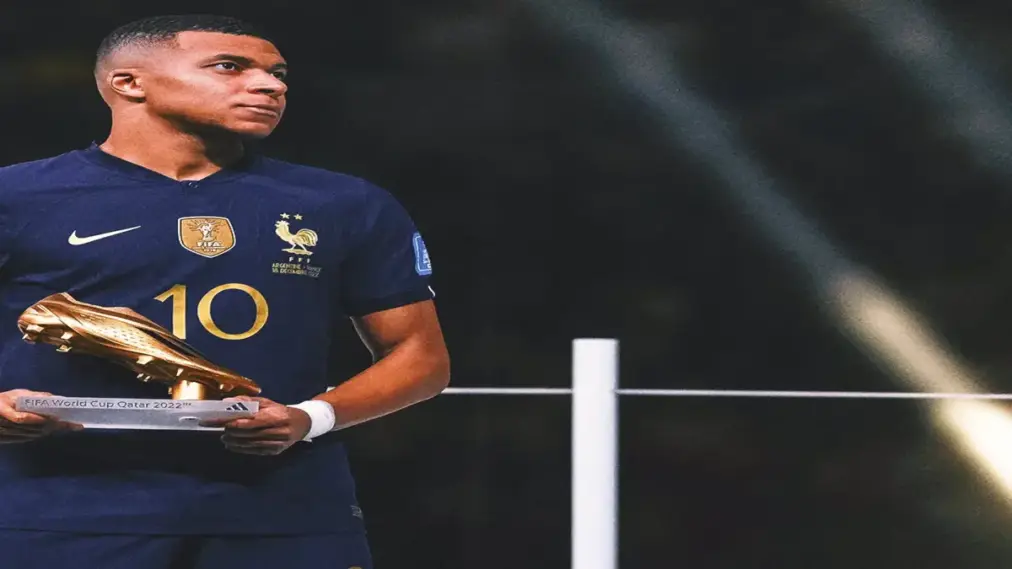
At the 2022 World Cup in Qatar, it was Kylian Mbappé who claimed the crown, scoring eight goals and almost single-handedly guiding France to the final.
His performance reinforced his status among the modern era’s elite forwards and placed him firmly in the tournament’s historical conversation.
Below is a full list of World Cup top scorers since the inaugural edition:
1930: Guillermo Stábile (Argentina) – 8 goals
1934: Oldřich Nejedlý (Czechoslovakia) – 5 goals
1938: Leônidas (Brazil) – 7 goals
1950: Ademir (Brazil) – 8 goals
1954: Sándor Kocsis (Hungary) – 11 goals
1958: Just Fontaine (France) – 13 goals
1962: Flórián Albert (Hungary), Garrincha (Brazil), Valentin Ivanov (USSR), Dražan Jerković (Yugoslavia), Leonel Sánchez (Chile), Vavá (Brazil) – 4 goals each
1966: Eusébio (Portugal) – 9 goals
1970: Gerd Müller (West Germany) – 10 goals
1974: Grzegorz Lato (Poland) – 7 goals
1978: Mario Kempes (Argentina) – 6 goals
1982: Paolo Rossi (Italy) – 6 goals
1986: Gary Lineker (England) – 6 goals
1990: Salvatore Schillaci (Italy) – 6 goals
1994: Oleg Salenko (Russia) and Hristo Stoichkov (Bulgaria) – 6 goals
1998: Davor Šuker (Croatia) – 6 goals
2002: Ronaldo (Brazil) – 8 goals
Each name on this list reflects a unique tournament story — moments of brilliance, decisive finishing, and performances that defined entire World Cups.
🗓️ June 11, 2026 ⏳#FIFAWorldCup pic.twitter.com/xSrAaK83aZ
— FIFA World Cup (@FIFAWorldCup) May 11, 2026
While the styles of play have evolved dramatically over time, the importance of a clinical goalscorer has remained constant.
Looking ahead to the 2026 edition, expectations are once again high.
Modern football’s attacking stars will enter the tournament under intense scrutiny, with defences more organised and analytics playing a greater role than ever before. Yet history suggests that one forward will still rise above the rest.
From Stábile’s pioneering goals in 1930 to Mbappé’s electric run in 2022, the World Cup Golden Boot has consistently highlighted the game’s most decisive attackers.
As the next tournament approaches, the question now is simple: who will be the next name added to this storied list?
-
 CAF Champions League: RS Berkane among first 10 clubs through to group stage Oct 25, 2026
 -
CAF Champions League: RS Berkane reach 2026-27 group stage after Star Sport Academy win Oct 25, 2026
-
CAF Confederation Cup: ASKO de Kara target home victory against FC Diarra Oct 25, 2026
-
CAF Champions League: RS Berkane and Esperance reach group stage as AFAD Plateau exit Oct 25, 2026




-
AFCON 2025: Fixtures, Results, Scores and Standings Jan 18, 2026
-
Match hero Taiwo Awoniyi reflects on team effort after Chelsea triumph May 5, 2026
-
Leadership and long-term vision key to rescuing Zamalek and inspiring Egyptian football – Hany Abou Rida Nov 5, 2025
-
South African giants Orlando Pirates set to lose influential forward Monnapule Saleng Mar 19, 2025




-
Barcelona v Real Madrid: Catalans backed at 1.65 to win October Clasico Oct 23, 2026
-
Barcelona and Real Madrid meet in pivotal 265th Clasico Oct 23, 2026
-
PSG v Barcelona: fiery attacks set up Champions League classic at Parc des Princes Oct 18, 2026
-
Champions League: PSG beat Barcelona as Liverpool complete comeback against Villarreal Oct 20, 2026