FIFA World Cup
Africa
Australia
Burundi
Competitions
Features & Interviews
Latest News
Tanzania
World Football
World Cup 2026: Nestory Irankunda – Australia’s star with Burundi and Tanzania roots

Youngster Nestory Irankunda has been included in Australia’s final squad for the 2026 FIFA World Cup.
His story, however, begins far from the World Cup stage. Born to Burundian parents in Tanzania, he moved to Australia at a young age and developed through the country’s football system.
His background reflects a modern football identity shaped by migration, opportunity, and rapid talent development.
Club development: From Adelaide to Bayern Munich
Irankunda first emerged at Adelaide Croatia Raiders before joining Adelaide United in 2021. He quickly progressed from a scholarship deal in September 2021 to a professional debut in January 2022.
That breakthrough year also delivered his first A-League goal, making him the second-youngest scorer in the competition’s history at the time.
His rise accelerated in 2024 when he scored a professional hat-trick, again ranking among the youngest players ever to achieve the feat in Australian football. That form earned him a major transfer to Bayern Munich in 2024, setting a new A-League transfer record and confirming his status as one of Australia’s most high-profile young exports.
International career: Choosing Australia
Irankunda was eligible to represent Tanzania or Burundi, but chose Australia at the international level. He has progressed through the youth ranks, helping Australia’s U17 side qualify for the AFC U-17 Asian Cup.
He was first called into the senior national team in March 2023 and made his debut in June 2024. Soon after, he became one of the youngest Australians to score in a FIFA World Cup qualification match during the 2026 cycle.
By 2025, his performances had already attracted global attention, with the CIES Football Observatory ranking him among the top 100 under-20 players worldwide.
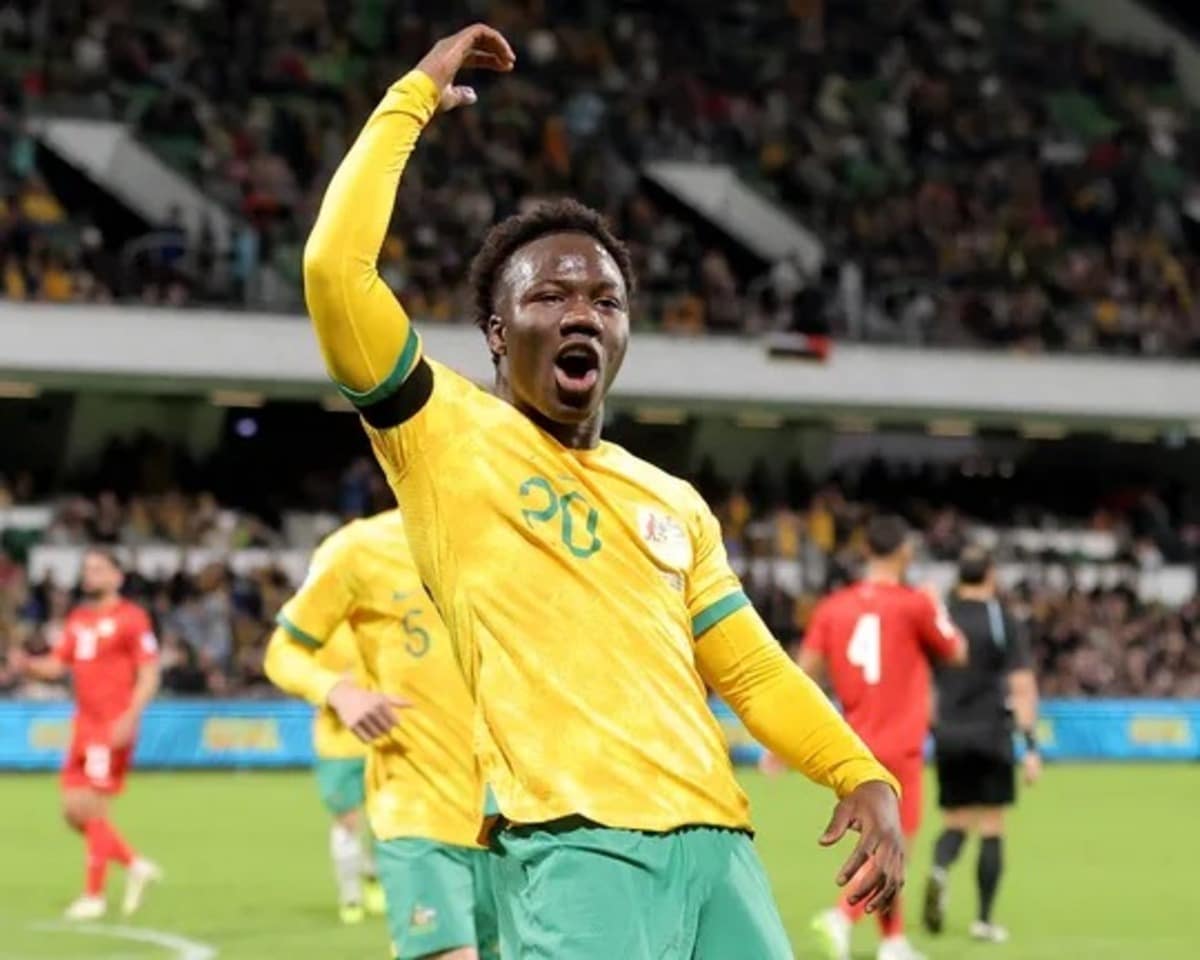
Role in Australia’s 2026 World Cup squad
In Tony Popovic’s system, Irankunda is not yet viewed as the main attacking leader, but as a high-impact option with game-changing potential.
His role is built around directness, pace, and unpredictability. He is most effective when games open up, or when Australia need to break down compact defensive setups. Rather than controlling matches, he changes their rhythm.
In a squad built on structure and experience, Irankunda provides something different: spontaneity and attacking aggression from wide areas or off the bench.
Australia’s squad context at the World Cup
Australia head into the 2026 World Cup in Group D alongside Turkey, Paraguay, and hosts USA. Their squad blends experienced internationals with emerging talent across Europe and Australia.
With goalkeeper Mathew Ryan offering leadership, Jackson Irvine anchoring midfield stability, and a disciplined defensive core, Australia are built for structure and resilience. Within that setup, Irankunda stands out as one of the few players capable of producing moments of individual brilliance.
Secret weapon potential under Tony Popovic
The big question is whether Irankunda becomes more than an impact player.
If Australia need a breakthrough in tight group-stage matches, his ability to run at defenders, take risks, and create chances out of nothing could be decisive. That unpredictability is exactly what makes him a potential “secret weapon” in Popovic’s tactical plan.
He may not define every match, but he could define the moments that decide Australia’s World Cup journey.
-
 Welayta Dicha thrash Halaba Ketema 6-0 in Ethiopia Premier League Oct 26, 2026
 -
Nico Williams reveals he rejected PSG, Arsenal and Barcelona to stay at Athletic Club Oct 26, 2026
-
Karim Coulibaly joins RC Strasbourg in €20m deal after European transfer interest Oct 26, 2026
-
Paris FC consider €30m January move for Nuremberg striker Mohamed Ali Zoma Oct 26, 2026



-
AFCON 2025: Fixtures, Results, Scores and Standings Jan 18, 2026
-
Match hero Taiwo Awoniyi reflects on team effort after Chelsea triumph May 5, 2026
-
Leadership and long-term vision key to rescuing Zamalek and inspiring Egyptian football – Hany Abou Rida Nov 5, 2025
-
South African giants Orlando Pirates set to lose influential forward Monnapule Saleng Mar 19, 2025




-
Barcelona v Real Madrid: Catalans backed at 1.65 to win October Clasico Oct 23, 2026
-
Barcelona and Real Madrid meet in pivotal 265th Clasico Oct 23, 2026
-
Champions League: PSG beat Barcelona as Liverpool complete comeback against Villarreal Oct 20, 2026
-
Inter Milan v Fiorentina: probable line-ups for San Siro clash Oct 24, 2026