2026 World Cup: FIFA defends Moroccan referee Jalal Jiyed over disallowed Germany goal
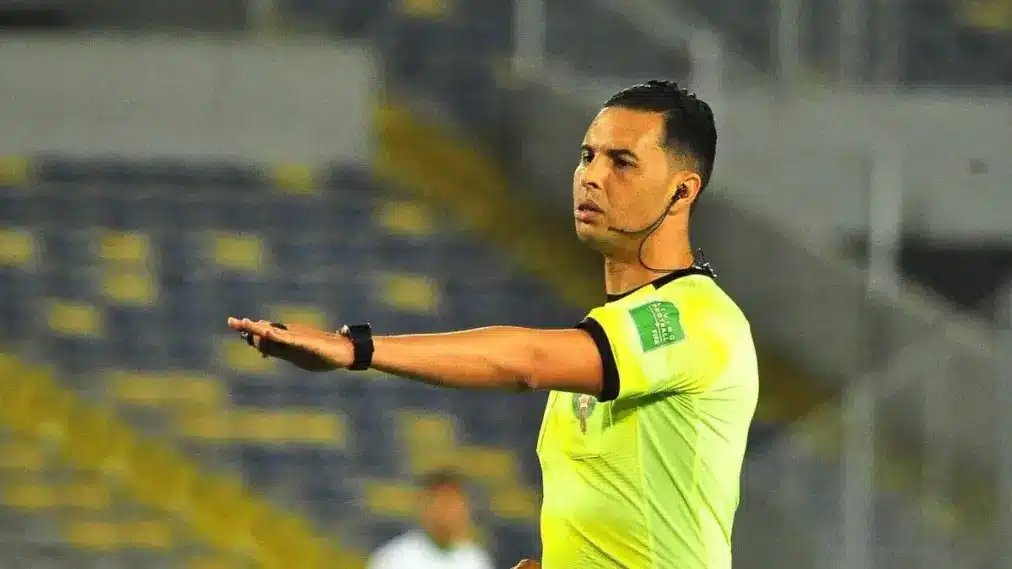
FIFA has defended Moroccan referee Jalal Jiyed after his controversial decision to disallow Germany’s late goal against Paraguay in the round of 32 at the 2026 World Cup.
The decision became one of the biggest talking points of the knockout stage after Germany thought they had scored a decisive goal through Jonathan Tah in the closing stages.
But after a VAR review, Jiyed ruled the goal out, judging that German defender Waldemar Anton had blocked Paraguay goalkeeper Orlando Gil and prevented him from moving towards the ball.
Germany later lost on penalties, ending their World Cup campaign in dramatic fashion and leaving coach Julian Nagelsmann furious.
For African audiences, the incident placed one of the continent’s leading referees at the centre of a major World Cup debate.
But FIFA’s refereeing leadership has now strongly backed the Moroccan official’s interpretation of the incident.
Germany anger after ruled-out goal
Germany believed they had found the breakthrough when Tah headed into the net late in the match.
The goal appeared to put the four-time world champions on course for the round of 16, only for VAR to intervene.
Jiyed was advised to check the pitchside monitor, and after reviewing the footage, he decided that Anton had illegally impeded the Paraguayan goalkeeper.
The Moroccan referee ruled that Anton’s movement had affected Gil’s ability to defend his goal, leading to the goal being cancelled.
Germany’s frustration grew after they were eliminated in the penalty shootout.
Nagelsmann criticised the decision strongly, reportedly describing the disallowed goal as a “scandal” and insisting that his team deserved to go through.
Collina explains FIFA position
FIFA referees committee chairman Pierluigi Collina responded by explaining why the decision was consistent with the guidance given to teams before the tournament.
Collina said, as reported by the British newspaper Mirror: “Positioning in itself is not an offense, but when an attacking player is not interested in the ball and deliberately moves, even slightly, with the clear aim of hindering the opponent’s movement and preventing him from defending, then the referees, with the help of video technology when needed, are required to analyze the situation accurately and intervene.”
He added: “This is especially true when the aim of the move is to prevent the opposing goalkeeper from defending his goal. Coaches and players have been informed of these guidelines beforehand, so they should not be surprised when referees penalize such offenses.”
Collina’s comments effectively supported Jiyed’s decision and rejected the suggestion that the Moroccan referee had made a major mistake.
The explanation also underlined FIFA’s intention to protect goalkeepers from deliberate blocking when attacking players are not genuinely challenging for the ball.
Moroccan referee under spotlight
Jiyed’s role in such a high-pressure knockout match reflects the trust placed in African officials at the expanded World Cup.
The Moroccan referee had to make a major decision in a tense match involving one of football’s biggest nations, and his call had a direct impact on the outcome.
While Germany were left angry, FIFA’s response suggests that the decision followed the tournament’s refereeing instructions.
For Morocco and African refereeing, the backing from FIFA will be seen as important.
It shows that African match officials are not only present at the World Cup, but are trusted to handle some of its most difficult and scrutinised moments.
Germany suffer historic shootout blow
Germany’s elimination became even more painful because of the manner of their defeat.
After the match remained level, they lost on penalties to Paraguay, suffering their first ever World Cup penalty shootout defeat.
Kai Havertz, Nico Woltmeide and Jonathan Tah all missed their kicks as Paraguay secured a famous victory.
The South Americans reached the round of 16 for the first time through a knockout-stage win and will now face France.
For Germany, the debate over the disallowed goal will continue.
But FIFA’s position is clear: Jiyed’s call was not a refereeing scandal, but the correct application of guidance given before the tournament.
For African football, the moment also carries wider significance.
A Moroccan referee stood firm under pressure, made a huge decision on the world stage, and received the backing of football’s governing body.
-
 Ghana’s Black Maidens ready to take on Norway as Joe Nana Adarkwa targets winning World Cup start Oct 18, 2026
 -
Lamine Yamal hailed as world’s best player after Barcelona win Oct 17, 2026
-
Malawi thrash Seychelles 10-1 to seal third beach soccer AFCON appearance Oct 17, 2026
-
Bafana Bafana set for November double-header against Kenya in 2027 AFCON qualifiers Oct 17, 2026


-
AFCON 2025: Fixtures, Results, Scores and Standings Jan 18, 2026
-
Match hero Taiwo Awoniyi reflects on team effort after Chelsea triumph May 5, 2026
-
Leadership and long-term vision key to rescuing Zamalek and inspiring Egyptian football – Hany Abou Rida Nov 5, 2025
-
South African giants Orlando Pirates set to lose influential forward Monnapule Saleng Mar 19, 2025




-
Real Betis v Barcelona: kick-off time, TV details and match preview Oct 16, 2026
-
Morocco to face New Zealand as FIFA U-17 Women’s World Cup kicks off in Rabat Oct 16, 2026
-
Roma v Real Madrid: home side tipped to score first in Champions League clash Oct 12, 2026
-
Atletico Madrid v Manchester United: probable line-ups for Champions League clash Oct 12, 2026