Powerful coaching reform: FAF restricts Ligue 1 Mobilis roles to Pro licence holders
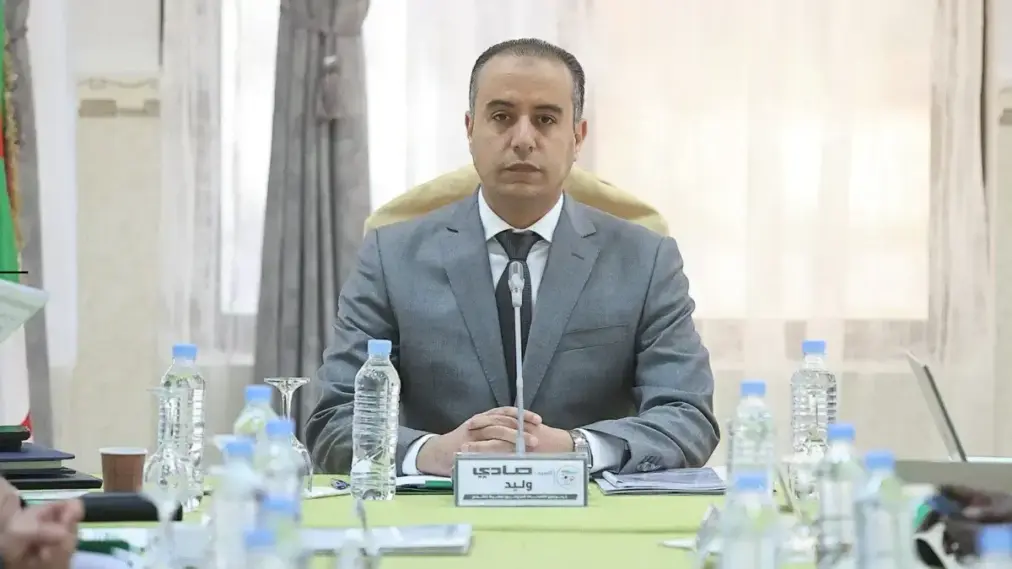
Algeria’s Football Federation (FAF) has approved sweeping changes to coaching regulations in Ligue 1 Mobilis, announcing that only coaches holding recognised Pro licences will be eligible to work in the country’s top division from the 2026-27 season.
The decision marks one of the most significant coaching reforms introduced in Algerian professional football in recent years and is designed to raise qualification standards across the domestic game.
The measure was adopted during the FAF Federal Bureau’s monthly statutory meeting on Saturday and introduces stricter requirements for both head coaches and assistant coaches operating at the highest level of Algerian football.
Under the new rules, coaches will be required to possess either a CAF Pro, UEFA Pro or AFC Pro licence in order to receive official approval to work in Ligue 1 Mobilis.
The federation made it clear that coaches who do not hold one of these qualifications will not be granted licences and their contracts will not be validated.
The move represents a major shift from previous regulations, which allowed clubs greater flexibility in appointing coaches with varying levels of certification.
Until now, several clubs in the Algerian top flight have relied on technical staff who did not necessarily possess the highest coaching qualifications recognised by international football confederations.
The federation’s latest decision seeks to establish a more uniform professional standard throughout the league.
The reform also includes specific provisions for foreign coaches currently working in Algeria.
Recognising that some coaches are already employed under existing regulations, the FAF has introduced a transitional period that will allow them to continue working during the upcoming season under exceptional arrangements.
However, that exception comes with conditions.
Foreign coaches benefiting from the transitional period will be required to undertake a skills development programme aimed at obtaining the necessary qualifications before the new regulations are fully enforced.
The federation’s objective is to provide sufficient time for affected coaches to meet the required standards while ensuring continuity for clubs that already have technical staff under contract.
Another important measure concerns the movement of foreign coaches between clubs during the same campaign.
According to the provisions approved by the Federal Bureau, foreign coaches will be limited to one licence per sporting season.
The rule means that any foreign coach who leaves a club before the end of a season will not be permitted to take charge of another Algerian team during that same campaign.
The federation believes the measure will contribute to greater stability within the league.
Repeated coaching changes have often been a feature of professional football, and the new regulation is intended to reduce frequent managerial turnover while also helping to minimise contractual disputes between clubs and coaches.
By restricting coaches to a single licence per season, the FAF hopes to encourage longer-term planning and greater continuity within technical projects.
While much of the focus has been placed on foreign coaches, Algerian coaches are also affected by the reform.
However, local coaches will be given additional time to comply with the new requirements.
The federation has approved a grace period extending beyond the implementation date for foreign coaches.
Beginning with the 2027-28 season, Algerian coaches will also be required to hold a CAF Pro licence in order to work in Ligue 1 Mobilis.
This phased approach is intended to give domestic coaches sufficient time to complete the necessary training and certification programmes before the regulations become mandatory.
The reforms will not be limited solely to head coaches.
Assistant coaches will also be required to meet the qualification criteria established by the federation.
The Professional Football League will be responsible for enforcing the regulations and ensuring compliance among participating clubs.
Under the adopted provisions, licences will not be issued to clubs whose head coach and first assistant coach fail to meet the required standards.
This aspect of the reform highlights the federation’s determination to raise professional qualifications throughout technical departments rather than focusing exclusively on senior coaching positions.
The decision reflects a broader commitment to strengthening coaching standards and professional structures within Algerian football.
By requiring internationally recognised qualifications, the federation aims to align Ligue 1 Mobilis more closely with modern coaching practices and established standards across global football.
For clubs, the changes will require careful planning in future recruitment decisions.
For coaches, the reform creates a clear pathway based on certification and professional development.
As the implementation dates approach, clubs and technical staff will now have to prepare for a new era in Algerian football, one in which holding a Pro licence will become an essential requirement rather than an advantage.
The regulations represent a significant shift in policy and could reshape the coaching landscape of Ligue 1 Mobilis for years to come.
-
 PSG beat Barcelona 4-2 in Champions League thriller Oct 21, 2026
 -
Morocco beaten by Germany but remain in contention at U17 Women’s World Cup Oct 21, 2026
-
Cloudflare Error 522: Connection to origin server timed out Oct 21, 2026
-
Champions League: Napoli edge Bodø/Glimt 4-3 in thrilling contest Oct 20, 2026




-
AFCON 2025: Fixtures, Results, Scores and Standings Jan 18, 2026
-
Match hero Taiwo Awoniyi reflects on team effort after Chelsea triumph May 5, 2026
-
Leadership and long-term vision key to rescuing Zamalek and inspiring Egyptian football – Hany Abou Rida Nov 5, 2025
-
South African giants Orlando Pirates set to lose influential forward Monnapule Saleng Mar 19, 2025




-
PSG v Barcelona: fiery attacks set up Champions League classic at Parc des Princes Oct 18, 2026
-
Champions League: PSG beat Barcelona as Liverpool complete comeback against Villarreal Oct 20, 2026
-
Real Betis v Barcelona: kick-off time, TV details and match preview Oct 16, 2026
-
Porto v PSV: predicted line-ups for Champions League league-phase clash Oct 19, 2026