Mourinho’s fixture complaints questioned as Real Madrid schedule comes under scrutiny
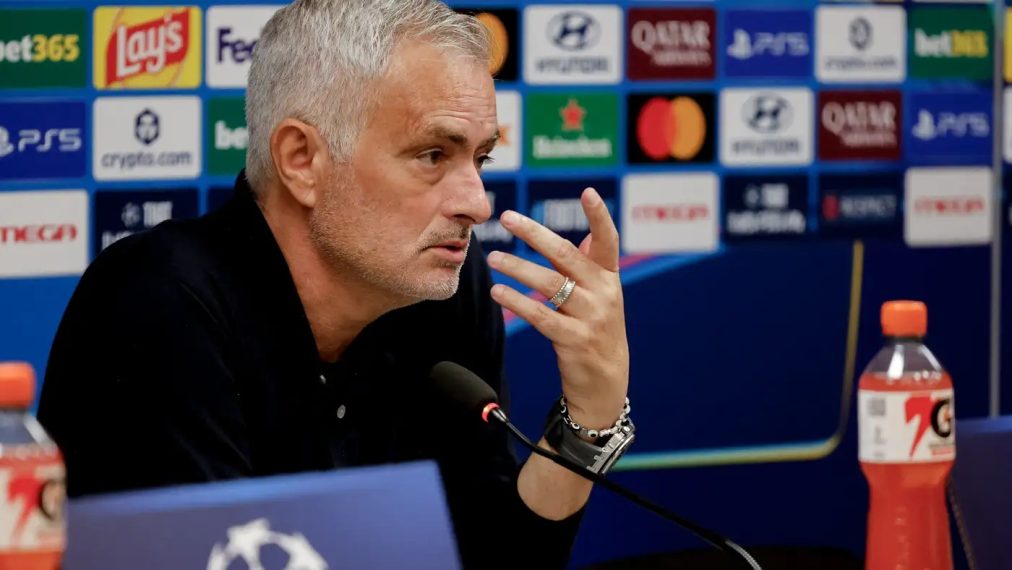
Jose Mourinho has renewed his criticism of La Liga’s fixture timetable, describing Real Madrid’s recent run as a “marathon” of matches, travel and limited recovery time.
However, the club’s own schedule, along with events held at Santiago Bernabeu, has raised questions about how much consideration Real Madrid’s complaints give to the difficulties faced by their opponents.
According to Spanish newspaper Sport, Mourinho’s protest after the win over Valencia at Mestalla did not address every factor affecting Real Madrid’s fixture list. That included the stadium’s commitments to non-football events and the demands placed on other teams during the same period.
Asked what message he wanted to send to La Liga officials, Mourinho said: “I have to be humble because they have the power. I hope they don’t play games with us again. Our players are not here now to play for their national teams, it was a marathon.”
His comments came after Santiago Bernabeu hosted an American football game between the Cincinnati Bengals and the Atlanta Falcons. It was the second official fixture in the competition to be held in Spain, prompting renewed debate over whether events outside football influence the timing of Real Madrid’s matches.
La Liga president Javier Tebas has previously criticised Real Madrid’s requests to alter fixtures to allow other events to take place at the stadium. He has asked the club to publish the number of changes it requested, how many were approved and the extent to which the league met its requirements, while insisting that accepted alterations should also be included in any assessment.
Real Madrid played four successive away matches, beginning with the clasico against Barcelona on 25 October, followed by Racing Santander on 1 November, Olympiacos in Athens on 4 November and Valencia on 7 November.
There were 74 hours and 30 minutes between the starts of the Santander and Athens matches, and 74 hours and 15 minutes between the Athens and Valencia games. Those intervals included travel and preparation time and did not necessarily represent the players’ actual recovery periods.
Mourinho said Real Madrid returned from Greece at 03:00 and that the squad had to stay overnight at the Valdebebas training centre to maximise its rest.
Racing Santander’s schedule, however, illustrates the wider pressures involved. They played Copa del Rey opponents Ribadesella on Thursday, 29 October, before hosting Real Madrid on Sunday, 1 November – only 67 hours and 15 minutes later. Mourinho had called the Sunday fixture a “gift” from La Liga and wanted the Valencia match, played on Saturday, moved.
Switching the Santander game to Saturday at the same time would have left the Cantabrian side with just 43 hours and 15 minutes before their cup tie. Racing therefore called up 10 players from their reserve team for the cup match.
Real Madrid were not alone in facing a demanding sequence. Barcelona played three away games in one week – against Galatasaray on 13 October, Real Betis on 17 October and Paris Saint-Germain on 20 October – travelling between Istanbul, Seville and Paris. The gap between the Betis and Paris games was 74 hours and 30 minutes.
Celta Vigo also had 68 hours and 15 minutes between facing Celtic on 22 October and hosting Real Betis on 25 October after returning from Europe.
After the international break, Real Madrid face Celta Vigo, PSV Eindhoven and Deportivo Alaves at Santiago Bernabeu on 21, 24 and 28 November, avoiding further travel but still facing a crowded schedule.
-
 USM Alger claim second CAF Super Cup title and $500,000 prize Nov 8, 2026
-
Man Utd linked with Rennes left-back Mahamadou Nagida Nov 8, 2026
-
Egypt forward Ibrahim Adel shines with four goal contributions as Nordsjælland thrash Randers Nov 8, 2026
-
Al Ahly to farm out forward Aqtay Abdallah on loan Nov 8, 2026



-
AFCON 2025: Fixtures, Results, Scores and Standings Jan 18, 2026
-
Match hero Taiwo Awoniyi reflects on team effort after Chelsea triumph May 5, 2026
-
Leadership and long-term vision key to rescuing Zamalek and inspiring Egyptian football – Hany Abou Rida Nov 5, 2025
-
South African giants Orlando Pirates set to lose influential forward Monnapule Saleng Mar 19, 2025




-
Barcelona host Aston Villa in Champions League meeting at Spotify Camp Nou Nov 2, 2026
-
AEK Athens v Real Madrid: Champions League date, kick-off time and viewing details Nov 2, 2026
-
Manchester United host Aston Villa as both sides seek a Premier League lift Nov 6, 2026
-
Villarreal host unbeaten PSG in first European meeting Nov 2, 2026