World Cup 2026: England consider boycott of pre-match handshake with Ghana’s Thomas Partey amid rape allegations
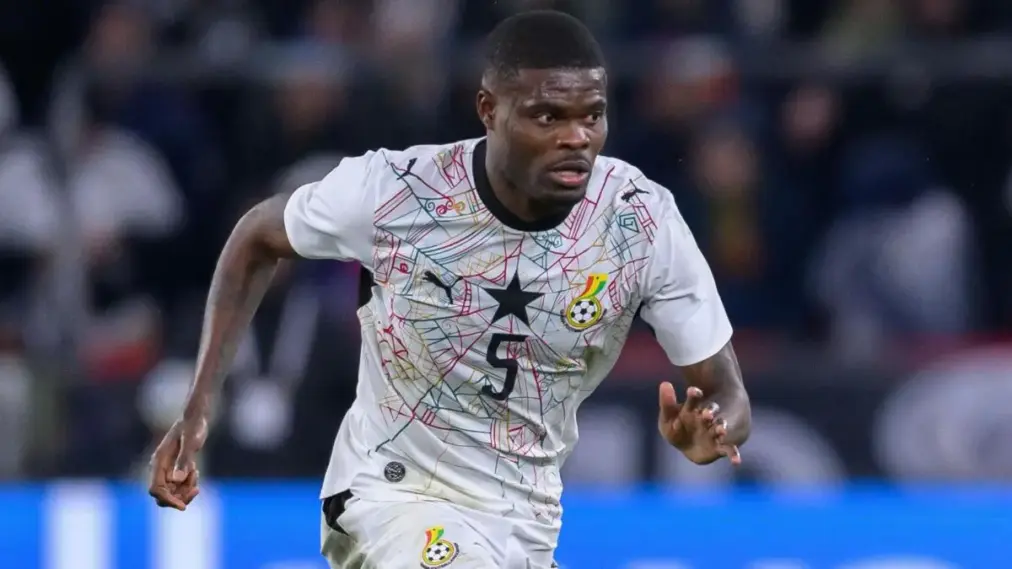
The English Football Association (FA) is reportedly considering boycotting the traditional pre-match handshake with Ghana star Thomas Partey ahead of the showdown at the 2026 World Cup tournament.
Partey, a former Arsenal midfielder, who now plays for Spanish outfit Villarreal is currently facing trial in the United Kingdom on seven counts of rape and one count of sexual assault.
The midfielder, who has been named in Ghana’s final World Cup squad denied all charges and entered not guilty pleas, with legal proceedings ongoing.
According to The Times, discussions are ongoing within the FA over whether specific guidance should be issued to players regarding the customary pre-match greeting before the Group L fixture scheduled for June 23 in Boston. The match will be the second group-stage game for both nations at the tournament co-hosted by the United States, Canada, and Mexico.
The handshake, a long-standing football tradition symbolising respect between opponents, has come under scrutiny due to the situation surrounding Partey’s inclusion in Ghana’s squad.
No official decision has yet been made by the FA or England’s management team, but internal discussions are understood to be focused on how players should handle pre-match formalities, including the handshake ritual, in light of the circumstances.
The situation places football authorities in a delicate position, balancing respect for legal due process with sporting tradition and public perception on the world stage.
Ghana are preparing for a competitive Group L campaign against European giants, England, 2018 World Cup finalists, Croatia and Panama. The Black Stars will open their account against Panama before taking on England and Croatia respectively.
As the tournament approaches, attention continues to shift beyond the pitch, with broader ethical and procedural questions increasingly shaping the build-up to football’s biggest event.
The West Africa football heavyweights has previously competed in 2006, 2010, 2014, and 2022, with their best performance coming in 2010 when they reached the quarterfinals.
-
 Nicolas Pepe backs Pape Gueye for 2026 African Ballon d’Or Oct 11, 2026
 -
Karim Matmour proposed for Algeria coaching staff by Antar Yahia Oct 11, 2026
-
Atletico Madrid face Manchester United in Champions League test as 1.92 market attracts attention Oct 11, 2026
-
Kaizer Chiefs missing four players for Stellenbosch meeting Oct 11, 2026


-
AFCON 2025: Fixtures, Results, Scores and Standings Jan 18, 2026
-
Match hero Taiwo Awoniyi reflects on team effort after Chelsea triumph May 5, 2026
-
Leadership and long-term vision key to rescuing Zamalek and inspiring Egyptian football – Hany Abou Rida Nov 5, 2025
-
South African giants Orlando Pirates set to lose influential forward Monnapule Saleng Mar 19, 2025




-
Croatia face Spain with Nations League hopes on the line in Split Oct 5, 2026
-
Manchester United host winless Tottenham in Premier League clash Oct 7, 2026
-
Lens v Lyon: Can the in-form visitors extend their unbeaten Ligue 1 run? Oct 6, 2026
-
Real Madrid fitness update: Valverde a doubt for Villarreal as Kylian Mbappe returns Oct 8, 2026