World Cup 2026 dream hits obstacle as DR Congo seeks Fifa ticket refunds
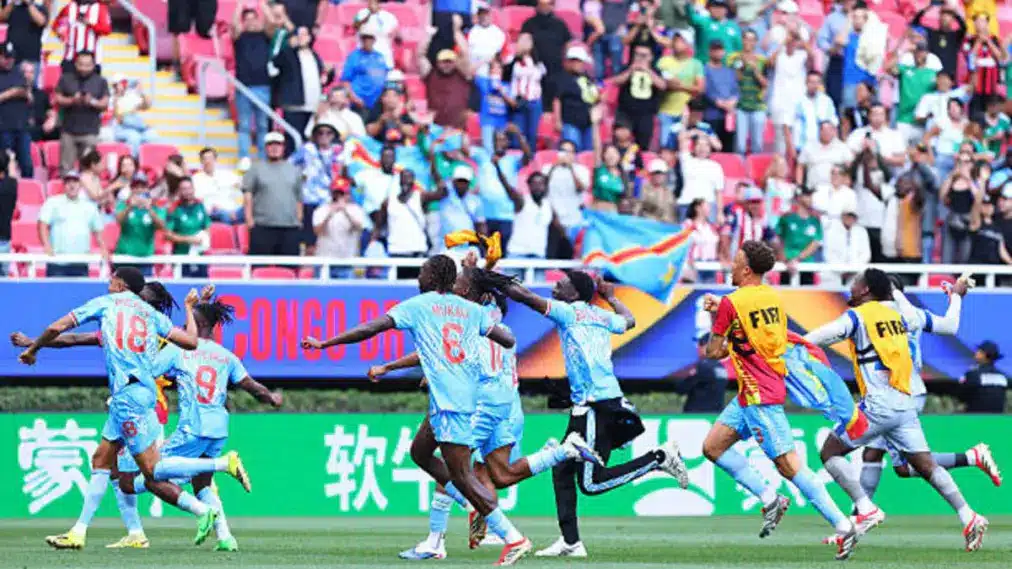
The Democratic Republic of Congo’s long-awaited return to the World Cup is being overshadowed by an escalating Ebola outbreak that has left thousands of supporters uncertain whether they will be able to watch the tournament in person.
With the United States enforcing strict entry measures linked to the outbreak, DR Congo’s football federation has formally asked Fifa to refund tickets purchased by fans now unable to travel to the 2026 World Cup.
The Leopards are preparing for their first appearance at football’s biggest tournament since 1974, when the country competed as Zaire and became the first sub-Saharan African nation to feature at a World Cup. But what should have been a moment of celebration has turned into frustration for supporters facing travel barriers.
The World Health Organization declared the Ebola outbreak a public health emergency on 16 May after more than 900 suspected cases and 223 suspected deaths were reported across central and East Africa. The majority of cases have been recorded in DR Congo.
As a result, the United States has barred entry to non-citizens who have recently been in DR Congo, Uganda or South Sudan. The US embassy in Kinshasa has also suspended visa services, leaving many supporters stranded despite already purchasing expensive match tickets.
“We asked Fifa if this is possible to take this into consideration, because the tickets are little bit expensive,” Fecofa president Veron Mosengo-Omba told BBC Sport Africa.
“They are punished because they cannot get [in to the US] to see the World Cup to support their team.
“We don’t want our supporters who love football, who love the World Cup, to lose everything.”
Fifa considers request as fans reroute plans
Fifa has acknowledged the request and said it would “look into it in due course”.
Under the governing body’s normal policy, supporters are expected to resell or transfer tickets rather than receive refunds, except in extraordinary circumstances such as match cancellations. However, the public health crisis surrounding DR Congo’s participation has created an unprecedented situation.
The timing has made matters even more difficult for travelling fans. DR Congo open their Group K campaign against Portugal in Houston on 17 June, meaning supporters would have needed to leave the country almost immediately to satisfy the US requirement of spending 21 days outside affected nations before entry.
Many Congolese supporters are now expected to alter their travel plans and attend the team’s second group match against Colombia in Guadalajara, Mexico, instead of fixtures hosted in the United States.
Their final group game against Uzbekistan will be played in Atlanta, although fans remain hopeful the Leopards can progress and potentially play a knockout fixture in Toronto should they finish second in the group.
The financial burden has added to the frustration. Ticket prices for the expanded 2026 tournament have risen sharply under Fifa’s dynamic pricing model, with some costing several times more than comparable seats at the 2022 World Cup in Qatar.
Team unaffected despite disrupted preparations
While supporters face uncertainty, the DR Congo squad itself is expected to avoid disruption.
Most players in coach Sebastien Desabre’s 26-man squad are based outside the country, meaning they are not impacted by the restrictions. Federation officials who needed to travel to the US reportedly left DR Congo early to complete the required quarantine period.
However, the outbreak has already altered the team’s preparations. A planned training camp in Kinshasa was cancelled, forcing the Leopards to regroup in Belgium for friendly matches before travelling to their base in Texas.
Fifa said it remains in “close communication” with Fecofa, host governments and health agencies to ensure all medical and security protocols are respected during the tournament.
A historic return under difficult circumstances
For many in DR Congo, qualification for the World Cup represents far more than football.
“This is the resurrection of football in this country,” Mosengo-Omba declared.
“People forget their problems now they are following the Leopards. The team need to go to the second round.”
Mosengo-Omba, recently elected as Fecofa president after leaving his role as Caf secretary general, believes the current generation can help rebuild the nation’s football identity after decades away from the global stage.
“We are not saying that we will win the Afcon or World Cup, but we will build a solid foundation for the future,” he said.
‘The world doesn’t need to be afraid’
Despite international concern, Mosengo-Omba insists fear surrounding the outbreak has fuelled misunderstanding about the country and its people.
“Some people are thinking Ebola is genetic, it’s a contamination,” he stated.
“It’s ignorance about this disease.
“Okay, there’s Ebola in DRC, in Ituri, in the rural parts. Because Congo is big, it’s not because you are from DRC you get Ebola immediately.
“The country in the world who knows how to fight this disease is DRC because we have faced this many times.
“The world doesn’t need to be afraid.”
Still, health experts remain cautious. The current outbreak involves the rare Bundibugyo strain of the virus, which has not surfaced in more than a decade and currently has no approved vaccine.
Combined with conflict and mass displacement in eastern DR Congo, authorities are struggling to contain the spread.
Now, as the Leopards prepare for a World Cup return 52 years in the making, a public health crisis threatens to deny thousands of fans the chance to witness history firsthand.
-
 Tottenham scouts watch Younes Ebnoutalib score Eintracht Frankfurt winner Oct 20, 2026
 -
Köln consider January move for German-Nigerian attacker Lukas Nmecha Oct 20, 2026
-
Manchester United join Liverpool in race for Borussia Dortmund midfielder Felix Nmecha Oct 20, 2026
-
Mali striker Lassine Sinayoko backs Paris FC to challenge for Ligue top spot Oct 20, 2026


-
AFCON 2025: Fixtures, Results, Scores and Standings Jan 18, 2026
-
Match hero Taiwo Awoniyi reflects on team effort after Chelsea triumph May 5, 2026
-
Leadership and long-term vision key to rescuing Zamalek and inspiring Egyptian football – Hany Abou Rida Nov 5, 2025
-
South African giants Orlando Pirates set to lose influential forward Monnapule Saleng Mar 19, 2025




-
PSG v Barcelona: fiery attacks set up Champions League classic at Parc des Princes Oct 18, 2026
-
Real Betis v Barcelona: kick-off time, TV details and match preview Oct 16, 2026
-
Morocco to face New Zealand as FIFA U-17 Women’s World Cup kicks off in Rabat Oct 16, 2026
-
Klinton Cod leads African journalists, Pundits and Content creators joining José Mourinho on Football.com TV Oct 19, 2026