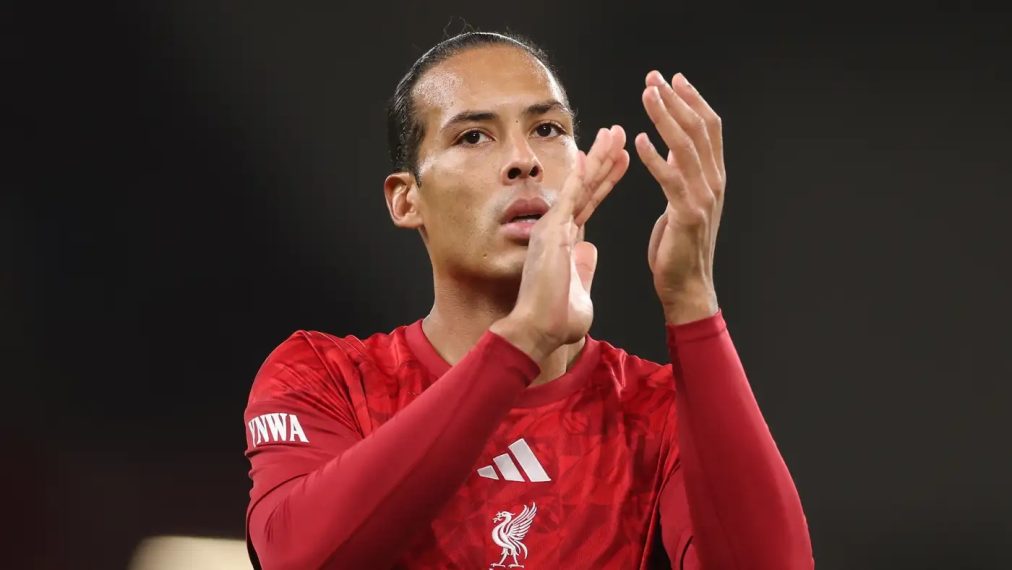
Liverpool captain Virgil van Dijk says the club’s players must accept the “chaos” created by Andoni Iraola’s high-pressing philosophy as their results improve across all competitions.
Iraola’s approach, built around risk and reward, is beginning to produce results, with Liverpool’s players showing growing confidence in following the plan. The Basque manager has reintroduced an aggressive pressing game this season after Arne Slot’s possession-based approach, which relied on slower build-up play.
The change has required several Liverpool players to move beyond their comfort zones and take greater responsibility for decisions during matches. Van Dijk can push 15 to 20 yards into the opposition half to apply pressure, while right-back Ronald Araujo can move into central areas to neutralise opponents.
That style can leave space behind Liverpool’s defensive line and create what Van Dijk describes as “chaos”. However, its benefits were evident when Liverpool beat Chelsea on penalties in the League Cup to record their fifth consecutive victory.
Liverpool face Arsenal at Anfield in the Premier League on Sunday, 01 November 2026. Van Dijk said the current league champions would not be treated differently, while explaining the tactical challenge posed by a team trying to press high.
“I think it is a challenge against any team,” Van Dijk told ESPN. “When teams know that we want to win the ball back in high areas, they try to drag you into difficult spaces and you have to read the game accurately.
“For example, Henderson would drop back to pull one of us out and leave space behind him. You then have to think quickly: do you push forward or stay where you are? It is about reading the match.”
The Netherlands defender said taking risks at Anfield could help Liverpool regain possession in dangerous areas and draw energy from the home crowd.
“Especially here at home, you have to start by going at full intensity and taking risks,” he said. “If you win the ball high up the pitch, you can feel the crowd ignite, and that gives the team energy throughout the 90 minutes.
“It is about man-to-man situations now, and you have to consider your next move: do you play directly and compete for the second ball, or do you try to break through the middle? That is the risk-and-reward equation you have to accept.”
Van Dijk said the players were responsible for turning the coaching staff’s ideas into action on the pitch.
“You have to be able to adapt, and that is part of our job,” he said. “The manager can certainly set out the plan, but we as players are responsible for carrying it out and fighting to win, with the help of the manager and staff. Inside the lines, though, we have the greatest influence.”
He added that Liverpool’s current pressing game should not be viewed as a return to the counter-pressing used under former manager Jurgen Klopp.
“I think it is a different era and different times,” Van Dijk said. “Under Jurgen, we pressed by forming a block, closing one side of the pitch and trapping the opponent. Football has changed. The pattern is completely different now, but what has not changed is the amount of running and the attempt to win the ball back as quickly as possible.”
Liverpool must also find the right balance between building from the back under pressure and playing more directly, Van Dijk said.
“We have to be more direct as well, which can help us win the ball back in advanced areas,” he added. “We need to find the right balance. I feel we can pass and build under pressure, while also playing directly, and at home sometimes you have to do that.
“You have to try to create this chaos and fight for clear second balls. That is the concept we are still learning and developing.”
-
 AFCON 2028: Proposed dates emerge as Libya and Ethiopia join hosting race Nov 2, 2026
-
Lassine Sinayoko continues to trouble Ligue 1 giants after brace against Monaco Nov 2, 2026
-
Morocco: AS FAR draw goalless with Meknes after difficult league match Nov 2, 2026
-
RS Berkane end winless run with convincing victory over Raja Casablanca Nov 2, 2026


-
AFCON 2025: Fixtures, Results, Scores and Standings Jan 18, 2026
-
Match hero Taiwo Awoniyi reflects on team effort after Chelsea triumph May 5, 2026
-
Leadership and long-term vision key to rescuing Zamalek and inspiring Egyptian football – Hany Abou Rida Nov 5, 2025
-
South African giants Orlando Pirates set to lose influential forward Monnapule Saleng Mar 19, 2025




-
Liverpool v Chelsea: Barcola backed at 3.25 in EFL Cup quarter-final clash Oct 26, 2026
-
Le Havre AC host Paris Saint-Germain as Ligue 1 leaders seek another win Oct 28, 2026
-
Liverpool host Chelsea in EFL Cup last-16 clash at Anfield Oct 26, 2026
-
DRC’s Leopardeaux beat Oman 2-0 to reach FIFA U15 World Cup quarter-finals Oct 29, 2026