World Cup 2026: Azzedine Ounahi performance underlines value of Morocco’s football academy system
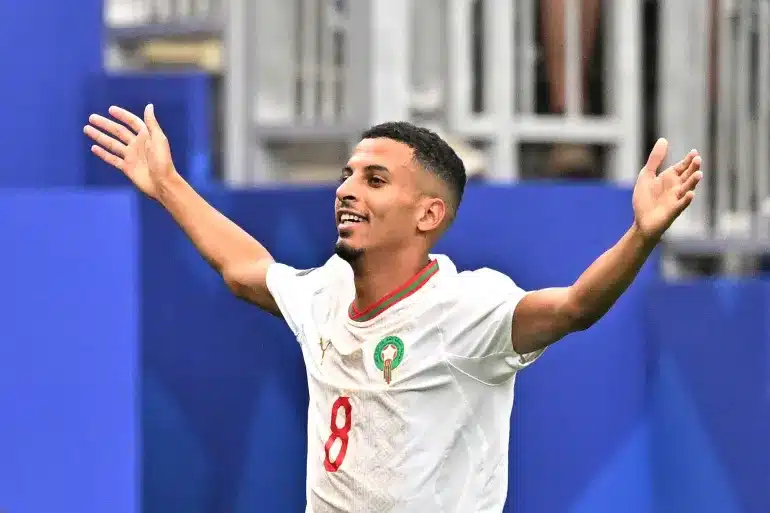
Azzedine Ounahi’s match-winning performance against Canada has reignited discussion about the role of Morocco’s domestic football development system after the midfielder inspired the Atlas Lions to the quarter-finals of the 2026 World Cup.
The Moroccan international scored twice in his side’s Round of 16 victory to earn the Man of the Match award, placing renewed attention on the country’s ability to produce elite players through its own academies alongside the growing influence of members of the Moroccan diaspora.
Ounahi’s contribution proved decisive as Morocco secured their place in the last eight, where they will face France on Thursday, July 9. His display has been widely viewed as another example of the success of Morocco’s long-term investment in youth development.
The midfielder, who came through the Mohammed VI Football Academy, opened the scoring with a powerful effort from outside the penalty area before adding his second goal by finishing a late counter-attack created by Brahim Diaz.
His outstanding display not only helped Morocco progress in the tournament but also shifted attention back to the country’s domestic talent pathway, which has increasingly produced players capable of competing on the biggest international stage.
According to Snrtnews, former Royal Moroccan Football Federation technical director and former Mohammed VI Football Academy director Nasser Larguet reflected on Ounahi’s development, recalling that he first saw the midfielder as a young player in Casablanca.
Larguet described Ounahi’s performance as a source of pride for everyone involved in his development and highlighted the demanding selection process at the academy.
He explained that around 15,000 young footballers are assessed during each recruitment cycle, with only about 60 players ultimately selected.
Beyond football ability, the academy also places emphasis on education, personal growth and professional development throughout a player’s progression.
Larguet also dismissed suggestions that there is a divide between players developed in Morocco and those who were born and trained abroad before choosing to represent the Atlas Lions.
Instead, he argued that any differences are linked to competitive experience rather than talent, stressing that players from the Moroccan diaspora are just as Moroccan as those who developed their careers inside the Kingdom.
To illustrate his point, he referred to several players who have come through Morocco’s domestic football structure, including Nayef Aguerd, Ahmed Reda Tagnaouti, Youssef En-Nesyri, Hamza Mendyl, Oussama Targhaline, Yassine Zabiri, Abdelhamid Maâli Essadek, Oussama Saadane, Soufiane Rahimi, Ayoub El Kaabi, Jamal Harkass Belammari and Yassine Bounou.
Morocco now turn their attention to a quarter-final meeting with France, with expectations surrounding Ounahi likely to increase after his influential performance against Canada.
As the Atlas Lions continue their World Cup campaign, Ounahi’s display has reinforced the growing recognition of Morocco’s domestic football system as an important contributor to the national team’s success, demonstrating that locally developed players continue to play a significant role alongside internationally developed talent.
-
 PSG beat Barcelona 4-2 in Champions League thriller Oct 21, 2026
 -
Morocco beaten by Germany but remain in contention at U17 Women’s World Cup Oct 21, 2026
-
Cloudflare Error 522: Connection to origin server timed out Oct 21, 2026
-
Champions League: Napoli edge Bodø/Glimt 4-3 in thrilling contest Oct 20, 2026




-
AFCON 2025: Fixtures, Results, Scores and Standings Jan 18, 2026
-
Match hero Taiwo Awoniyi reflects on team effort after Chelsea triumph May 5, 2026
-
Leadership and long-term vision key to rescuing Zamalek and inspiring Egyptian football – Hany Abou Rida Nov 5, 2025
-
South African giants Orlando Pirates set to lose influential forward Monnapule Saleng Mar 19, 2025




-
PSG v Barcelona: fiery attacks set up Champions League classic at Parc des Princes Oct 18, 2026
-
Champions League: PSG beat Barcelona as Liverpool complete comeback against Villarreal Oct 20, 2026
-
Real Betis v Barcelona: kick-off time, TV details and match preview Oct 16, 2026
-
Porto v PSV: predicted line-ups for Champions League league-phase clash Oct 19, 2026