Mohamed Ouahbi’s Morocco contract could run until the 2030 World Cup
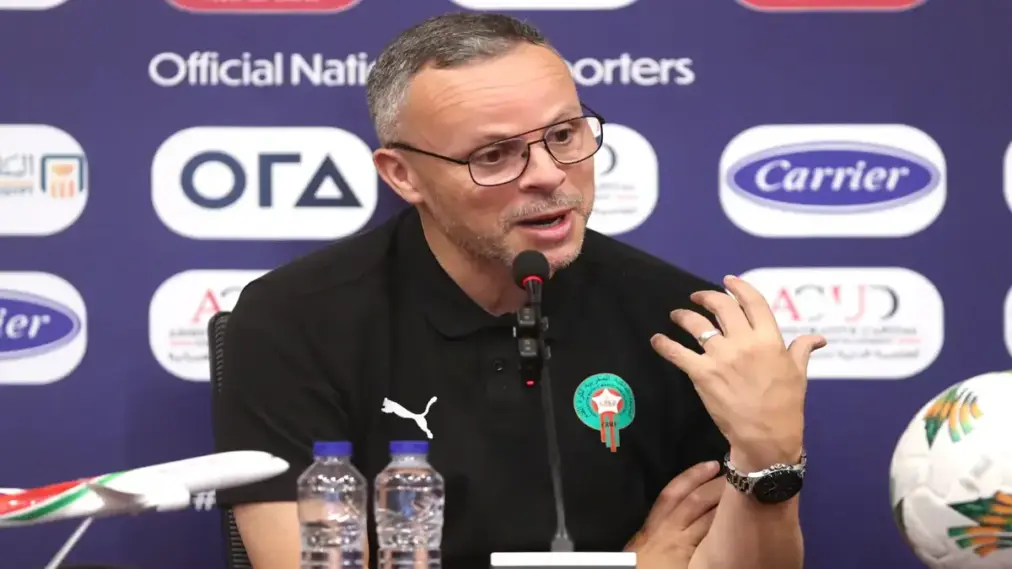
Morocco coach Mohamed Ouahbi has revealed that his agreement with the Royal Moroccan Football Federation may run until the 2030 World Cup, raising fresh questions about the federation’s long-term plans for the national team.
Speaking in an interview with beIN Sports, Ouahbi disclosed that his contract is linked to the 2030 tournament, which Morocco will co-host alongside Spain and Portugal.
The statement has drawn attention because it appears to contradict widespread reports suggesting his deal would expire after the 2026 World Cup in the United States, Canada and Mexico.
The revelation comes at a crucial stage for Moroccan football, with the Atlas Lions preparing for the upcoming World Cup, which begins in less than three weeks.
Ouahbi officially succeeded Walid Regragui on 5 March and immediately inherited the responsibility of guiding one of Africa’s most closely watched national teams into a new international cycle.
His latest comments have now intensified speculation surrounding the federation’s long-term strategy and whether the coach is truly being viewed as the man to lead Morocco into the home World Cup scheduled for 2030.
While Ouahbi suggested his agreement extends that far, uncertainty remains over whether the Royal Moroccan Football Federation intends to commit to such a lengthy project.
Much could still depend on Morocco’s performances at the 2026 World Cup.
The timing of the comments is significant because the FRMF had reportedly explored other high-profile coaching options following Regragui’s departure.
Among the names linked with the position was former Barcelona manager Xavi.
Although the Catalan coach was said to be interested in taking charge of Morocco, reports indicated he preferred to wait until after the 2026 World Cup before considering such a move.
That context has added another layer to discussions surrounding Ouahbi’s future.
His remarks also appear to indicate that he may already have been tied to the federation on a long-term basis before being promoted to lead the senior national team.
Prior to taking charge of the Atlas Lions, Ouahbi worked with Morocco’s youth setup, including the U20 side.
However, despite the possibility of a contract running until 2030, there is still no certainty that the federation will maintain the same direction throughout the next four years.
Results at major tournaments often play a decisive role in determining the future of national team coaches, and Morocco’s ambitions remain extremely high after their recent rise on the international stage.
For now, the immediate focus remains on preparations for the World Cup.
Ouahbi is expected to announce his final squad on 26 May after Morocco’s friendly match against Burundi, which will be played behind closed doors on the same day.
The Atlas Lions will then continue their preparations with another friendly against Madagascar in Rabat on 2 June before travelling to the United States for a final test against Norway in New York on 7 June.
Those matches are expected to help the coaching staff finalise tactical adjustments before the start of the tournament.
Morocco will begin their World Cup campaign during the night of 12-13 June against Brazil in New Jersey.
It will be one of the standout opening fixtures involving an African side and is already attracting major attention because of Morocco’s growing reputation on the global stage.
The Atlas Lions will then continue their Group C campaign against Scotland in Foxborough on 19-20 June before facing Haiti in Atlanta on 24-25 June.
The objective will be to secure a place in the round of 32 and build momentum in a competition where expectations surrounding Morocco continue to rise.
Ouahbi’s situation will inevitably remain under scrutiny throughout the tournament.
A strong World Cup campaign could reinforce the idea of a long-term project extending toward the 2030 tournament on home soil.
On the other hand, disappointing results could reopen debate over the federation’s future direction and revive speculation surrounding alternative candidates.
For now, the coach appears focused on preparing his players for what promises to be one of the most demanding challenges of his managerial career.
Dans une interview avec BeIn sport, le sélectionneur national révèle qu’il est lié avec la FRMF avec un contrat qui arrive à échéance après le Mondial 2030 co-organisé par le Maroc, l’Espagne et le Portugal
Ouahbi met ainsi fin aux rumeurs qui limitaient à six mois, le bail du… pic.twitter.com/hFDESWH54k
— SKWAD (@SKWAD_ma) May 18, 2026
His remarks have nevertheless added intrigue to the wider conversation about Morocco’s football future and the leadership intended to guide the national team into one of the most important periods in its history.
With the World Cup approaching rapidly and squad announcements drawing closer, attention is now shifting from speculation to performances on the pitch.
Whether Mohamed Ouahbi remains the man leading Morocco all the way to 2030 may ultimately depend on what happens over the coming weeks in North America.
-
 Fisayo Dele-Bashiru set for Lazio contract extension discussions Oct 17, 2026
 -
Issa Doumbia attracts Newcastle interest as Sporting set €80m clause Oct 17, 2026
-
Mikel Arteta backs Noni Madueke to reach his best form at Arsenal Oct 17, 2026
-
Marumo Gallants chase first win as Milford FC target top-four Betway Premiership place Oct 17, 2026



-
AFCON 2025: Fixtures, Results, Scores and Standings Jan 18, 2026
-
Match hero Taiwo Awoniyi reflects on team effort after Chelsea triumph May 5, 2026
-
Leadership and long-term vision key to rescuing Zamalek and inspiring Egyptian football – Hany Abou Rida Nov 5, 2025
-
South African giants Orlando Pirates set to lose influential forward Monnapule Saleng Mar 19, 2025




-
Real Betis v Barcelona: kick-off time, TV details and match preview Oct 16, 2026
-
Roma v Real Madrid: home side tipped to score first in Champions League clash Oct 12, 2026
-
Atletico Madrid v Manchester United: probable line-ups for Champions League clash Oct 12, 2026
-
Celta Vigo v Juventus: Probable line-ups for Europa League encounter Oct 14, 2026