Africans Born Abroad
Countries
Foreign Leagues
Latest News
Leagues
Mali
Transfers & Rumours
WAFU A
Zonal Bodies
Lassana Diarra and FIFA end bitter transfer dispute
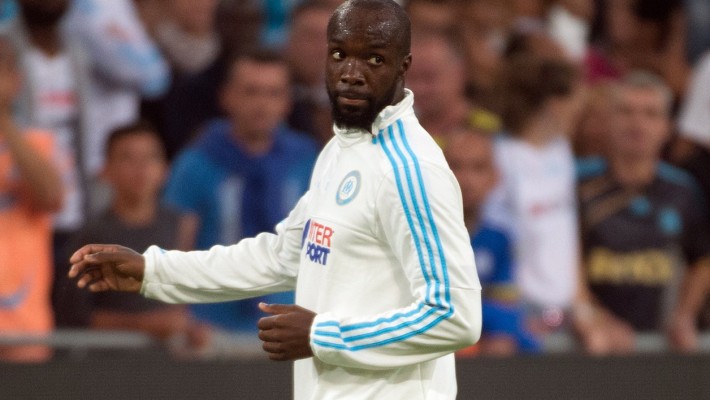
A long-running legal battle over player transfer rights has reached a decisive conclusion after FIFA confirmed a settlement with former France international Lassana Diarra, bringing an end to proceedings that had threatened to reshape football’s regulatory framework.
The global governing body of football said on Monday that it had reached a “global agreement” with Diarra, closing all legal actions between the two parties.
The dispute centred on compensation rules and contractual restrictions that govern player movement across borders.
“Following the global agreement they have reached, Mr Lassana Diarra and FIFA have settled all legal proceedings between them,” FIFA said in a statement. “FIFA has not made any admission of liability nor payment by way of compensation. FIFA will not be providing any further comment at this time.”
Diarra’s legal team has yet to issue a response to a Reuters request for comment.
Roots in a controversial Lokomotiv Moscow exit
The case stemmed from Diarra’s departure from Lokomotiv Moscow in 2014, when he walked away one year into a four-year contract.
At the time, FIFA imposed a 10 million euro fine on the midfielder, who had previously played for Chelsea, Arsenal and Real Madrid during a high-profile European career.
Diarra later escalated the matter, seeking 65 million euros ($75 million) in damages from FIFA and the Belgian FA, arguing that football’s transfer rules unfairly restricted player mobility and financial rights.
The dispute evolved into one of the most significant legal challenges ever mounted against football’s transfer system, placing FIFA’s regulatory authority under intense scrutiny.
CJEU ruling triggered regulatory upheaval
A major turning point came when the European Union’s highest court, the Court of Justice of the European Union (CJEU), ruled in October that parts of FIFA’s transfer regulations were incompatible with EU law.
The judgment effectively strengthened Diarra’s position and forced football’s governing structures to reassess long-standing rules governing compensation, contract termination, and liability for breach of contract.
Following the ruling, FIFA moved to revise its regulatory framework, introducing interim measures on how compensation is calculated and how the burden of proof is applied in disputes involving contract breaches.
The so-called “Diarra ruling” has since been described by legal experts as a potential watershed moment in the relationship between European labour law and global football governance.
Wider impact across European football
The implications of the case have extended far beyond Diarra himself. The ruling has already prompted around 20 European national player unions to support plans for a Europe-wide class action against FIFA, signalling deeper unrest within the professional game.
While the settlement closes Diarra’s individual case, the broader legal and political questions surrounding player rights remain unresolved, particularly as governing bodies attempt to balance contractual stability with labour mobility.
For FIFA, the agreement brings immediate legal relief, but it also underscores the continuing pressure on its transfer system in the wake of judicial intervention.
-
 Barcelona star Lamine Yamal’s father responds to criticism over his wealth Oct 22, 2026
 -
Hadiya Hosaena vs Fasil Ketema: Early-season test in Ethiopia’s league Oct 22, 2026
-
Sidama Bunna vs Awassa Kenema: New-season test puts early focus on attack Oct 22, 2026
-
Bahardar face Welwalo Adigrat Uni in early-season Ethiopian league test Oct 22, 2026




-
AFCON 2025: Fixtures, Results, Scores and Standings Jan 18, 2026
-
Match hero Taiwo Awoniyi reflects on team effort after Chelsea triumph May 5, 2026
-
Leadership and long-term vision key to rescuing Zamalek and inspiring Egyptian football – Hany Abou Rida Nov 5, 2025
-
South African giants Orlando Pirates set to lose influential forward Monnapule Saleng Mar 19, 2025




-
PSG v Barcelona: fiery attacks set up Champions League classic at Parc des Princes Oct 18, 2026
-
Champions League: PSG beat Barcelona as Liverpool complete comeback against Villarreal Oct 20, 2026
-
Real Betis v Barcelona: kick-off time, TV details and match preview Oct 16, 2026
-
PSG beat Barcelona 4-2 in Champions League thriller Oct 21, 2026