Hakimi, Saibari and Bounou shine as Morocco stars dominate World Cup statistics
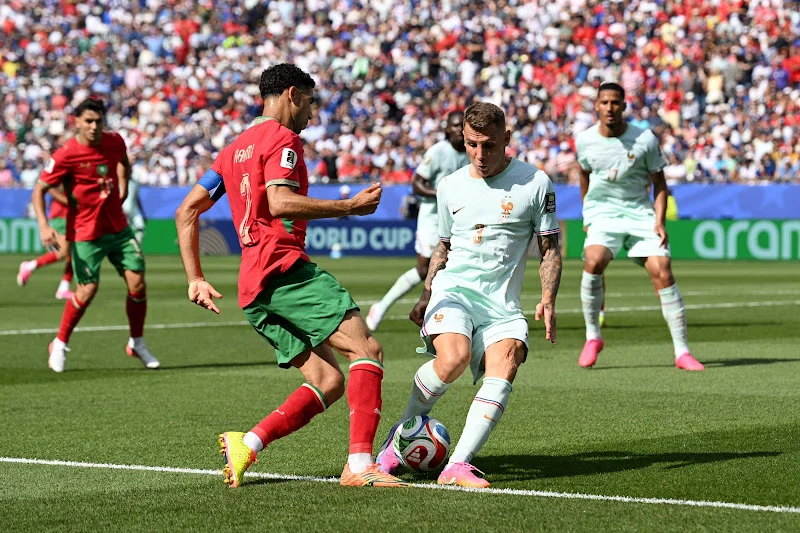
Morocco’s impressive run at the 2026 FIFA World Cup may have ended in the quarter-finals, but several Atlas Lions players finished the tournament among the team’s standout performers after producing outstanding individual displays throughout the competition.
The North Africans bowed out after a 2-0 defeat to France in the last eight, bringing to an end a memorable campaign in which they played six matches and once again demonstrated their ability to compete with the world’s elite.
According to statistics released by Opta, Morocco’s players excelled in several key performance metrics, highlighting the team’s balance in attack, midfield and defence.
Captain Achraf Hakimi was once again one of Morocco’s most influential players. The Paris Saint-Germain full-back led the team in shots on goal with 14 attempts and finished the tournament with one goal. He also recorded the highest expected goals (xG) value among the Atlas Lions at 2.11, underlining his constant attacking threat from the right flank.
Hakimi’s influence extended far beyond his attacking contributions. The defender completed 356 of his 399 passes for an impressive passing accuracy of 89.2 percent. He also delivered 118 passes into the final third and completed 10 crosses, reflecting his importance in Morocco’s attacking build-up.
Renowned for his pace and dynamism, Hakimi also topped the team in progressive runs into the opposition half, recording 41 carries while advancing the ball over a combined distance of 516 metres.
Midfielder Nael El Aynaoui also enjoyed an exceptional tournament, emerging as Morocco’s most accurate and prolific passer. He attempted 442 passes and successfully completed 408, achieving a remarkable passing accuracy of 92.3 percent.
The midfielder was equally effective without the ball, recovering possession 21 times, making seven interceptions, completing 18 tackles and producing 12 clearances. His all-round displays highlighted his growing importance in the heart of Morocco’s midfield.
In front of goal, Ismail Saibari finished as Morocco’s leading scorer at the tournament with three goals from just 10 attempts. The PSV Eindhoven midfielder consistently delivered in the final third and played a key role in Morocco’s run to the quarter-finals.
Azzedine Ounahi followed with two goals, while captain Hakimi and central defender Issa Diop each contributed one goal. Despite featuring in all six matches, Brahim Diaz was unable to get on the scoresheet.
Defensively, Bilal El Khannous proved invaluable, leading the team in ball recoveries with 36. The talented midfielder also won 26 of his 43 ground duels, posting a success rate of 60.5 percent.
Noussair Mazraoui was another standout performer at the back. The versatile defender led Morocco in clearances with 34, comfortably ahead of Issa Diop’s 24. Mazraoui also recorded the best ground-duel success rate among Morocco’s regular starters, winning 24 of his 33 contests for an impressive success rate of 72.7 percent.
In terms of ball progression, Bilal El Khannous and Nael El Aynaoui shared the lead with 80 progressive carries each, narrowly edging Azzedine Ounahi, who recorded 78, and Hakimi, who managed 76. Nevertheless, Hakimi remained Morocco’s most effective player in driving the ball into dangerous attacking areas thanks to his 41 progressive runs.
Between the posts, Yassine Bounou once again underlined why he is regarded as one of the world’s finest goalkeepers. The experienced shot-stopper played every minute of Morocco’s campaign, accumulating 570 minutes on the pitch while conceding only six goals.
Bounou also made 15 saves, posting a save percentage of 71.4 percent. According to Opta’s post-shot expected goals model, he prevented 0.4 goals more than expected based on the quality of chances he faced, further emphasizing his consistency throughout the tournament.
Although Morocco fell short of a second consecutive World Cup semi-final appearance, the performances of Hakimi, Bounou, Saibari, El Aynaoui, El Khannous and Mazraoui reflected the quality and resilience of a team that once again established itself among the world’s elite by finishing as one of the top eight nations at the 2026 FIFA World Cup.
-
 Ivorian winger Yan Diomande makes UEFA Champions League history with Real Madrid win against Leipzig Oct 22, 2026
 -
Morocco forward Amine Adli scores as Bournemouth thrash AC Milan in Europa League Oct 22, 2026
-
Tanguy Ndombele linked with Rubin Kazan move Oct 22, 2026
-
Ousmane Dembele faces three weeks out with PSG after Barcelona injury Oct 22, 2026


-
AFCON 2025: Fixtures, Results, Scores and Standings Jan 18, 2026
-
Match hero Taiwo Awoniyi reflects on team effort after Chelsea triumph May 5, 2026
-
Leadership and long-term vision key to rescuing Zamalek and inspiring Egyptian football – Hany Abou Rida Nov 5, 2025
-
South African giants Orlando Pirates set to lose influential forward Monnapule Saleng Mar 19, 2025




-
PSG v Barcelona: fiery attacks set up Champions League classic at Parc des Princes Oct 18, 2026
-
Champions League: PSG beat Barcelona as Liverpool complete comeback against Villarreal Oct 20, 2026
-
Real Betis v Barcelona: kick-off time, TV details and match preview Oct 16, 2026
-
PSG beat Barcelona 4-2 in Champions League thriller Oct 21, 2026