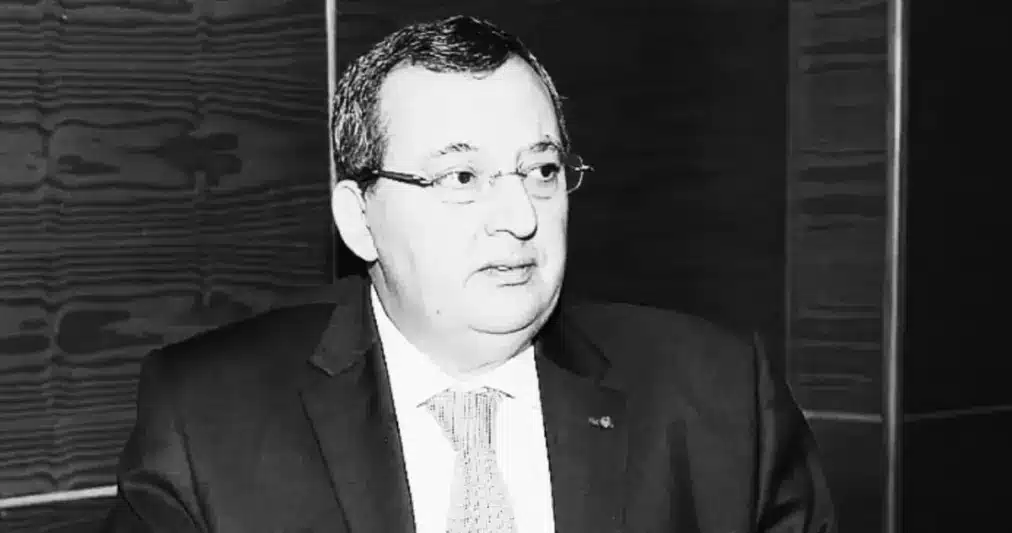
FEATURE: Ali Fassi Fihri – One of the architects of modern Moroccan football
The evolution of Moroccan football is often celebrated through unforgettable victories, legendary players, and the unwavering passion of supporters.
However, behind every successful football era stands a group of administrators whose decisions shape the future long before success arrives on the pitch. Among those influential figures was Ali Fassi Fihri.
The former president of the Royal Moroccan Football Federation passed away at the age of 71 after a prolonged illness, leaving behind a legacy deeply connected to the modernization and professionalization of football in Morocco.
Known for his calm personality and methodical leadership style, Ali Fassi Fihri was never a figure who sought attention. Nevertheless, his impact on Moroccan football would become impossible to ignore over time.
From Engineering to National Service
Before entering football administration, Fassi Fihri built a distinguished career in engineering and public service. Armed with a doctorate in energetics from the University of Paris VII-Jussieu, he initially worked as a lecturer at the School of Mines in Rabat before rising through some of Morocco’s most important state institutions.
He served as head of the National Office of Electricity and later the National Office of Drinking Water before playing a key role in the creation of the National Office of Electricity and Drinking Water. His work contributed to major national development projects involving rural electrification, renewable energy, access to water, and territorial development across Morocco.
The same structured and strategic mindset later influenced his football leadership philosophy.
The Transformation of FUS Rabat
Long before taking charge of the Moroccan Football Federation in 2009, Ali Fassi Fihri had already established himself as a central figure in the transformation of Fath Union Sport in Rabat.
Working under the leadership of Mohamed Mounir El Majidi, he helped introduce a modern management culture at FUS that focused on governance, financial discipline, long-term planning, and institutional stability rather than short-term improvisation. The club gradually became a model for professional sports management in Morocco.
Years later, FUS Rabat’s success, including the Botola title won in 2016, was widely viewed as proof that the reforms introduced during that period had been ahead of their time.
Guiding Moroccan Football Through Transition
When Ali Fassi Fihri succeeded General Housni Benslimane as president of the Royal Moroccan Football Federation in 2009, Moroccan football was facing significant challenges. The national team struggled with inconsistency, governance systems remained fragile, and calls for reform continued to grow louder.
His appointment also carried symbolic importance, as he became the federation’s first truly non-military leader after decades dominated by generals and colonels. Many viewed his arrival as a turning point for Moroccan football governance.
Using the analytical approach that had defined his public-service career, Fassi Fihri focused on implementing structural reforms aimed at professionalizing Moroccan football. His tenure coincided with the application of the updated sports law 30-09, which accelerated the transition toward a professional league system.
Despite resistance from sections of the football community that were reluctant to embrace change, he continued pushing reforms designed to strengthen governance, create sustainable structures, and establish a more modern legal framework for the game.
The Launch of Botola Pro
One of the defining moments of his presidency came with the launch of the Botola Pro during the 2011-2012 season. The reform officially introduced professionalism into Morocco’s domestic championship and sought to align the country’s football system with international standards.
At a time when many clubs lacked strong administrative and financial foundations, the federation encouraged the adoption of professional contracts, improved organization, and stricter governance standards. Although the transition proved difficult for several clubs, the creation of the Botola Pro became a historic milestone in Moroccan football.
Moroccan Clubs Shine on the Continental Stage
Moroccan clubs also enjoyed notable continental success during his leadership. FUS Rabat lifted the CAF Confederation Cup in 2010, while Maghreb de Fès won the same competition in 2011 before securing the CAF Super Cup the following year. Raja Club Athletic also reached the semi-finals of the CAF Champions League in 2011, underlining Morocco’s growing competitiveness on the continental stage.
Although the Atlas Lions did not enjoy immediate major international success during his presidency, many observers believe his administration laid the groundwork for the achievements that followed in later years.
A Lasting Legacy Beyond Results
His tenure represented a crucial transition period during which Moroccan football moved away from improvised management toward a structure built on governance, infrastructure, training, and long-term institutional planning.
Many within Moroccan football acknowledge that while current federation president Fouzi Lekjaa accelerated the country’s football progress, Ali Fassi Fihri helped establish the foundations that made such growth possible.
Morocco also qualified for the men’s football tournament at the 2012 Summer Olympics during his mandate, one of the major sporting achievements of that era.
Those who worked closely with Ali Fassi Fihri frequently described him as a patient and reflective leader who preferred dialogue and careful planning over confrontation and publicity. His leadership style reflected a generation of Moroccan public servants who viewed institutions as long-term national projects rather than personal platforms.
As Moroccan football continues to gain continental and global recognition, Ali Fassi Fihri’s contribution appears increasingly significant with the passage of time. While others may celebrate victories on the pitch today, his legacy remains deeply embedded in the structures, governance, and professional standards that helped guide Moroccan football into a new era.
-
 Napoli name Kevin De Bruyne and Frank Anguissa in starting XI against Bodø/Glimt Oct 20, 2026
 -
S. Guirassy double earns Borussia Dortmund narrow Champions League win at Sabah Oct 20, 2026
-
Roma make six changes as Suleiman Camara starts for Slovan Bratislava Oct 20, 2026
-
Liverpool name starting XI for UEFA Champions League clash with Villarreal Oct 20, 2026



-
AFCON 2025: Fixtures, Results, Scores and Standings Jan 18, 2026
-
Match hero Taiwo Awoniyi reflects on team effort after Chelsea triumph May 5, 2026
-
Leadership and long-term vision key to rescuing Zamalek and inspiring Egyptian football – Hany Abou Rida Nov 5, 2025
-
South African giants Orlando Pirates set to lose influential forward Monnapule Saleng Mar 19, 2025




-
PSG v Barcelona: fiery attacks set up Champions League classic at Parc des Princes Oct 18, 2026
-
Real Betis v Barcelona: kick-off time, TV details and match preview Oct 16, 2026
-
Porto v PSV: predicted line-ups for Champions League league-phase clash Oct 19, 2026
-
Morocco face Germany with top spot in Women’s Under-17 World Cup Group A at stake Oct 20, 2026