World Cup 2026: Messi meets miracle as Argentina face Cape Verde in football’s ultimate knockout mismatch
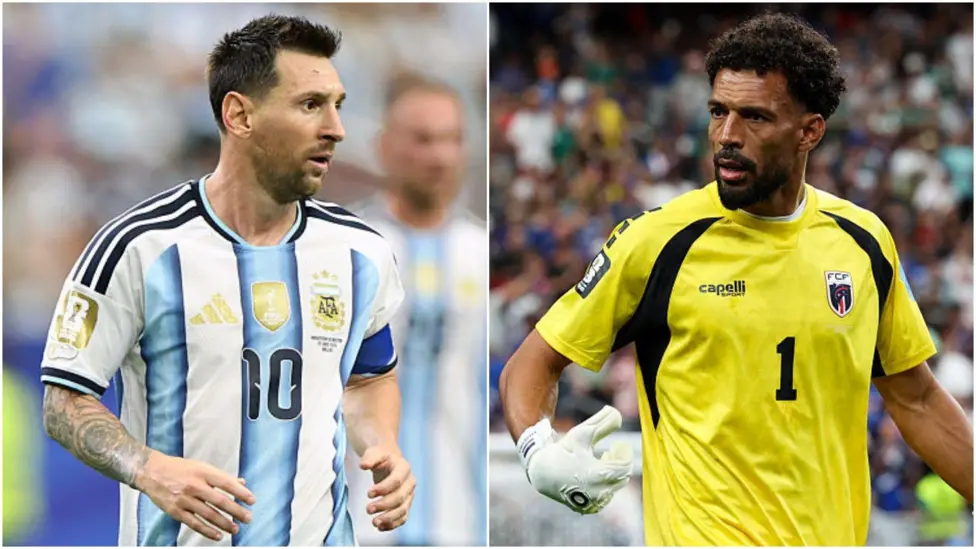
On Friday night in Miami, football’s global hierarchy will be stretched to its limits. On one side stands Argentina, reigning world champions, a team defined by legacy, silverware and superstardom. On the other is Cape Verde, debutants at this level and already the tournament’s most improbable success story.
The headline attraction is obvious. Lionel Messi, still the sport’s gravitational force, against 40-year-old goalkeeper Vozinha, a man who was virtually unknown to global audiences only weeks ago. The scale of contrast is so extreme it borders on fiction.
Yet this is no exhibition. It is a World Cup last-32 tie, and Cape Verde arrive not as passengers, but as survivors of one of the most remarkable group-stage campaigns in tournament history.
The small nation rewriting expectations
Cape Verde’s journey has defied every pre-tournament prediction. Few gave them a chance against European champions Spain, yet they held them to a 0-0 draw in a performance that stunned observers. That result alone would have qualified as a headline moment.
Instead, it became just the beginning.
Draws followed against Uruguay and Saudi Arabia, sealing progression from Group H in second place and confirming a place in the knockout rounds on debut. Each result added another layer to a story that now feels increasingly surreal.
It is a rise built on organisation, discipline and belief rather than individual stardom. For a nation that first entered World Cup qualifying in the early 2000s, this is an arrival on football’s grandest stage that has come far ahead of schedule.
A football empire meets a football dream
The gulf between the two sides is stark. Argentina’s history stretches across generations, beginning with a World Cup final appearance in 1930 and extending through triumphs in 1978, 1986 and most recently Qatar 2022.
Their trophy cabinet is matched by continental dominance, with a record 16 Copa America titles reinforcing their status as one of the sport’s most successful nations.
By contrast, Cape Verde only formed their football federation in the 1980s and entered FIFA competition decades later. Their rise has been gradual, built on diaspora recruitment and steady structural development rather than tradition or infrastructure.
Even rankings reflect the divide. Argentina have rarely left the global elite in recent years, while Cape Verde sit outside football’s top tier, operating in a far more modest competitive bracket.
Numbers that underline the imbalance
The financial gap between the two squads is perhaps even more striking than the historical one.
Argentina’s team is valued at over €800m, featuring players from Europe’s top leagues and global superclubs. Cape Verde’s entire squad is worth a fraction of that total, with estimates placing them below €60m.
Within individual comparisons, the imbalance becomes even sharper. Several Argentina players alone are valued higher than Cape Verde’s entire starting XI combined.
Argentina’s squad is filled with elite experience, including players from Champions League-winning environments, domestic title campaigns and international triumphs. Cape Verde’s roster, by contrast, is built largely from lower-profile European leagues, with many players operating outside football’s most visible stages.
The diaspora engine behind Cape Verde’s rise
Cape Verde’s transformation owes much to its global diaspora. Players born in Portugal, France and the Netherlands have formed the backbone of the national team, supplementing a small domestic pool.
Of the current squad, none are based in the domestic semi-professional league. Instead, the team is spread across Europe, with only a handful competing in major top-flight competitions.
This model has produced both opportunity and unpredictability. It has also delivered moments of brilliance, including Kevin Pina’s historic goal against Uruguay, the first ever scored by Cape Verde at a World Cup.
The system reflects necessity as much as strategy, but it has undeniably elevated the nation into a competitive force capable of challenging established sides.
History, geography and perspective
Beyond football, the contrast between the nations is extraordinary.
Cape Verde is a cluster of volcanic islands off the west coast of Africa, with a population smaller than many global cities. It became independent from Portugal in 1975 and remains one of the smallest nations ever to reach this stage of a World Cup.
Argentina, by comparison, is one of the largest countries on the planet, with vast territory, deep football infrastructure and a global sporting identity shaped over a century.
The meeting of these two worlds in Miami is therefore more than a match. It is a statistical, cultural and sporting anomaly.
A match without fear, but with limits
Cape Verde’s run has already exceeded expectation, and belief within the camp remains strong. Yet Argentina represent a different level entirely, one shaped by experience, pressure and expectation.
For Messi and his teammates, this is a stage they know well. For Cape Verde, it is uncharted territory.
Still, football’s beauty lies in its unpredictability. Cape Verde have already rewritten one narrative. On Friday night, they will attempt to stretch it further against the game’s most iconic figure.
-
 PSG beat Barcelona 4-2 in Champions League thriller Oct 21, 2026
 -
Morocco beaten by Germany but remain in contention at U17 Women’s World Cup Oct 21, 2026
-
Cloudflare Error 522: Connection to origin server timed out Oct 21, 2026
-
Champions League: Napoli edge Bodø/Glimt 4-3 in thrilling contest Oct 20, 2026




-
AFCON 2025: Fixtures, Results, Scores and Standings Jan 18, 2026
-
Match hero Taiwo Awoniyi reflects on team effort after Chelsea triumph May 5, 2026
-
Leadership and long-term vision key to rescuing Zamalek and inspiring Egyptian football – Hany Abou Rida Nov 5, 2025
-
South African giants Orlando Pirates set to lose influential forward Monnapule Saleng Mar 19, 2025




-
PSG v Barcelona: fiery attacks set up Champions League classic at Parc des Princes Oct 18, 2026
-
Champions League: PSG beat Barcelona as Liverpool complete comeback against Villarreal Oct 20, 2026
-
Real Betis v Barcelona: kick-off time, TV details and match preview Oct 16, 2026
-
Porto v PSV: predicted line-ups for Champions League league-phase clash Oct 19, 2026