World Cup 2026: Group stage smashes records as expanded tournament delivers historic milestones
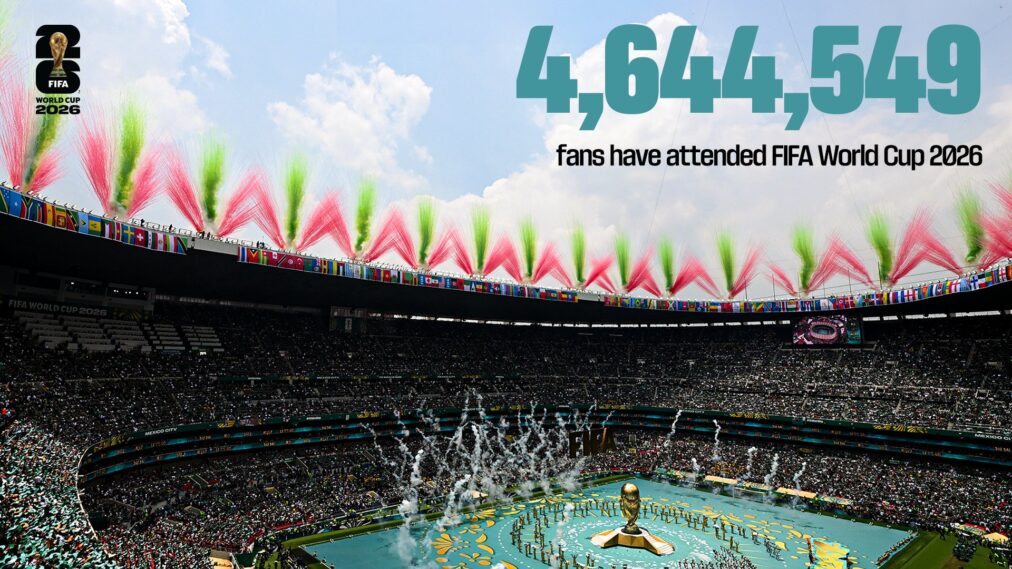
The group stage of the FIFA World Cup 2026 has concluded in spectacular fashion, with the first-ever 48-team edition rewriting the history books both on and off the pitch.
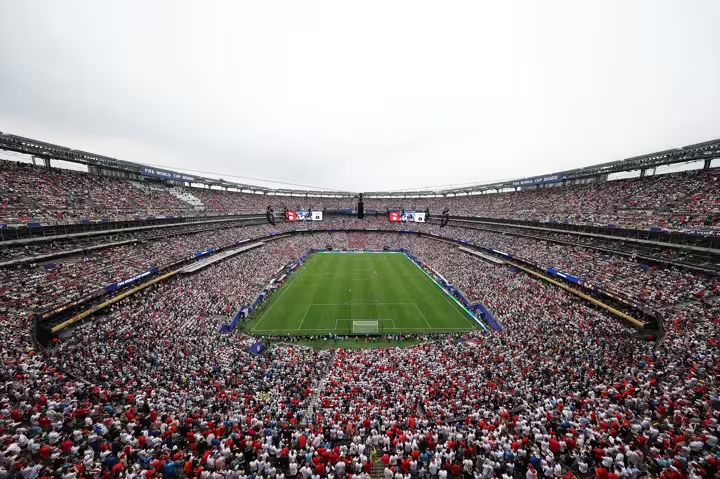
Across 72 matches played in just 17 days, the tournament has attracted a record-breaking 4,644,549 spectators, eclipsing the previous World Cup attendance record of 3.5 million set during the 1994 edition in the United States.
Stadiums have operated at an impressive 99.7 per cent capacity, averaging 64,508 fans per match across the 16 host cities in Canada, Mexico and the United States.
The expanded tournament has also produced unprecedented sporting achievements. A total of 215 goals were scored during the group stage – an average of three per game – comfortably surpassing the 172 goals scored throughout the entire 2022 FIFA World Cup in Qatar.
Africa enjoys historic breakthrough
African football emerged as one of the biggest winners of the expanded competition, with a record nine CAF representatives reaching the Round of 32.
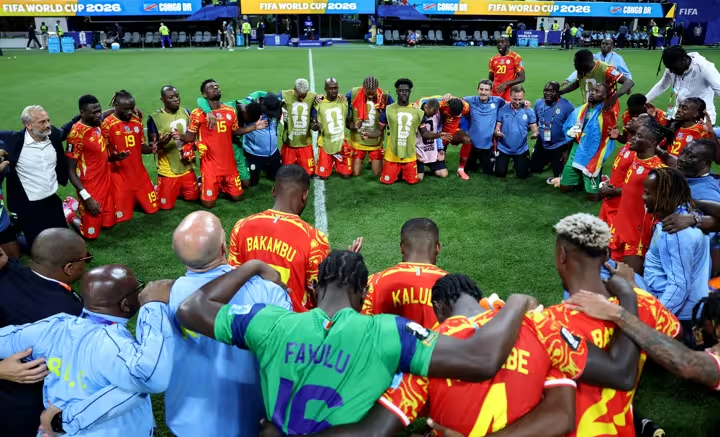
The qualification of Bosnia and Herzegovina, Cabo Verde, Canada, DR Congo, Côte d’Ivoire, Egypt and South Africa marked the first time each nation has progressed to the knockout stage of a FIFA World Cup.
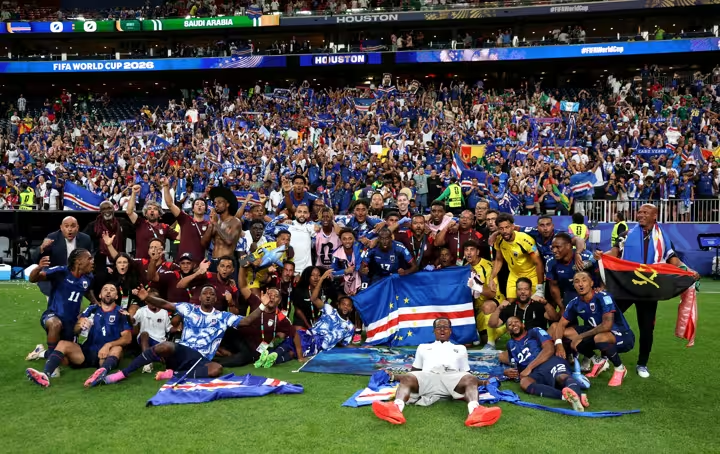
Tournament debutants Cabo Verde became one of the stories of the competition after remaining unbeaten in the group stage. The island nation of just over 500,000 people also celebrated its first-ever FIFA World Cup goal, scored by Kevin Pina, and will now face reigning world champions Argentina in Miami.
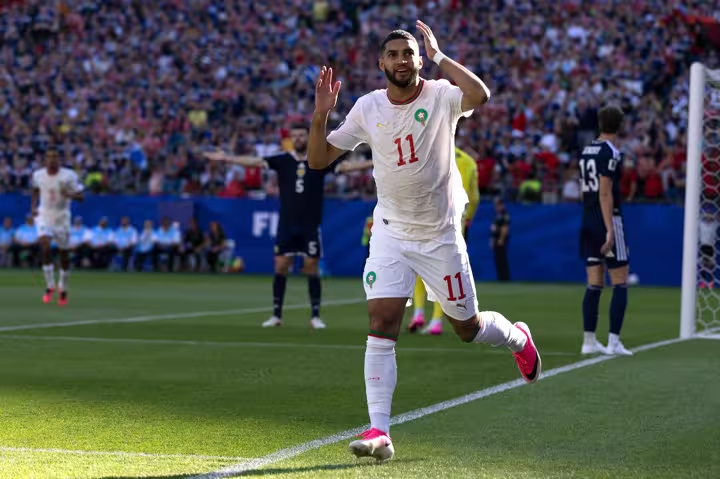
Senegal also etched their name into the history books by becoming the first African nation to score five goals in a FIFA World Cup match, while Morocco’s Ismael Saibari became the first African player to score in three consecutive World Cup matches.
South Africa’s Belgian coach Hugo Broos became the oldest manager ever to win a FIFA World Cup match at the age of 74 years and 75 days, breaking the record previously set by Carlos Queiroz during Ghana’s victory over Panama earlier in the tournament.

Football legends continue rewriting history
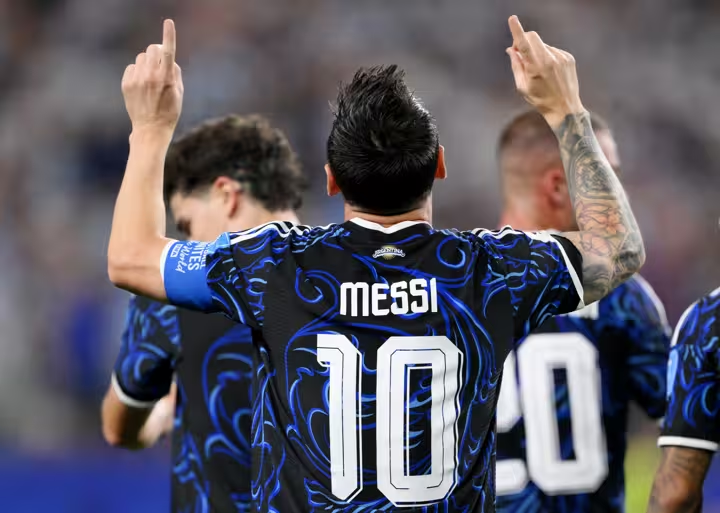
Argentina captain Lionel Messi continued to enhance his legendary status by becoming the first player to score in seven consecutive FIFA World Cup matches. The 38-year-old also became the competition’s all-time leading scorer with 19 goals and the oldest player ever to score a World Cup hat-trick.
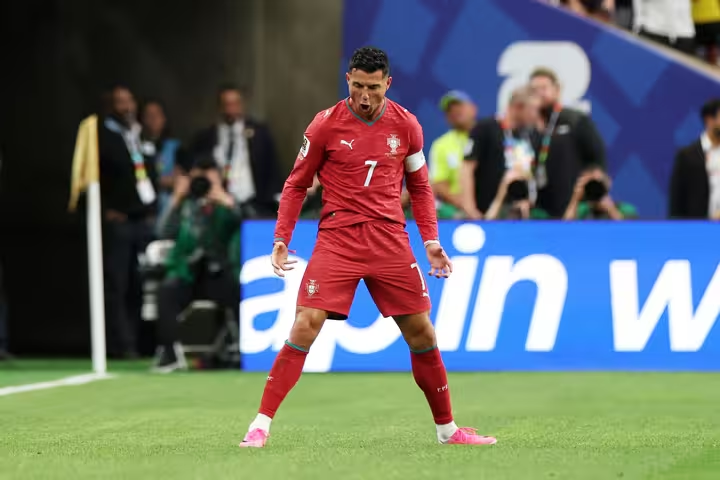
Portugal captain Cristiano Ronaldo also achieved a significant milestone, overtaking Eusébio as Portugal’s all-time leading World Cup scorer with ten goals.
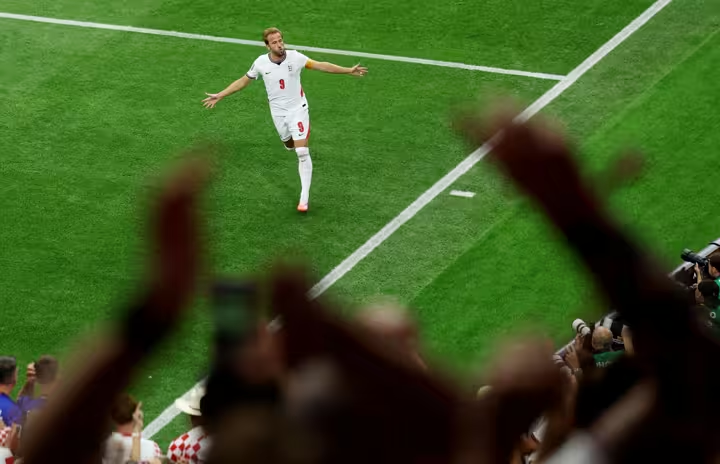
England striker Harry Kane surpassed Gary Lineker to become England’s all-time leading FIFA World Cup goalscorer with 11 goals.
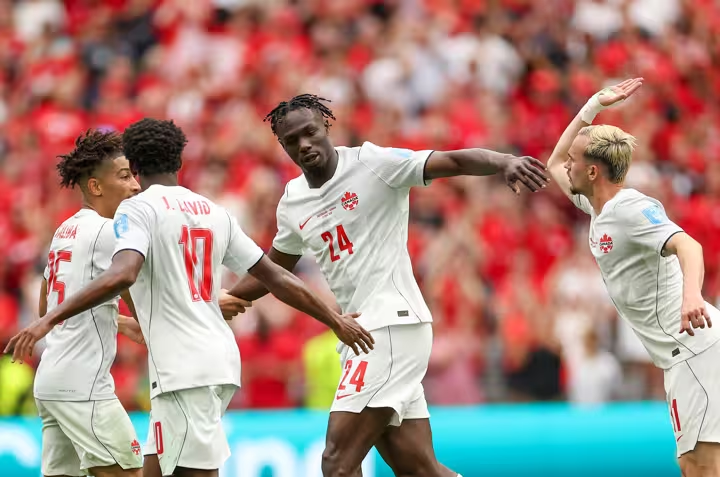
Elsewhere, Canada’s emphatic 6-0 victory over Qatar became the first occasion a CONCACAF nation had scored more than four goals in a World Cup match, while the United States’ 4-1 win over Paraguay marked the first time the Americans had scored four goals in a World Cup fixture.
Japan’s convincing 4-0 triumph over Tunisia was also historic as it became the 1,000th match in FIFA World Cup history and the biggest-ever victory recorded by an AFC nation at the tournament.
Fans embrace football’s biggest celebration
Supporters from 210 countries and territories attended matches during the group stage, highlighting the tournament’s truly global appeal.
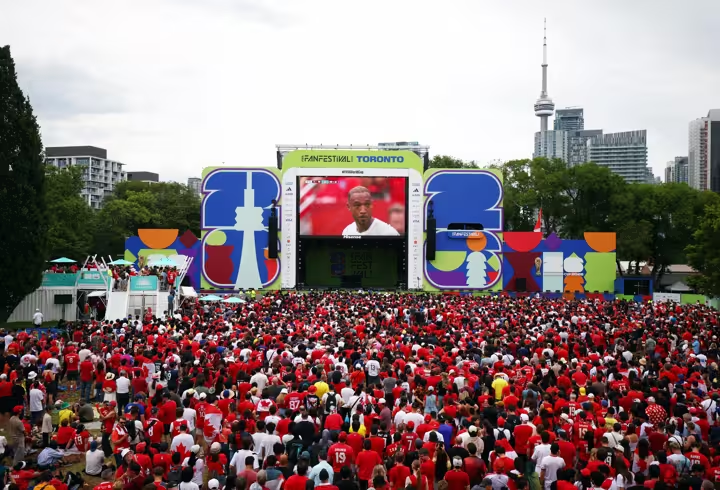
Beyond the stadiums, more than 5.5 million supporters gathered at FIFA Fan Festivals across the three host nations, creating the largest fan engagement programme in World Cup history.
The appetite for the tournament has also been reflected digitally. FIFA reported 130 million unique visitors to FIFA.com during the group stage – a 26 per cent increase compared to the same stage of Qatar 2022 – while the FIFA World Cup mobile app recorded a remarkable 130 per cent growth in users.
Social media engagement has exploded, generating 17 billion impressions, 11 billion video views and one billion engagements. FIFA also gained 39 million new followers across its digital platforms during the opening phase of the competition.
Record television audiences
Television audiences have also reached unprecedented levels.
More than 50 million viewers watched the opening matches involving the three host nations across North America.
In the United States, Mexico’s opening fixture against South Africa attracted 7.2 million viewers on Fox, becoming the most-watched English-language FIFA Men’s World Cup opening match in American television history.
Brazil’s clash against Morocco also set a new benchmark as the most-watched non-US Men’s National Team World Cup group-stage broadcast in English-language US television history.
Meanwhile, Canada’s historic first-ever World Cup victory attracted an average audience of 5.3 million viewers, making it the country’s most-watched group-stage national team match.
Tournament operations on an unprecedented scale
Behind the scenes, FIFA activated 645 official tournament sites, including stadiums, airports, hotels and training facilities.
More than 40,000 volunteers from 162 countries supported tournament operations, while over 20,000 security personnel worked more than 265,000 shifts to ensure the smooth delivery of the competition.
A workforce of 4,738 people representing 134 nationalities has helped manage over 5,000 official tournament transport movements during the group stage.
World Cup fever extends beyond football
The FIFA World Cup’s cultural impact has also been significant.
Shakira and Burna Boy’s official tournament song, Dai Dai, has become one of the world’s biggest hits, climbing to second on Spotify’s Global Top 50 chart, while the Official FIFA World Cup 2026 Album has become the first World Cup soundtrack to enter the Billboard Top 200 Albums chart.
Inside the stadiums, supporters purchased more than 2.8 million beers, 300,000 hot dogs and nearly one million bottles of water during the opening phase of the tournament.
Knockout stage promises more history
With 32 teams still in contention and numerous records already broken, FIFA believes the first-ever 48-team World Cup has established a new benchmark for the sport’s biggest competition.
As the tournament enters the knockout rounds, the expanded format has already demonstrated its ability to deliver more goals, greater global participation, historic firsts and unprecedented fan engagement, setting the stage for what promises to be an unforgettable conclusion to the FIFA World Cup 2026.
-
 Ghana appoint Kim Lars Björkegren to lead Black Stars interim technical team Oct 17, 2026
 -
Ghana’s Black Starlets secure top spot after powerful unbeaten run at WAFU B U17 Championship Oct 17, 2026
-
Elyaz Zidane opens up on pressure of living in father Zinédine’s shadow Oct 17, 2026
-
Algeria reach historic Futsal AFCON semi-finals as Morocco maintain perfect record Oct 17, 2026




-
AFCON 2025: Fixtures, Results, Scores and Standings Jan 18, 2026
-
Match hero Taiwo Awoniyi reflects on team effort after Chelsea triumph May 5, 2026
-
Leadership and long-term vision key to rescuing Zamalek and inspiring Egyptian football – Hany Abou Rida Nov 5, 2025
-
South African giants Orlando Pirates set to lose influential forward Monnapule Saleng Mar 19, 2025




-
Real Betis v Barcelona: kick-off time, TV details and match preview Oct 16, 2026
-
Roma v Real Madrid: home side tipped to score first in Champions League clash Oct 12, 2026
-
Atletico Madrid v Manchester United: probable line-ups for Champions League clash Oct 12, 2026
-
Celta Vigo v Juventus: Probable line-ups for Europa League encounter Oct 14, 2026