Senegal’s AFCON final withdrawal puts CAF disciplinary rules under the spotlight
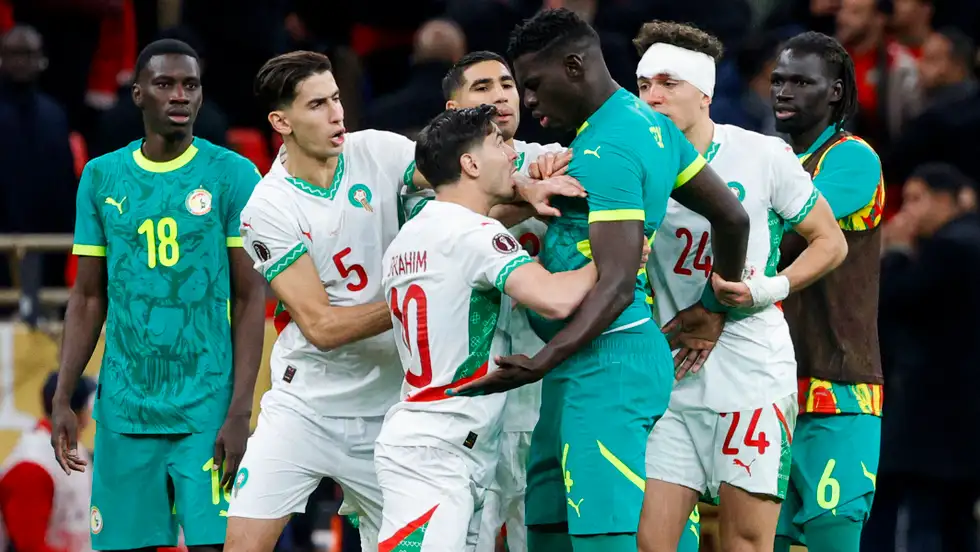
The controversy that overshadowed the Africa Cup of Nations Morocco 2025 final between Morocco and Senegal has reignited debate over the Confederation of African Football’s commitment to enforcing its disciplinary regulations.
What many observers have described as serious violations during the match have raised concerns about sportsmanship and the integrity of Africa’s premier football competition.
Analysts and football stakeholders have argued that Senegal’s decision to withdraw from the final and refuse to continue the match before the final whistle places a clear obligation on CAF’s Disciplinary Committee to act decisively, in line with the regulations governing the tournament.
The Africa Cup of Nations regulations are explicit on such matters. Article 82 states that “if a team withdraws from the competition for any reason, or does not show up for the match, or refuses to play, or leaves the field before the end of the regular time of the match without the permission of the referee, it shall be considered the loser and shall be permanently excluded from the ongoing competition. The same applies to teams that have been previously excluded by a decision of the Confederation of African Football.”
Article 83 further provides that “Any team that does not appear on the field in its playing uniform at the time specified for the kick-off, or after a maximum of fifteen (15) minutes, will be considered to have forfeited. The referee is obligated to record the team’s absence and include it in his report. The case will be referred to the organizing committee, which will make the final decision.”
In addition, Article 84 clarifies that “the team that violates the provisions of Articles 82 and 83 will be permanently excluded from the competition. It will be considered to have lost the match by a score of 3-0. If the opposing team was leading by a larger score at the time the match was stopped, that result will stand. The organising committee may take other measures.”
Against this backdrop, media professional and sports analyst Adel Rahmouni described the final as a high-quality contest in technical and tactical terms, but one that “lacked sportsmanship, especially on the part of the technical staff of the Senegalese national team.”
Speaking to Hespress, Rahmouni recalled that Senegal coach Pape Thiaw had displayed what he termed provocative behaviour even before the match, notably during the pre-match press conference where he compared the organization of the tournament in Morocco to that of other events. According to Rahmouni, this reflected an underlying tension that later manifested during the game itself.
He further noted that Senegal’s decision to withdraw came despite what he described as a clear penalty decision, awarded after consultation with VAR technology and confirmed, in his view, by several foreign media figures observing the match from the press tribune.
Rahmouni contrasted this with the conduct of the Moroccan camp, highlighting the efforts of the Moroccan players and technical staff, led by Walid Regragui, to persuade the Senegalese team to return to the pitch. He described the gesture as “noble,” adding that the situation later deteriorated when some Senegalese supporters stormed the field, leading to injuries among security personnel and photographers.
Sports expert and analyst Essam El Idrissi also weighed in on the matter, stressing that the legal position is “clear and unambiguous.” He insisted that the withdrawal of any team from a final, from a regulatory standpoint, requires the immediate termination of the match and the opposing team being declared the winner.
El Idrissi told Hespress that the referee was obliged to apply the law as soon as the Senegalese players left the field. He added that the sanctions outlined in the regulations could extend beyond the match itself, potentially including bans from several continental competitions as well as financial penalties.
According to El Idrissi, enforcing these sanctions should not be viewed solely as punitive action, but as an essential measure to safeguard the credibility of African football competitions. He emphasised that this is particularly important given the widespread praise for the organisational standards displayed by Morocco during this edition of the Africa Cup of Nations, which many have described as meeting global benchmarks.
-
 FIFA invests USD 4.3m in Côte d’Ivoire football development through Bingerville technical centre upgrade Oct 20, 2026
 -
Tottenham scouts watch Younes Ebnoutalib score Eintracht Frankfurt winner Oct 20, 2026
-
Köln consider January move for German-Nigerian attacker Lukas Nmecha Oct 20, 2026
-
Manchester United join Liverpool in race for Borussia Dortmund midfielder Felix Nmecha Oct 20, 2026


-
AFCON 2025: Fixtures, Results, Scores and Standings Jan 18, 2026
-
Match hero Taiwo Awoniyi reflects on team effort after Chelsea triumph May 5, 2026
-
Leadership and long-term vision key to rescuing Zamalek and inspiring Egyptian football – Hany Abou Rida Nov 5, 2025
-
South African giants Orlando Pirates set to lose influential forward Monnapule Saleng Mar 19, 2025




-
PSG v Barcelona: fiery attacks set up Champions League classic at Parc des Princes Oct 18, 2026
-
Real Betis v Barcelona: kick-off time, TV details and match preview Oct 16, 2026
-
Morocco to face New Zealand as FIFA U-17 Women’s World Cup kicks off in Rabat Oct 16, 2026
-
Klinton Cod leads African journalists, Pundits and Content creators joining José Mourinho on Football.com TV Oct 19, 2026