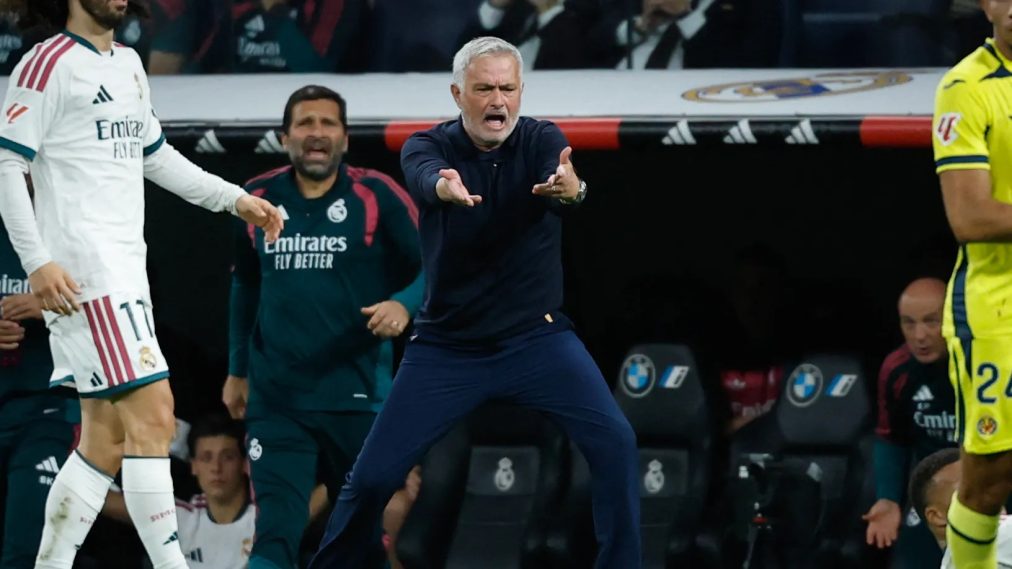
Real Madrid beat Villarreal 1-0 on Saturday to claim three points in La Liga’s eighth round, but the result did little to ease doubts about Jose Mourinho’s work. After three weeks of preparation during the international break, the team produced another disjointed display and again appeared to rely on individual moments rather than a clear collective plan.
Real Madrid began slowly, with little evidence of a strategy designed to control the tempo. The transition from defence to attack was laboured, the midfield struggled to dictate play and the team found it difficult to move the ball into dangerous areas. Villarreal looked better organised and were able to contain their hosts for much of the opening half.
The problem was not simply how much possession Real Madrid had, but what they did with it. Their attacks often bypassed the passing phases of the build-up, depending instead on individual runs to carry the ball forward. That lack of connection between the lines also restricted Arda Guler, who was unable to find the space needed to influence the game or set its rhythm.
The first-half statistics reflected those difficulties. Real Madrid managed one shot on target and created one clear-cut chance. Much of their threat remained dependent on what Kylian Mbappe could produce alone, although he did not look at his best and his output appeared to have been affected by the international break and injury.
Villarreal did not need to dominate possession to trouble the home side. Their defensive organisation kept Real Madrid’s attacks under control, while their forward movement, particularly down the left, created openings into the final third. Thibaut Courtois, however, was consistently ready to deal with the danger.
Second-half improvement, but no lasting solution
Real Madrid improved after the interval, with the substitutions adding greater energy to the attack. Diomande became more influential on the flank, Guler moved more effectively into central areas and Vinicius gave the team an extra outlet for dribbling and breaking through Villarreal’s lines.
The opening goal arrived in the 62nd minute, illustrating the difference an individual initiative can make when space becomes available. Federico Valverde advanced on the right before finding Diomande, who controlled the ball well and placed his shot into the bottom corner. The goal was initially ruled out for offside, but the video assistant referee confirmed it should stand.
It reflected greater movement and attacking intent, but not necessarily the discovery of a reliable team solution. Real Madrid had needed a direct move and space behind the defence to end their stagnation after struggling to create clear chances through sustained, coordinated attacks.
Vinicius offered a clear attacking improvement, yet his sending-off placed Real Madrid under pressure just as the balance was beginning to favour the hosts. The visitors played for about 20 minutes with 10 men and had to sacrifice much of their attacking ambition to protect their lead.
Their defensive resilience until the final whistle was a positive, but it could not disguise the limitations of the performance before the goal. Nor can the match be explained solely by Vinicius’ action or the refereeing decisions. Those factors influenced the contest, but they do not explain why Mourinho’s Real Madrid continue to find victories mainly through isolated moments.
The international break was supposed to give Mourinho time to address the weaknesses seen in earlier matches. Instead, the game against Villarreal revealed no clear change in the team’s build-up, midfield role or ability to impose its tempo.
If Mourinho wants his players to disrupt an opponent’s possession, he must also provide clear mechanisms for constructing attacks when the ball is recovered. So far, Real Madrid appear more dependent on individual names than on a settled collective structure.
They have the three points and showed character after the dismissal, but the same pattern returned: slow transitions, a midfield unable to dominate, an attack waiting for individual inspiration and a late retreat to preserve the score. Complaints about refereeing, even when justified, cannot conceal the central question: can Mourinho change this Real Madrid side and its “zero” reality, or will it remain trapped in tactical impotence and disjointed, dull performances?
-
 Yan Diomande dedicates first Real Madrid goal to late sister after emotional Villarreal winner Oct 11, 2026
 -
Sion Oppong scores first Toulouse goal to earn draw at AS Monaco Oct 11, 2026
-
Edan Diop shines for AS Monaco with goal and assist in Toulouse draw Oct 11, 2026
-
Mamady Bangre scores as Cedric Badolo helps Sumqayit FK beat Qəbələ FK Oct 10, 2026




-
AFCON 2025: Fixtures, Results, Scores and Standings Jan 18, 2026
-
Match hero Taiwo Awoniyi reflects on team effort after Chelsea triumph May 5, 2026
-
Leadership and long-term vision key to rescuing Zamalek and inspiring Egyptian football – Hany Abou Rida Nov 5, 2025
-
South African giants Orlando Pirates set to lose influential forward Monnapule Saleng Mar 19, 2025




-
Croatia face Spain with Nations League hopes on the line in Split Oct 5, 2026
-
Manchester United host winless Tottenham in Premier League clash Oct 7, 2026
-
Morocco coach Mohamed Ouahbi refuses to single out player after Mali draw Oct 4, 2026
-
Italy v Turkey: Mancini’s side set for Nations League clash with key absences Oct 4, 2026