Real Madrid exploit Barcelona’s high line and defensive errors to win tactical Clasico
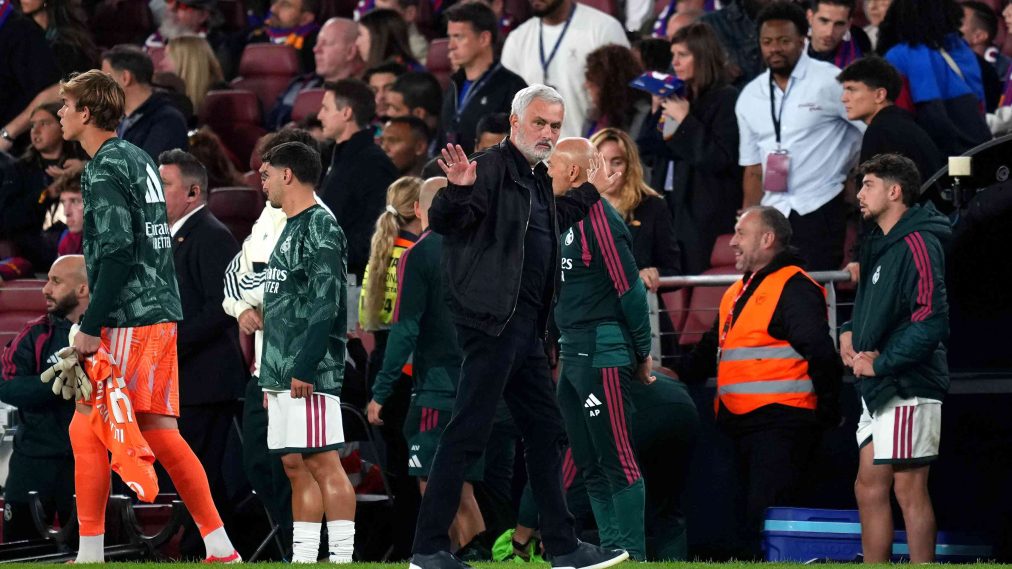
Real Madrid turned Barcelona’s attacking ambition against them as Jose Mourinho’s tactical flexibility and two costly mistakes from Pau Cubarsi settled the Clasico.
Barcelona’s defeat was not decided by fine margins alone. It exposed a tactical battle in which Mourinho identified weaknesses in Hansi Flick’s system, using the spaces left behind by the Catalan side’s aggressive approach to create clear opportunities.
Real Madrid did not simply retreat into defence or allow Barcelona to dictate the tempo. Instead, Mourinho adjusted the team’s pressing approach as the match developed. Barcelona paid the price for individual errors and poor defensive reactions during attacking transitions, highlighting the difference between calculated aggression and uncontrolled commitment.
Real Madrid’s tactical balance
Real Madrid moved between a mid-block and a deeper defensive shape before pressing higher at carefully chosen moments. Their intention was not only to protect the penalty area, but also to control space and force Barcelona’s players into difficult decisions under pressure.
Flick relied on his usual high press and advanced defensive line, but Real Madrid repeatedly found ways beyond the first wave. Once Barcelona’s pressing players were bypassed, space opened behind the defence and the visitors could turn their build-up into direct attacks with only a few passes.
The organisation of Real Madrid’s pressure, particularly in the final third, was another notable improvement after that area had been criticised for much of the season. It was one of Mourinho’s strongest performances in recent years and recalled his ability to manage major matches without relying on excessive defensive retreat or surrendering possession and control to the opposition.
Bernardo Silva’s presence in central midfield gave Real Madrid composure when attempting to play out under pressure. His ability to read the game also drew Barcelona’s midfielders into specific areas, creating room out wide and between the lines.
Alongside him, Tchouameni provided balance by protecting the centre and helping circulate possession. That allowed Real Madrid to resist hurried forward passes and wait for the right moment to advance. Fede Valverde’s deployment at right-back added pace, physical strength and the ability to cover the wide spaces created by the demands of the Clasico.
Jude Bellingham also helped Real Madrid retain the ball under pressure and attack the gaps behind Barcelona’s defence. He found himself in several dangerous positions, although he did not make the most of them.
Yamal contained as Barcelona’s high line backfires
Restricting Lamine Yamal was central to disrupting Barcelona’s attack. The young winger is a major source of creativity, particularly when given room to take on defenders or move inside. Real Madrid reduced that freedom through close attention from Cucurella and defensive support from Diomande.
Collective defending, including the work of the full-back and winger on the opposite side, further limited Yamal’s influence. Pressure on the ball and blocked passing lanes also made it difficult for Barcelona to find him in dangerous positions, forcing him away from the areas where he can have the greatest impact.
Relying on Raphinha, with Yamal on the right and Gordon on the left, was not enough to guarantee attacking effectiveness. The wider problem was Barcelona’s inability to deliver the ball to their forwards in useful spaces once Real Madrid neutralised one of their main creative outlets. Barcelona’s midfield, led by Pedri, generally struggled to break through Real Madrid’s organised lines, while many of the side’s players were below their usual level.
Barcelona’s high defensive line can compress the pitch and enable pressure in the opponent’s half, but it becomes vulnerable when possession is not recovered quickly or the ball is played behind the defenders. Real Madrid showed patience rather than resorting to random long balls, using Bernardo Silva and Tchouameni to hold possession until the correct pass became available.
After bypassing the initial pressure, Real Madrid repeatedly attacked the space between Barcelona’s defenders and goalkeeper through Kylian Mbappe and Bellingham. The threat forced Barcelona either to retreat or hesitate when attempting to maintain the same intensity of press.
Cubarsi errors prove decisive
Real Madrid’s tactical superiority created the conditions for victory, but individual errors in Barcelona’s defence proved decisive. Pau Cubarsi was at the centre of both incidents, with misplaced passes exploited by Mbappe and the Real Madrid attack.
For the opening goal, Cubarsi’s inaccurate pass presented Mbappe with a scoring opportunity, with the ball ricocheting off him and ending in the net. For the second, Cubarsi appeared closest to winning a pass on the right side of the penalty area but misjudged the situation. Substitute Camavinga stole possession and supplied Mbappe, who scored again.
Those mistakes ultimately decided the defeat and reflected the poor mental state of many Barcelona players after their outstanding start to the current La Liga season.
-
 CAF announces dates for Champions League and Confederation Cup group stage draw Oct 26, 2026
-
RS Berkane set for $700,000 CAF reward after reaching Champions League group stage Oct 26, 2026
-
Ethiopia Bunna 0-1 Mebrat Hayl: visitors claim narrow win in Ethiopia Premier League Round 4 Oct 26, 2026
-
Mbappe double gives Real Madrid victory over Barcelona in thrilling Clasico Oct 26, 2026




-
AFCON 2025: Fixtures, Results, Scores and Standings Jan 18, 2026
-
Match hero Taiwo Awoniyi reflects on team effort after Chelsea triumph May 5, 2026
-
Leadership and long-term vision key to rescuing Zamalek and inspiring Egyptian football – Hany Abou Rida Nov 5, 2025
-
South African giants Orlando Pirates set to lose influential forward Monnapule Saleng Mar 19, 2025




-
Barcelona v Real Madrid: Catalans backed at 1.65 to win October Clasico Oct 23, 2026
-
Barcelona and Real Madrid meet in pivotal 265th Clasico Oct 23, 2026
-
Champions League: PSG beat Barcelona as Liverpool complete comeback against Villarreal Oct 20, 2026
-
Inter Milan v Fiorentina: probable line-ups for San Siro clash Oct 24, 2026