FIFA refereeing chief Pierluigi Collina defends integrity of 2026 World Cup officiating
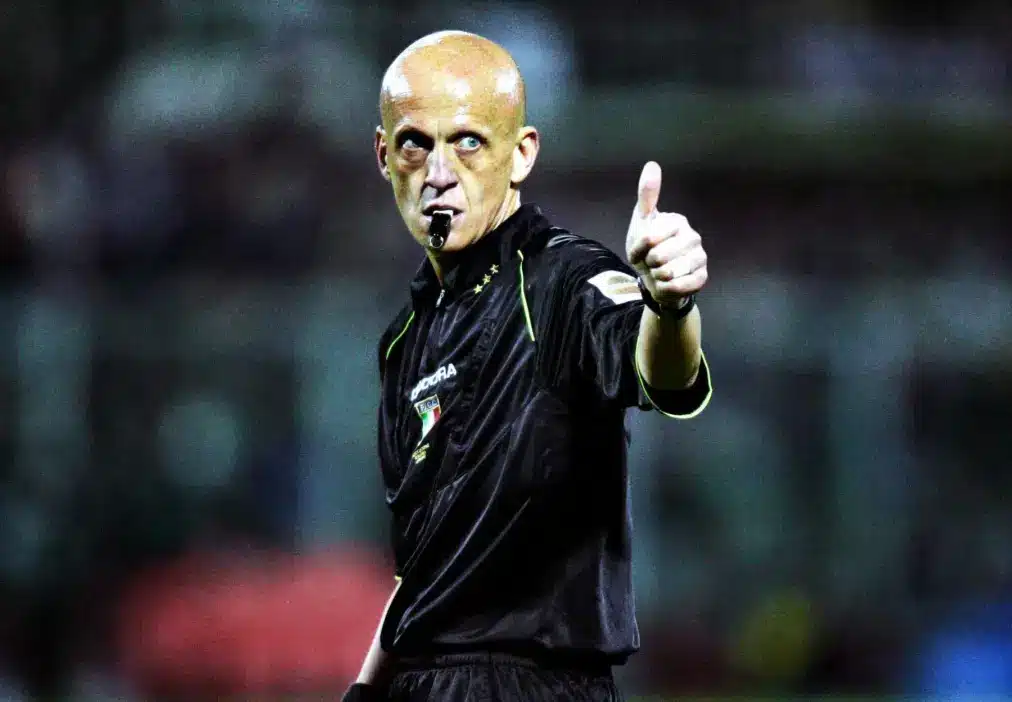
FIFA’s head of refereeing, Pierluigi Collina, has strongly defended the integrity and independence of match officials at the 2026 World Cup following criticism surrounding Egypt’s Round of 16 defeat to Argentina.
Speaking in an interview published by FIFA on Thursday, Collina rejected suggestions that the tournament’s officiating had been compromised and insisted that referees continue to perform their duties without outside influence.
“Of course, constructive discussion around decisions will always be part of football, but unfounded accusations have no place in our sport. No one can question the integrity of the tournament officials,” he asserted in an interview published online by FIFA.
Collina also dismissed the idea that FIFA’s refereeing department could be influenced by external figures, including the organisation’s leadership.
According to him, “no one can claim that FIFA arbitration can be influenced by anyone, not even by FIFA President Gianni Infantino,” who “has always given his full support” to the arbitration team while respecting its “independence.”
The former Italian international referee did not address the controversy involving United States President Donald Trump, who said he had contacted FIFA President Gianni Infantino regarding the red card shown to American forward Folarin Balogun.
The disciplinary committee later lifted the player’s suspension, making him eligible for the Round of 16 match against Belgium, although no detailed explanation for the decision was provided.
Instead, Collina focused on defending the work of French referee François Letexier, whose performance during Argentina’s 3-2 victory over Egypt drew criticism from the Egyptian Football Association.
On Wednesday, the federation requested that Letexier be removed from further matches, citing what it described as “flagrant refereeing errors.”
Explaining the decisions made during the match, Collina highlighted FIFA’s VAR review process.
“After each goal scored, the video assistant referee (VAR) checks the attacking possession phase” to detect any “fault in the preparation of the action” that may have had an impact on the goal, Mr. Collina recalls.
He pointed to the disallowed goal scored by Egypt’s Mostafa Zico in the 58th minute, explaining that teammate Marwan Attia had “clearly stepped on the foot” of Argentina defender Lisandro Martinez during the build-up, making the decision to rule out the goal correct.
Collina also defended the decision not to award Egypt a penalty late in the game after Mohamed Salah went to ground following contact with Argentina’s Julián Álvarez inside the penalty area.
“The referee and VAR decided that it was a normal football contact,” the Italian decided.
-
 Champions League: Napoli edge Bodø/Glimt 4-3 in thrilling contest Oct 20, 2026
 -
Champions League: PSG beat Barcelona as Liverpool complete comeback against Villarreal Oct 20, 2026
-
Liverpool fight back from two-goal deficit to beat Villarreal 4-3 in Champions League thriller Oct 20, 2026
-
Roma claim first Champions League win with 4-0 victory over Yaya Toure’s Slovan Bratislava Oct 20, 2026




-
AFCON 2025: Fixtures, Results, Scores and Standings Jan 18, 2026
-
Match hero Taiwo Awoniyi reflects on team effort after Chelsea triumph May 5, 2026
-
Leadership and long-term vision key to rescuing Zamalek and inspiring Egyptian football – Hany Abou Rida Nov 5, 2025
-
South African giants Orlando Pirates set to lose influential forward Monnapule Saleng Mar 19, 2025




-
PSG v Barcelona: fiery attacks set up Champions League classic at Parc des Princes Oct 18, 2026
-
Real Betis v Barcelona: kick-off time, TV details and match preview Oct 16, 2026
-
Porto v PSV: predicted line-ups for Champions League league-phase clash Oct 19, 2026
-
Morocco face Germany with top spot in Women’s Under-17 World Cup Group A at stake Oct 20, 2026