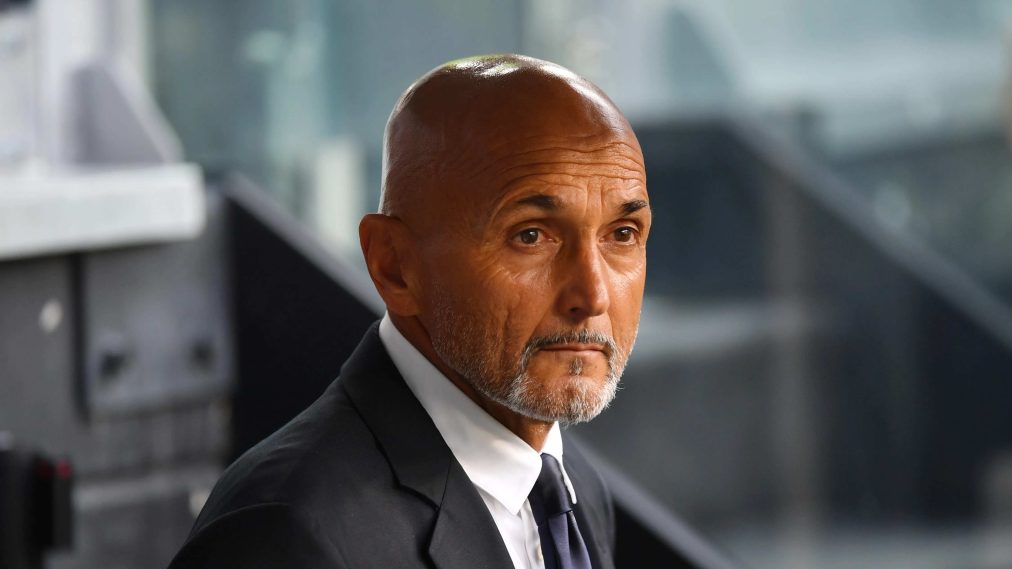
Luciano Spalletti says Mohamed Salah’s quality made the difference during his time at Roma, while describing Juventus forward Kenan Yildiz as “mad in his creativity” in an extensive interview with Tuttosport.
Spalletti, who has also managed Roma, Inter and Napoli and coached Italy, said Yildiz had qualities similar to Khvicha Kvaratskhelia, whom he worked with at Napoli.
“Some players are clearer in my mind: Pizarro at Udinese, Kvaratskhelia at Napoli and Mohamed Salah at Roma,” he said.
“Kvaratskhelia came from a particular type of football, but Salah gives a Ballon d’Or to every coach who trains him. Let’s be clear: the level of the player is always what makes the difference.”
Spalletti also identified Adam Ounas as the player he had failed to develop sufficiently, saying: “Adam Ounas at Napoli, without a doubt.”
The Italian believes Yildiz is capable of making Juventus unpredictable, particularly while the club deals with absences.
“He brings beauty to the game and makes it shine. Every movement he makes is a work of genius,” Spalletti said. “He breaks the system and does not even know what he can do. He is mad in his creativity.”
Asked whether Yildiz had become a leader at Juventus, Spalletti said leadership did not necessarily involve speaking loudly or addressing team-mates.
“They have given him the reins. He is a wonderful person, very simple, just like our neighbour, but he is a leader,” he said.
“He does not necessarily have to speak to the team. I had Nestor Sensini at Udinese, and he hardly said a word, but his charisma made everyone follow him.”
Spalletti said Dusan Vlahovic still needed to regain his calm and find the right emotional balance.
“He makes mistakes on his own, whether you give him too much energy or too little,” he said. “It is a question of balance.”
‘At Juventus, you coach a mentality’
Spalletti described Juventus as a unique challenge compared with his previous clubs.
“At Roma, I coached a fanbase. At Napoli, I coached an entire city. At Inter, I coached a great tradition. With the national team, I coached an entire people,” he said. “At Juventus, you coach a mentality. It is football history.”
He said he accepted a contract renewal because of his belief in the squad, himself and the club’s history, adding that he had needed time to test himself in the role.
Spalletti admitted Juventus had endured a difficult start, including a defeat by Sassuolo, but believed the team was recovering its level, rhythm and collective performance.
He named Gianluca Vialli as the Juventus figure who had inspired him most, recalling how the former striker could knock opponents down in challenges before shaking their hands and smiling. He also cited Marcello Lippi and Giovanni Trapattoni as the club’s standout coaches, and recited the historic names Zoff, Gentile, Cabrini, Bonini, Brio, Scirea, Bettega, Tardelli, Rossi, Platini and Boniek.
Spalletti said he had learned to handle criticism by judging himself first. He added that coaching was about creating joy, uniting players and helping them recognise their individual qualities.
On modern football, he said mental readiness and the ability to read what the ball will create were increasingly important as positions and roles constantly changed.
-
Fouzi Lekjaa injured after colliding with glass door at political meeting Oct 4, 2026
-
 Senegal edge Comoros to end international break on winning note Oct 4, 2026
 -
Senegal lead Comoros at half-time after Ndiaye opener in Marseille Oct 4, 2026
-
Senegal v Comoros: International friendly under way in Marseille Oct 4, 2026


-
AFCON 2025: Fixtures, Results, Scores and Standings Jan 18, 2026
-
Match hero Taiwo Awoniyi reflects on team effort after Chelsea triumph May 5, 2026
-
Leadership and long-term vision key to rescuing Zamalek and inspiring Egyptian football – Hany Abou Rida Nov 5, 2025
-
South African giants Orlando Pirates set to lose influential forward Monnapule Saleng Mar 19, 2025




-
AFCON 2027 Qualifiers: McCarthy warns South Africa to expect tough test against Eritrea Sep 29, 2026
-
Denmark v Portugal: Nations League kick-off time, TV channel and match prediction Sep 29, 2026
-
South Sudan vs Egypt: Where to watch AFCON 2027 qualifier Sep 29, 2026
-
Spain and Croatia name experienced line-ups for Nations League clash Sep 28, 2026