How Themba Zwane’s misplaced humility denied South Africa a winning World Cup farewell
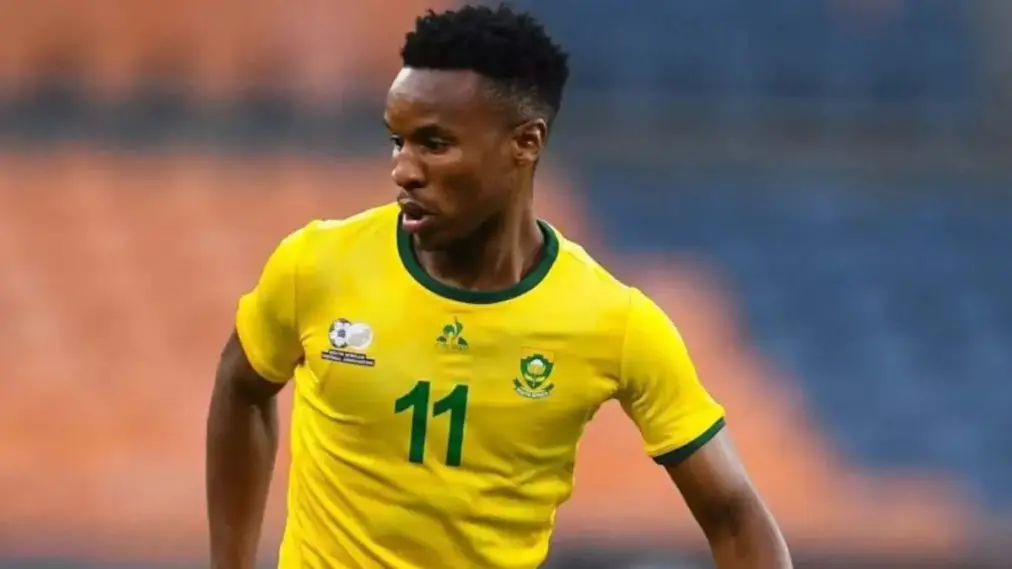
Expectations were high that Bafana Bafana would sign off their home preparations for the FIFA World Cup with authority, but instead they were left reflecting on a night where kindness, rather than conviction, defined the outcome.
Much of that spotlight inevitably fell on Themba Zwane, whose leadership and restraint shaped a frustrating goalless draw against limited opposition.
Against Nicaragua national football team at Orlando Stadium, the hosts failed to convert dominance into goals, leaving the home crowd subdued and the team’s attacking questions unresolved ahead of the tournament.
Control without cutting edge
From the outset, Bafana dictated possession and tempo, yet the final product rarely matched their territorial advantage. Zwane stood out as the most composed figure in a rotated squad, constantly offering technical stability and resisting pressure with effortless control in tight areas.
His influence, however, highlighted a deeper issue. While he consistently linked play, the surrounding movement lacked urgency, allowing Nicaragua’s defensive block to remain compact and unbroken for long stretches.
The moment that changed everything
The decisive passage of the match arrived shortly before the interval when Kamogelo Sebelebele’s forward surge forced a penalty. Zwane, captain for the night, initially assumed responsibility, a natural reflection of his seniority and influence.
Yet in a surprising act of deference, he relinquished the opportunity to Lyle Foster. The decision shifted momentum away from the side’s most composed figure at a crucial juncture.
Foster’s attempt was well struck, sending the goalkeeper the wrong way, but it ricocheted off the post and away. What should have been a confidence-building breakthrough instead dissolved into frustration, silencing the stadium and undercutting Bafana’s rhythm.
A lesson in authority missed
While Foster’s miss will be recorded as an unfortunate detail, the broader discussion centred on decision-making. Zwane’s gesture, rooted in humility, raised questions about leadership in decisive moments, particularly in a match where hierarchy and instinct might have demanded a different outcome.
Bafana had controlled large phases of the contest, yet lacked the ruthless edge required to punish a disciplined opponent. The penalty episode symbolised that hesitation more than any tactical flaw.
Tactical changes fail to shift the tide
After the break, head coach Hugo Broos introduced Relebohile Mofokeng and Oswin Appollis in an effort to inject pace and unpredictability into the attack. The substitutions added energy, with quicker transitions and sharper movement in advanced areas.
However, Nicaragua remained organised and resilient, comfortably absorbing pressure and limiting clear opportunities. Despite late intent from Bafana, the breakthrough never arrived.
The final whistle confirmed a stalemate that felt heavier for the hosts than the visitors. While Nicaragua celebrated a disciplined defensive performance, Bafana were left to confront familiar concerns about efficiency in front of goal and the cost of rare missed opportunities at the highest level.
-
 Tottenham scouts watch Younes Ebnoutalib score Eintracht Frankfurt winner Oct 20, 2026
 -
Köln consider January move for German-Nigerian attacker Lukas Nmecha Oct 20, 2026
-
Manchester United join Liverpool in race for Borussia Dortmund midfielder Felix Nmecha Oct 20, 2026
-
Mali striker Lassine Sinayoko backs Paris FC to challenge for Ligue top spot Oct 20, 2026


-
AFCON 2025: Fixtures, Results, Scores and Standings Jan 18, 2026
-
Match hero Taiwo Awoniyi reflects on team effort after Chelsea triumph May 5, 2026
-
Leadership and long-term vision key to rescuing Zamalek and inspiring Egyptian football – Hany Abou Rida Nov 5, 2025
-
South African giants Orlando Pirates set to lose influential forward Monnapule Saleng Mar 19, 2025




-
PSG v Barcelona: fiery attacks set up Champions League classic at Parc des Princes Oct 18, 2026
-
Real Betis v Barcelona: kick-off time, TV details and match preview Oct 16, 2026
-
Morocco to face New Zealand as FIFA U-17 Women’s World Cup kicks off in Rabat Oct 16, 2026
-
Bryan Mbeumo scores again as Manchester United held by Leeds Oct 18, 2026