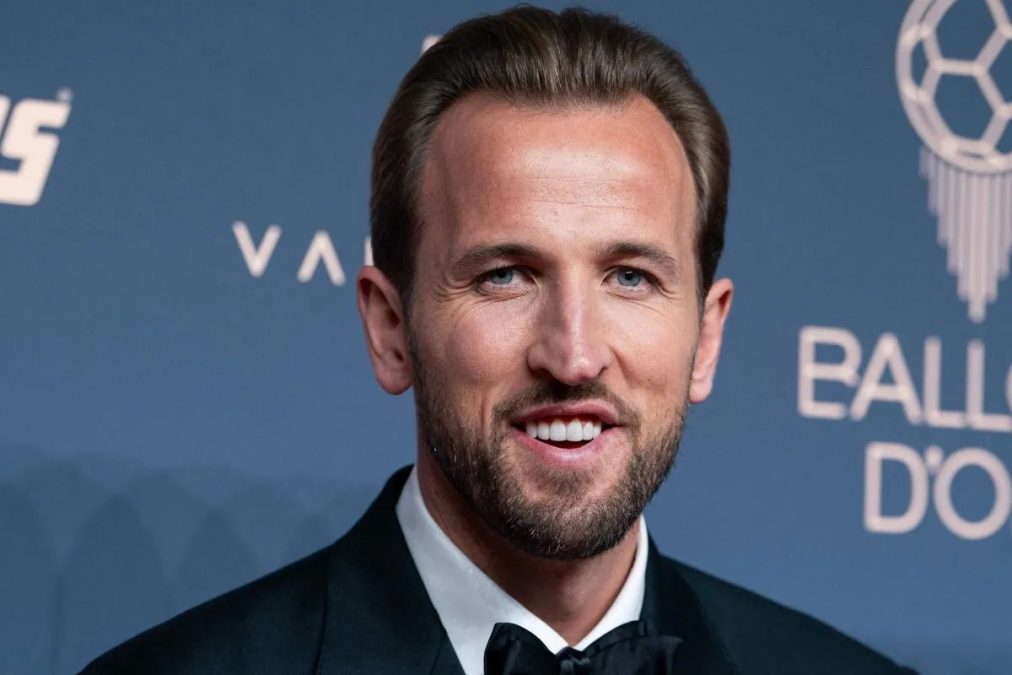
Harry Kane’s Ballon d’Or triumph in 2026 closely followed a prediction made several months earlier by a Senegalese analysis platform.
The Bayern Munich striker was crowned the winner in London on Monday night, finishing ahead of Kylian Mbappe in second place and Lamine Yamal, who completed the podium.
The result was strikingly similar to the forecast produced by Le meilleur joueur du monde, a specialist website that uses mathematical data to rank footballers.
In August, the Senegalese supercomputer, based in Dakar, had also placed Kane at the top of its rankings, although only narrowly ahead of Mbappe. The English forward received a projected score of 137.3 points, compared with 126.9 for the Frenchman, according to journalist Mansour Loum.
Kane’s international performances were considered less impressive than Mbappe’s, particularly during the 2026 World Cup. However, the former Tottenham player made up the difference through his team’s collective achievements at club level.
Mbappe, by contrast, endured a trophyless season with Real Madrid. The two forwards were judged to have made broadly similar attacking contributions.
How the ranking works
The Senegalese supercomputer is designed to combine a wider range of data in an attempt to provide a fairer and more objective assessment of the best players in each season.
It processes performances published each week using what its creators describe as a “unique and innovative calculation model”.
The system is intended to assess players on an equal basis, regardless of their position, and to address what it sees as limitations in the official Ballon d’Or voting process.
The Ballon d’Or’s established criteria, set out by France Football, include a player’s performances and direct influence in major matches, their honours and their fair play.
Only journalists from the 100 highest-ranked countries in the FIFA rankings are eligible to vote for the award. The publication of the ballots regularly leads to controversy, with differing opinions over how individual voters have ranked the leading candidates.
Kane’s victory therefore arrived with the winner’s identity broadly matching the Senegalese model’s forecast, despite the differences between a statistical ranking and the official vote.
-
 Harry Kane’s 2026 Ballon d’Or win matches Senegalese supercomputer prediction Oct 27, 2026
-
Pape Gueye declares himself a contender for 2026 African Ballon d’Or Oct 27, 2026
-
Hemdani considers two France-born defenders for Algeria squad Oct 27, 2026
-
Lothar Matthaus defends Michael Olise’s ninth-place Ballon d’Or finish Oct 27, 2026


-
AFCON 2025: Fixtures, Results, Scores and Standings Jan 18, 2026
-
Match hero Taiwo Awoniyi reflects on team effort after Chelsea triumph May 5, 2026
-
Leadership and long-term vision key to rescuing Zamalek and inspiring Egyptian football – Hany Abou Rida Nov 5, 2025
-
South African giants Orlando Pirates set to lose influential forward Monnapule Saleng Mar 19, 2025




-
Barcelona v Real Madrid: Catalans backed at 1.65 to win October Clasico Oct 23, 2026
-
Barcelona and Real Madrid meet in pivotal 265th Clasico Oct 23, 2026
-
Sevilla FC v Osasuna: probable line-ups for Monday’s La Liga meeting Oct 25, 2026
-
Inter Milan v Fiorentina: probable line-ups for San Siro clash Oct 24, 2026