Africans Born Abroad
Algeria
Cameroon
Countries
FIFA World Cup
Latest News
UNAF
UNIFFAC
Zonal Bodies
Frank Leboeuf casts doubt on Kylian Mbappe’s leadership credentials ahead of 2026 World Cup bid
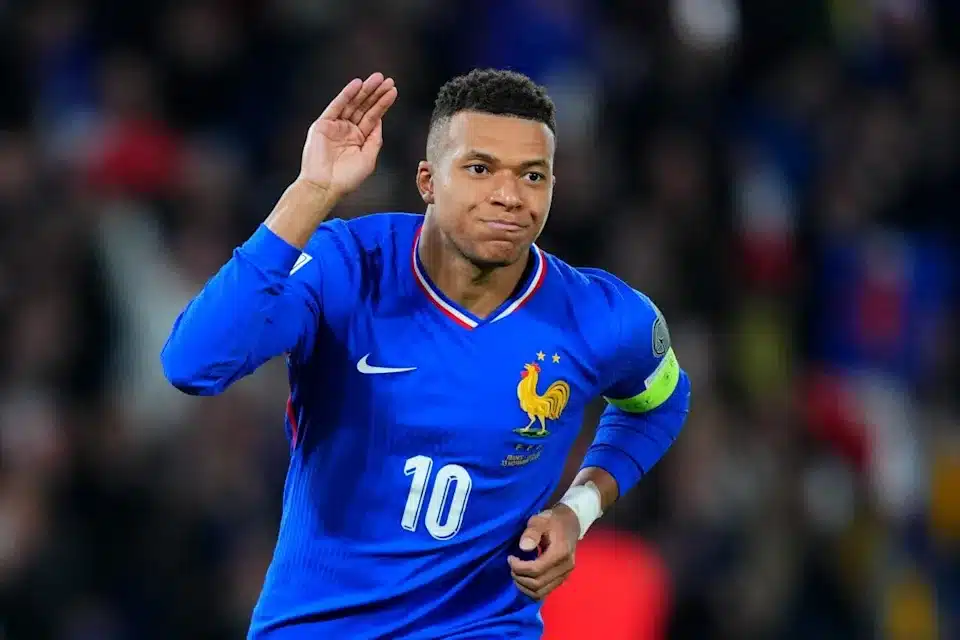
France’s preparations for the 2026 World Cup have been drawn into an early debate over leadership, after former international defender Frank Leboeuf raised concerns about Kylian Mbappe’s suitability to captain Les Bleus on football’s biggest stage.
The 1998 World Cup winner, a respected voice in French football circles, suggested that while Mbappe’s talent is unquestioned, his leadership profile may not align with what is required to guide a team through a demanding global tournament in North America.
With France expected to enter the competition among the favourites, questions over dressing room hierarchy and on-field authority have added an unexpected subplot to their campaign outlook.
Leboeuf questions Mbappe’s footballing mentality
Leboeuf’s criticism centred not on Mbappe’s ability, but on his perceived approach to the collective aspects of the game, arguing that leadership demands a stronger emphasis on sacrifice and team-first thinking.
“No, Kylian Mbappe is not a leader for me because he’s too selfish in his thoughts, in the way he thinks,” Leboeuf told SportsBoom.
“I don’t know him. I met him only once when he was with the national team, and he was playing for Paris Saint-Germain, having just signed for Paris Saint-Germain at the time.
“Again, he’s a great lad, well-educated, but his thinking, his way of thinking about football, doesn’t align with my values of the game.”
His remarks reflect a broader debate in modern football about the balance between individual brilliance and collective discipline, particularly when managing elite attackers in high-pressure international environments.
Alternative leadership profiles proposed for Les Bleus
Rather than Mbappe, Leboeuf pointed to other members of the France setup whom he believes better embody the qualities required to lead a World Cup squad.
He highlighted defenders and midfielders known for their tactical discipline and selflessness as stronger candidates to wear the armband in a major tournament setting.
“That’s why I like people like William Saliba and N’Golo Kante, players like that who are ready to sacrifice for the team,” he continued.
“That’s the difference for me, and that’s what counts for me the most. Antoine Griezmann, as well, was a real leader in terms of the way he was playing and the way he was thinking about football.
These names reflect a traditional view of leadership, where consistency, defensive responsibility and emotional stability are prioritised over attacking stardom.
Team-first philosophy at the heart of criticism
Leboeuf also referenced comments from within the current generation of French players, suggesting that modern squad culture still values accountability and defensive work rate, even among elite forwards.
He cited an example he felt reinforced his argument about collective responsibility and tactical discipline in top-level football.
“ I liked Ousmane Dembélé’s comment, saying that if I don’t track back, the coach won’t put me in, and that’s the reality of football. Mbappé is a superstar, but he’s not the best teammate in the world; that’s my problem.”
The statement underscores a recurring tension in elite football between superstar status and the non-negotiable demands of team structure.
-
 Tottenham scouts watch Younes Ebnoutalib score Eintracht Frankfurt winner Oct 20, 2026
 -
Köln consider January move for German-Nigerian attacker Lukas Nmecha Oct 20, 2026
-
Manchester United join Liverpool in race for Borussia Dortmund midfielder Felix Nmecha Oct 20, 2026
-
Mali striker Lassine Sinayoko backs Paris FC to challenge for Ligue top spot Oct 20, 2026


-
AFCON 2025: Fixtures, Results, Scores and Standings Jan 18, 2026
-
Match hero Taiwo Awoniyi reflects on team effort after Chelsea triumph May 5, 2026
-
Leadership and long-term vision key to rescuing Zamalek and inspiring Egyptian football – Hany Abou Rida Nov 5, 2025
-
South African giants Orlando Pirates set to lose influential forward Monnapule Saleng Mar 19, 2025




-
PSG v Barcelona: fiery attacks set up Champions League classic at Parc des Princes Oct 18, 2026
-
Real Betis v Barcelona: kick-off time, TV details and match preview Oct 16, 2026
-
Morocco to face New Zealand as FIFA U-17 Women’s World Cup kicks off in Rabat Oct 16, 2026
-
Bryan Mbeumo scores again as Manchester United held by Leeds Oct 18, 2026