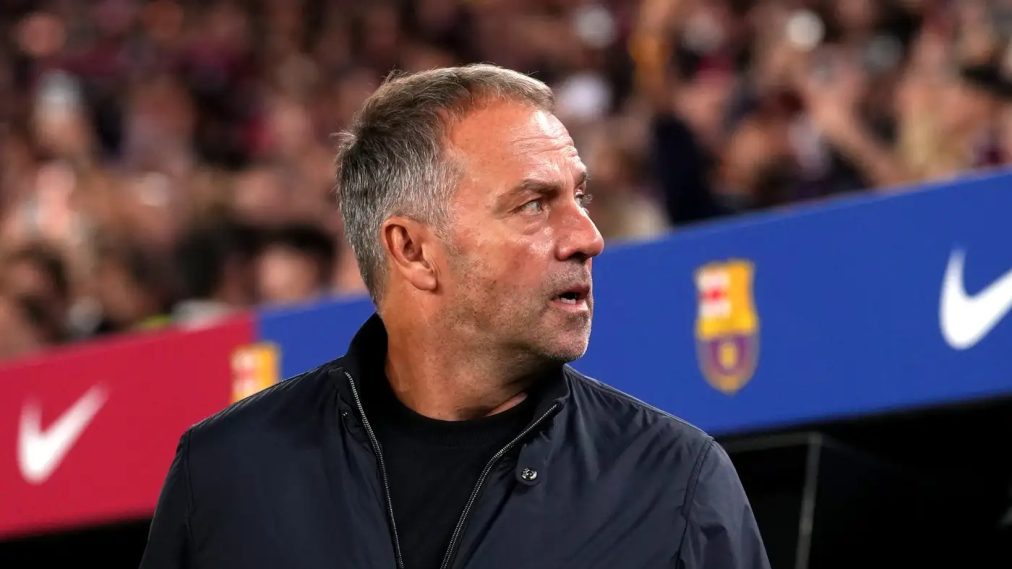
Barcelona manager Hansi Flick is under pressure to respond after defeats by Paris Saint-Germain and Real Madrid exposed concerns over the team’s defensive balance, performance in major matches and ability to compete at the highest level.
The German coach has little time to dwell on the reasons for the setbacks. According to Spanish newspaper Marca, Barcelona’s current situation requires practical solutions rather than exaggerated reactions, with the next three matches offering Flick an immediate opportunity to restore confidence and correct his team’s course.
Barcelona face Deportivo Alaves in La Liga on 31 October 2026, Aston Villa in the Champions League on 03 November 2026 and then Atletico Madrid. The sequence is likely to test Flick’s tactical judgement, squad management and ability to rebuild the team’s character.
Defensive balance is the priority
Barcelona’s defensive structure is the most urgent issue. The side have lost much of their cohesion and are conceding too frequently, but the answer is not necessarily to abandon the attacking philosophy that has brought success under Flick.
Instead, Barcelona must find a better balance between pressing high and protecting the space behind the defence. They need to recognise when to apply pressure, when to retreat and how to avoid leaving the back line exposed.
An advanced defensive line should support the team’s attacking ambition rather than become an obvious weakness for opponents to exploit. In major matches, particularly those played over two legs, repeated errors can change the entire course of a tie.
Injuries have made that task more difficult. Flick must form a reliable defensive unit from the players available while managing workloads and limiting the risk of further setbacks. The expected returns of Jules Kounde, Andreas Christensen, Eric Garcia and Espart would give him more options to reassess the back line and consider players waiting for an opportunity.
However, defensive improvement will depend on the collective structure, not simply on finding the ideal combination of defenders and goalkeeper. Midfielders and forwards must also press effectively, recover possession and prevent opponents from reaching dangerous areas easily.
Midfield selection and squad rotation
Flick also has to decide how best to use a midfield group with contrasting qualities. His options include Rodri, Pedri, Bernal, Frenkie de Jong and Gavi.
Pedri can control the tempo and provide creativity, while Rodri offers experience and helps organise possession. De Jong is capable of escaping pressure and starting attacks from deep; Bernal brings composure and balance, and Gavi adds energy, intensity and competitive spirit.
The challenge is to assign those players clear roles and select combinations suited to each opponent, rather than relying on reputation alone.
Rotation will be important across the three games. The demands of Deportivo Alaves differ from those of Aston Villa, while Atletico Madrid present a separate physical and tactical challenge. Flick must manage playing time carefully, using fitness, technical merit and suitability for each match as his main criteria.
The Alaves game offers a chance to rebuild confidence, Aston Villa will test Barcelona’s response against strong opposition away from Spain, and Atletico Madrid will show whether the team has regained its cohesion and tactical identity.
Rebuilding confidence
Flick must also address the psychological impact of defeats by Paris Saint-Germain and Real Madrid. Repeated mistakes against leading opponents can create doubt, and Barcelona need to recover their belief without allowing every error to undermine their concentration.
The manager’s role will be to bring calm to the dressing room while demanding responsibility, teamwork and a refusal to search for excuses. Improved performances will come through daily work, collective effort and victories rather than explanations alone.
The next three matches will therefore be a significant point in Barcelona’s season. Flick is expected to make genuine adjustments to the system and distribution of roles, restore players to their best form and use the squad’s depth instead of overburdening key members.
The time for analysing defeats has passed. Barcelona now need solutions that can return them to competitive strength.
-
 Martin O’Neill praises Haitham Hassan’s impact after Celtic’s draw with Dundee United Oct 30, 2026
-
Martin O’Neill faces growing criticism over Haitham Hassan’s limited role at Celtic Oct 30, 2026
-
Cafu breaks silence on Brazil-Norway controversy that ended Morocco’s 1998 World Cup hopes Oct 30, 2026
-
Hassania Agadir lodge formal protest over refereeing decisions in defeat to Raja AC Oct 30, 2026




-
AFCON 2025: Fixtures, Results, Scores and Standings Jan 18, 2026
-
Match hero Taiwo Awoniyi reflects on team effort after Chelsea triumph May 5, 2026
-
Leadership and long-term vision key to rescuing Zamalek and inspiring Egyptian football – Hany Abou Rida Nov 5, 2025
-
South African giants Orlando Pirates set to lose influential forward Monnapule Saleng Mar 19, 2025




-
Barcelona v Real Madrid: Catalans backed at 1.65 to win October Clasico Oct 23, 2026
-
Barcelona and Real Madrid meet in pivotal 265th Clasico Oct 23, 2026
-
Sevilla FC v Osasuna: probable line-ups for Monday’s La Liga meeting Oct 25, 2026
-
Inter Milan v Fiorentina: probable line-ups for San Siro clash Oct 24, 2026