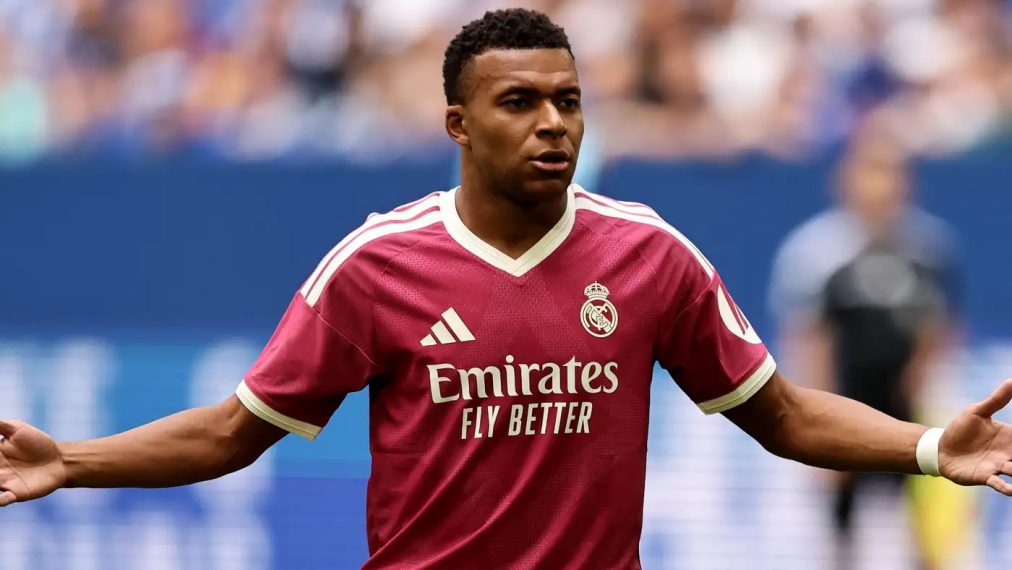
Kylian Mbappe’s comments about former Chinese leader Mao Zedong have highlighted the financial dependence of European football on China, and the pressure Beijing can exert through broadcasting rights and commercial partnerships.
The dispute has already reached the Spanish league’s television rights and the French forward’s advertising agreements. Real Madrid and La Liga both issued apologies in an attempt to contain the fallout.
The controversy began after a video interview was circulated in which Mbappe discussed a satirical image showing his face superimposed on that of a Chinese political figure. He described the figure as a Chinese dictator.
Although Mbappe did not name Mao Zedong, the image was associated with the former leader and prompted widespread anger on Chinese social media.
Mbappe apologised and said he regretted hurting the feelings of people in China and elsewhere. Real Madrid also apologised formally to the Chinese people, while La Liga president Javier Tebas attempted to calm the situation. The statements did not immediately end the dispute.
Chinese companies, including Mengniu Dairy, Shanghai Milkground and Dongpeng Beverages, have reportedly ended their commercial relationships with Mbappe. The move threatens both his advertising income and his prospects in the Chinese market.
Why China matters
China is important to football organisations because it provides access to millions of supporters, as well as opportunities for broadcasting, sponsorship, advertising and product sales.
In August 2026, La Liga announced an agreement with Migu, the platform owned by China Mobile, making it the exclusive online broadcasting rights partner in mainland China for the four seasons from 2026-27 to 2029-30. The deal covers all 380 matches in each season.
Real Madrid could face weaker sales of shirts and other merchandise, fewer sponsorship opportunities and a decline in the market value of its leading players.
Mbappe’s immediate losses are more direct because Chinese companies have ended agreements with him. French newspaper Le Monde estimated that some of the cancelled deals were worth about 50m yuan, approximately 6.7m euros.
China has imposed similar sporting consequences before. In 2019, Daryl Morey, general manager of the Houston Rockets, posted a message supporting protests in Hong Kong. China responded by suspending broadcasts of NBA games, which remained absent from Chinese television for about 18 months before returning in March 2022.
Morey was not dismissed to satisfy China, despite the commercial damage. US reports estimated the losses linked to the dispute at hundreds of millions of dollars, although figures varied according to the period and the elements included.
In December 2019, former Germany international Mesut Ozil criticised China’s treatment of its Muslim Uyghur minority. Chinese television removed Arsenal’s match against Manchester City from its schedule, while Arsenal distanced itself from the comments and said they represented the player’s personal view.
The Women’s Tennis Association also confronted China in 2021 after Chinese player Peng Shuai disappeared from public view following an allegation of sexual assault against a senior Chinese official. In December, the WTA suspended all tournaments in China and Hong Kong, citing concerns over Peng’s safety and demanding a transparent investigation.
China hosted nine WTA tournaments in the 2019 season, including the WTA Finals. Reuters reported that the suspension could cost the organisation hundreds of millions of dollars. The WTA resumed events in China in April 2023 after about 16 months, saying the ongoing boycott was creating major financial costs for players and tournaments despite insufficient progress on its original demands.
Chinese broadcasters also withheld Premier League matches in March 2022 during a weekend featuring gestures of solidarity with Ukraine, including players wearing armbands in the colours of the Ukrainian flag.
These cases demonstrate the reach of China’s sporting boycotts, backed by its economic influence and a huge market that clubs, players and competition organisers fear losing.
-
 Cote d’Ivoire U23 name 32-player squad for CAN preparation camp Oct 28, 2026
-
Sundowns, Al Ahly and Mazembe miss out as CAF Champions League hierarchy is shaken Oct 28, 2026
-
PSG eye winter move for Algeria youngster Ibrahim Maza after Kvaratskhelia injury Oct 28, 2026
-
Transfer news: PSG and Bayer Leverkusen battle for Ibrahim Maza Oct 28, 2026




-
AFCON 2025: Fixtures, Results, Scores and Standings Jan 18, 2026
-
Match hero Taiwo Awoniyi reflects on team effort after Chelsea triumph May 5, 2026
-
Leadership and long-term vision key to rescuing Zamalek and inspiring Egyptian football – Hany Abou Rida Nov 5, 2025
-
South African giants Orlando Pirates set to lose influential forward Monnapule Saleng Mar 19, 2025




-
Barcelona v Real Madrid: Catalans backed at 1.65 to win October Clasico Oct 23, 2026
-
Barcelona and Real Madrid meet in pivotal 265th Clasico Oct 23, 2026
-
Sevilla FC v Osasuna: probable line-ups for Monday’s La Liga meeting Oct 25, 2026
-
Inter Milan v Fiorentina: probable line-ups for San Siro clash Oct 24, 2026