Barcelona have used four different players at right-back in their 15 official matches this season, underlining the uncertainty surrounding a position that has become one of the most unusual in world football.
Eric Garcia has started there seven times, while Jules Kounde has played at right-back on four occasions. Xavi Espart and Brian Farinas have each been used twice, with Farinas making his most recent appearances in the position.
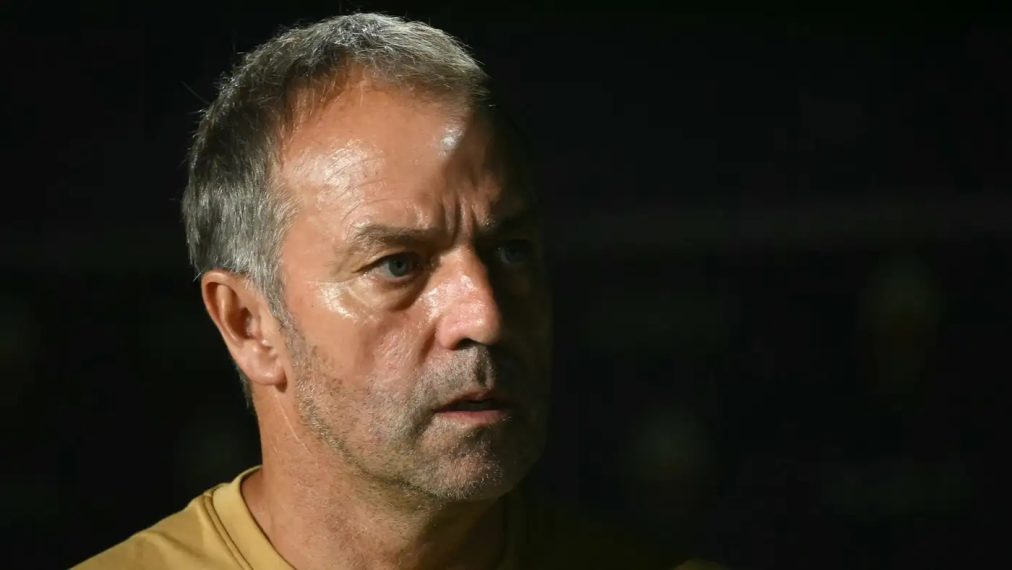
The experimentation reflects Hansi Flick’s need to find solutions from within his squad. Unlike Joao Cancelo, a natural right-back who is comfortable in the role, none of the four players most frequently selected this season was developed primarily as a right-back.
Centre-backs on the flank
Kounde initially had reservations about playing at right-back. When he joined Barcelona, he had been promised by Xavi Hernandez that he would have opportunities at centre-back, the position in which he had excelled at Sevilla.
Thomas Tuchel, then Chelsea manager, had also wanted to sign the France international but viewed him as someone who could play at right-back. That did not match Kounde’s ambitions at the time. His view has gradually changed, however, and he now acknowledges that the position may suit his qualities best.
Garcia has always been capable of operating in several roles, although he was brought through primarily as a centre-back and remains more comfortable there. Flick nevertheless made him his leading option at right-back after telling the player at the end of last season that he considered him important in that position.
Midfielders given an opportunity
Espart and Farinas offer a different solution, having developed with backgrounds in midfield rather than defence.
Flick was impressed by Espart from the outset, and the player is highly regarded by the coaching staff. The Barcelona manager has even compared him with former Bayern Munich star Joshua Kimmich.
Espart’s control, passing accuracy, awareness and ability to read space have helped him adapt to the position. His midfield education gives him the flexibility to perform different roles, while his early displays suggest he could develop further as a right-back.
Farinas’ selection against Alaves was unexpected, but the experiment worked sufficiently well for Flick to repeat it in the Champions League against Aston Villa. The German did so despite having a shortage of recognised full-backs, with Alejandro Balde available as an option on the left. That decision illustrated the confidence Farinas earned after his first appearance.
A position without a settled owner
Garcia, Kounde, Espart and Farinas currently appear to be Flick’s main choices, but there is no clear indication that any one of them will become the permanent solution.
The emergence of young players at full-back could instead allow Garcia and Kounde to return to centre-back, giving Barcelona greater depth and flexibility in defence. For the players themselves, regular first-team football remains the priority, making them willing to operate outside their preferred positions, particularly those younger members seeking to establish themselves.
Barcelona’s uncertainty at right-back is not new. Since Dani Alves left, the club has struggled to find a consistently successful replacement. Douglas, Aleix Vidal, Nelson Semedo and Sergino Dest all failed to provide a long-term answer, while Oscar Mingueza was also unable to secure the position permanently.
Earlier generations also included improvised solutions, with Eusebio and Albert Celades, followed later by Luis Enrique, Gabri and Sergi Roberto, all filling the role despite it not being their specialist position.
Barcelona are continuing that tradition, but with an even wider mix of centre-backs, midfielders and emerging youngsters competing for the same place.
-
 Bachir Belloumi ruled out of Algeria’s next two matches by Hull City Nov 7, 2026
-
Algeria’s Yacine Abed faces six-match sprint across UNAF and U17 World Cup Nov 7, 2026
-
Inter Milan v Como: Probable line-ups for Serie A top-five meeting Nov 7, 2026
-
Inter Milan face in-form Como in key Serie A clash at San Siro Nov 7, 2026




-
AFCON 2025: Fixtures, Results, Scores and Standings Jan 18, 2026
-
Match hero Taiwo Awoniyi reflects on team effort after Chelsea triumph May 5, 2026
-
Leadership and long-term vision key to rescuing Zamalek and inspiring Egyptian football – Hany Abou Rida Nov 5, 2025
-
South African giants Orlando Pirates set to lose influential forward Monnapule Saleng Mar 19, 2025




-
Barcelona host Aston Villa in Champions League meeting at Spotify Camp Nou Nov 2, 2026
-
AEK Athens v Real Madrid: Champions League date, kick-off time and viewing details Nov 2, 2026
-
Manchester United host Aston Villa as both sides seek a Premier League lift Nov 6, 2026
-
Villarreal host unbeaten PSG in first European meeting Nov 2, 2026