Algerian star Yacine Brahimi funds new stadium in Aït Bouada to support grassroots football development
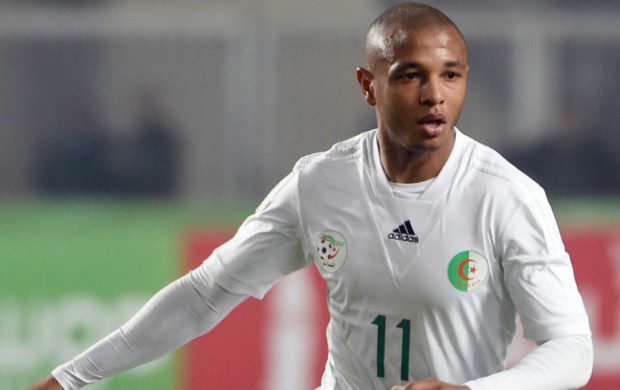
Yacine Brahimi has financed the construction of a new synthetic-turf football stadium in the village of Aït Bouada, in the daïra of Azazga, marking a significant personal investment in the future of Algerian football.
The Algerian international, known for his decorated playing career and contributions to the national team, has followed in the footsteps of his former teammate Riyad Mahrez, who helped fund the construction of a mosque in Beni Senouss, his hometown in the wilaya of Tlemcen.
In Brahimi’s case, the initiative is rooted in a personal connection to Aït Bouada, the village from which his mother hails. Reports indicate that his grandmother attended the inauguration of the new facility.
The “Yacine Brahimi Stadium” will serve as more than just a playing field. Situated in a mountainous area rich in natural beauty and open air, the modern venue will offer young people from the village and surrounding communities a space not only to play but to train and grow in the sport.
The infrastructure is set to host matches and training sessions for local clubs, with the potential to become a regional centre for youth tournaments and development programmes.
The project has been widely applauded for its scope and vision. It provides a structured environment for aspiring footballers—boys and girls alike—who now have access to quality facilities often lacking in rural areas. The stadium could serve as a launching pad for local talent, some of whom may one day don the national jersey themselves.
More than just a charitable act, Brahimi’s contribution has been described as a “structuring project” by local observers. It combines immediate benefits with long-term potential, offering both a safe recreational outlet and a talent pipeline for Algerian football.
It stands as an example of how personal initiatives from former or current national players can play a pivotal role in the development of sport at the grassroots level.
In Algeria, as in many African countries, several former internationals have enjoyed lucrative careers, yet few have reinvested directly into the sporting infrastructure of their homeland. Brahimi’s actions highlight the possibilities when that wealth and experience are channeled back into local communities.
The move has sparked calls for more players to follow suit. With many footballers in a position to support social and sporting causes, particularly those benefitting youth, the disabled, or underprivileged communities, the potential for positive change is significant.
Media outlets and institutions are being encouraged to raise awareness and help create platforms through which more athletes can engage in impactful philanthropic projects.
Around the world, prominent players have contributed to causes ranging from hospital construction and medical research to education and environmental initiatives. These acts often leave a lasting legacy, transforming not only individual lives but entire communities.
Brahimi’s project is a reminder that investment in sport—especially at the local level—can have far-reaching implications. It sends a strong message to Algerian footballers past and present: that even a single gesture, grounded in purpose and community, can help build the future of the game in Algeria.
-
 Bayern Munich consider Jules Kounde as Sacha Boey replacement Oct 10, 2026
 -
Charlotte linked with former Everton midfielder Abdoulaye Doucoure Oct 10, 2026
-
Football betting tips for 10 October: Olise backed to score as Bayern face Augsburg Oct 10, 2026
-
Mayoyo backs Moses Mabhida Stadium as neutral setting for MTN8 final Oct 10, 2026



-
AFCON 2025: Fixtures, Results, Scores and Standings Jan 18, 2026
-
Match hero Taiwo Awoniyi reflects on team effort after Chelsea triumph May 5, 2026
-
Leadership and long-term vision key to rescuing Zamalek and inspiring Egyptian football – Hany Abou Rida Nov 5, 2025
-
South African giants Orlando Pirates set to lose influential forward Monnapule Saleng Mar 19, 2025




-
Croatia face Spain with Nations League hopes on the line in Split Oct 5, 2026
-
France v Belgium: Probable line-ups for Nations League clash Oct 3, 2026
-
Manchester United host winless Tottenham in Premier League clash Oct 7, 2026
-
Morocco coach Mohamed Ouahbi refuses to single out player after Mali draw Oct 4, 2026