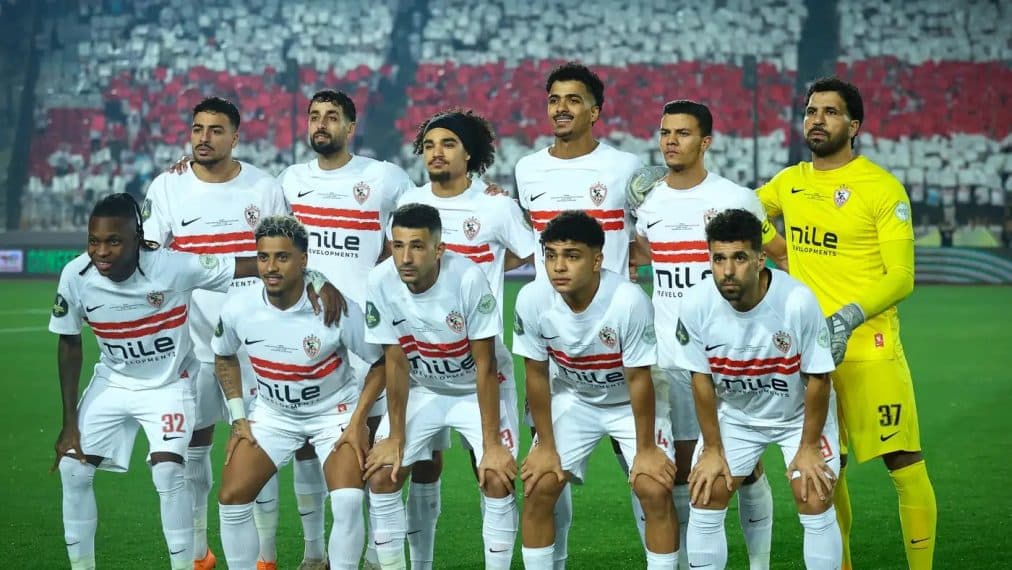
Zamalek return to the group stage of the African Champions League for the first time in three years, but their difficult draw and a decline in organisation have raised questions over their ability to challenge for a sixth continental title.
The Egyptian club have not won the competition for 23 years, although they remain its second most successful side with five titles, behind domestic rivals Al Ahly.
Zamalek reached the final twice during that period, losing to South Africa’s Mamelodi Sundowns in 2016 before suffering defeat by Al Ahly in 2020.
Their absence from the group stage coincided with three successive seasons in the Confederation Cup. They won the competition once, lost another final and exited in the quarter-finals in the third campaign.
This season, however, Zamalek have been placed in a particularly demanding group despite several leading African clubs being absent, including Al Ahly, Mamelodi Sundowns, Wydad and Raja Casablanca.
They will face Club Africain, champions of Tunisia, Algerian champions MC Alger and Tanzania’s Young Africans, who also won their domestic league.
On paper, Zamalek’s results suggest a team in strong form. They have played 11 matches in the Egyptian Premier League and African Champions League this season, winning nine, drawing once against Al Ittihad Alexandria at the start of the campaign and losing to Al Ahly.
They are third in the Egyptian Premier League with 16 points, five behind leaders Pyramids and one adrift of second-placed Al Ahly.
Their continental record is perfect so far, with four wins from four matches across the two legs of the preliminary and first qualifying rounds. Yet those results have concealed performances in which Zamalek were often not the better side and, on several occasions, came close to dropping points or even losing.
Relying on the scorelines rather than addressing what is happening on the pitch could prove costly in the Champions League, even with major contenders missing.
Zamalek’s most useful guide may be last season, when they won the Egyptian Premier League despite not being regarded as the leading contenders, and perhaps not even among the top three, given the problems surrounding the club.
They had a sporting director overseeing football operations away from the board, a head coach supported by performance analysts and a clear level of discipline. Those foundations remained important despite financial difficulties, the termination of contracts belonging to Moroccan players Abdelhamid Maali and Salah الدين Mesadek, and the departures of Nasser Maher and Nabil Emad “Donga”.
That structure has since disappeared. The sporting director left without a replacement, the performance analyst also departed, and internal crises have increasingly dominated the club.
Zamalek are close to appointing Hossam El-Zanaty as their new sporting director. His immediate task will be to restore the discipline that helped deliver last season’s title.
A new, experienced coaching staff with continental expertise may also be required, particularly as the club cannot strengthen the squad with new players. The final international break of the year, in November, would give a new manager time to assess the team.
If that appointment cannot be made, the current staff will need capable assistants and performance analysts. Continuing as they are, while hoping fortune carries them through each match, would leave Zamalek relying on a path that could quickly lead to failure.
-
 Mamelodi Sundowns consider Miguel Cardoso suspension after shock Champions League exit Oct 28, 2026
-
Cote d’Ivoire U23 name 32-player squad for CAN preparation camp Oct 28, 2026
-
Sundowns, Al Ahly and Mazembe miss out as CAF Champions League hierarchy is shaken Oct 28, 2026
-
PSG eye winter move for Algeria youngster Ibrahim Maza after Kvaratskhelia injury Oct 28, 2026




-
AFCON 2025: Fixtures, Results, Scores and Standings Jan 18, 2026
-
Match hero Taiwo Awoniyi reflects on team effort after Chelsea triumph May 5, 2026
-
Leadership and long-term vision key to rescuing Zamalek and inspiring Egyptian football – Hany Abou Rida Nov 5, 2025
-
South African giants Orlando Pirates set to lose influential forward Monnapule Saleng Mar 19, 2025




-
Barcelona v Real Madrid: Catalans backed at 1.65 to win October Clasico Oct 23, 2026
-
Barcelona and Real Madrid meet in pivotal 265th Clasico Oct 23, 2026
-
Sevilla FC v Osasuna: probable line-ups for Monday’s La Liga meeting Oct 25, 2026
-
Inter Milan v Fiorentina: probable line-ups for San Siro clash Oct 24, 2026