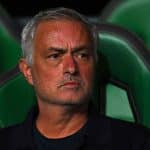
Morocco’s Ilias Akhomach says footballers should stay out of Ceuta political row

Morocco international Ilias Akhomach has defended footballers’ right to decide whether to wear shirts supporting the Spanish-occupied city of Ceuta, arguing that players should not be drawn into political disputes.
The Villarreal winger said footballers should be free to make their own choices after a campaign involving Spanish clubs sparked controversy among supporters, particularly in Morocco, where Ceuta remains a sensitive issue.
“Everyone can do what they want,” Akhomach said in an interview with El Mundo Castellón al Día, adding that he respected both players who wore the shirt and those who chose not to.
Ceuta shirt campaign sparks controversy
The debate began in September when players from Villarreal and Real Betis appeared before their La Liga match wearing shirts bearing the slogan “Todos somos caballas”, a message presented in Spain as an expression of solidarity with Ceuta and its residents.
Morocco international Abde Ezzalzouli wore the shirt alongside his Real Betis teammates and subsequently faced criticism from some Moroccan supporters.
Ezzalzouli later said the gesture was social rather than political and reaffirmed his attachment to Morocco.
Akhomach, meanwhile, was among Villarreal’s substitutes on the day and did not participate in the pre-match display.
The controversy attracted further attention when Real Madrid players Kylian Mbappé, Vinicius Junior and Ibrahima Konaté chose not to fully display the same message before a match against Elche. Their decision was treated by the club as a matter of personal choice.
‘We’re going to play football’
Akhomach questioned why the issue had developed into such a heated debate, arguing that footballers should not be expected to resolve political questions through their actions on the pitch.
“We’re going to play a football match,” he said, stressing that players are there to perform and entertain supporters rather than become involved in political disputes.
The 22-year-old also maintained that politicians and the relevant institutions should take responsibility for addressing such matters.
While acknowledging the importance of supporting people facing difficult circumstances, Akhomach said he did not want to comment beyond what he understood or turn football into a political platform.
Morocco’s sensitive relationship with Ceuta
Ceuta, a Spanish-administered city on the North African coast, remains a sensitive subject in Morocco. As a result, gestures associated with the city can attract strong reactions when Moroccan footballers are involved.
The shirt campaign has placed players in a difficult position, with some choosing to participate and others opting not to display the slogan fully.
Akhomach’s position centres on respecting those individual decisions rather than judging footballers based on whether they wore the shirt.
His comments add to the debate over the relationship between football and political expression, with the Moroccan winger insisting that players should not be attacked or pressured into taking positions on issues beyond their sporting responsibilities.
-
 Morocco’s Ilias Akhomach says footballers should stay out of Ceuta political row Oct 12, 2026
 -
Shikabala criticises Hussein Amouta’s tactics despite Al Ahly’s triumph over Zamalek Oct 12, 2026
-
Kaizer Chiefs defender Thabo Moloisane frustrated by lack of Bafana Bafana call-ups but remains hopeful Oct 12, 2026
-
Egypt star Omar Marmoush fined in England over uninsured £250,000 McLaren vehicle Oct 12, 2026



-
AFCON 2025: Fixtures, Results, Scores and Standings Jan 18, 2026
-
Match hero Taiwo Awoniyi reflects on team effort after Chelsea triumph May 5, 2026
-
Leadership and long-term vision key to rescuing Zamalek and inspiring Egyptian football – Hany Abou Rida Nov 5, 2025
-
South African giants Orlando Pirates set to lose influential forward Monnapule Saleng Mar 19, 2025




-
Manchester United host winless Tottenham in Premier League clash Oct 7, 2026
-
Real Madrid fitness update: Valverde a doubt for Villarreal as Kylian Mbappe returns Oct 8, 2026
-
Lens v Lyon: Can the in-form visitors extend their unbeaten Ligue 1 run? Oct 6, 2026
-
Barcelona aim for eighth straight Liga win as Getafe visit Camp Nou Oct 7, 2026