Messi and Ronaldo choose contrasting paths as football careers approach their endings
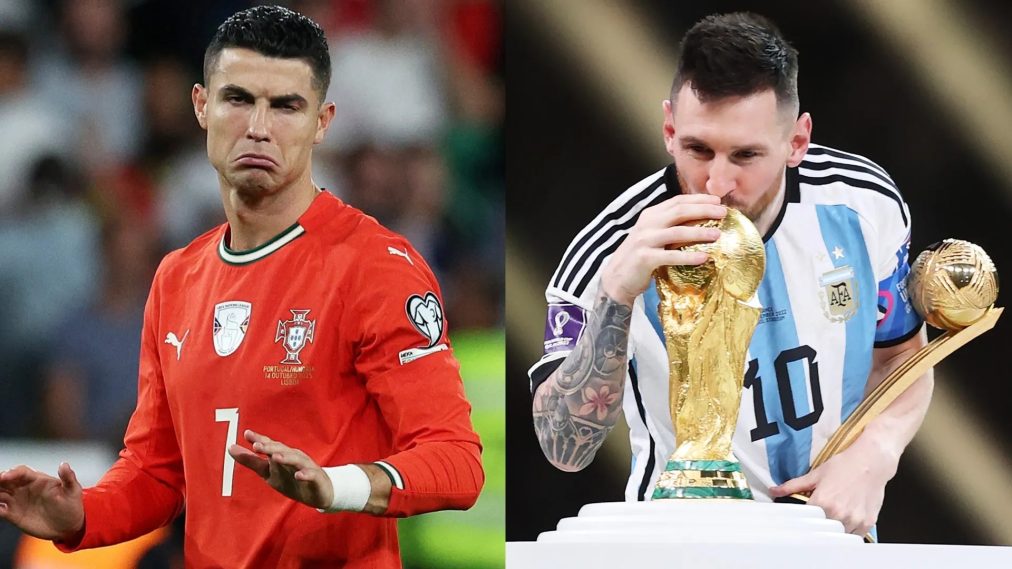
In the space of one week, Lionel Messi and Cristiano Ronaldo offered very different visions of how football’s greatest careers should end.
Messi, 39, stood before 85,000 supporters at the Monumental with tears in his eyes and described the prospect of international retirement as “the saddest day of my career”.
At almost the same time, Ronaldo, 41, issued a lengthy statement insisting he was not ready to leave international football and remained available for Portugal.
Both players have reached the summit of the sport, broken its biggest records and moved beyond the age of 40. Yet their responses to the passing of time could hardly be more different.
Ronaldo’s refusal to let time decide
Ronaldo continues to challenge age head-on. He is still pursuing the 1,000th goal of his career and refuses to allow anyone else to write the final chapter of his story.
That determination remains intact despite a public disagreement with his manager. Ronaldo seriously considered retiring after Portugal’s exit from the 2026 World Cup, but ultimately returned to the same principle: “As long as my body allows me, and as long as I am scoring, I will stay.”
Following his latest dispute with Jorge Jesus, Ronaldo is no longer simply trying to protect his place in the Portugal squad. The disagreement led to an unprecedented moment in his career when he left the team camp angrily.
His position now represents something larger than selection. Ronaldo is defending the belief that time has not defeated him.
Messi chooses when to leave
Messi has taken the opposite approach. He departed while he was still capable of scoring and influencing matches. In his final appearance, he scored once and created two goals before offering a quiet explanation that appeared to settle the matter.
“I have nothing more to give,” he said.
Messi knows, as do those watching him, that he still has plenty to offer. But he no longer wishes to pay the price required to continue doing so.
That decision protects his legacy from the slower decline that can alter the way great players are remembered: fatigue, time spent on the substitutes’ bench or heavy steps during a major tournament.
Messi chose to leave while he was still recognisably “Messi”. He wanted the final image to be of a player crying with simultaneous joy and pain, rather than one substituted in the 60th minute and accused of becoming a burden.
Ronaldo has accepted the opposite risk. Continuing brings more goals, more memorable moments and the satisfaction of remaining competitive, but it also carries the possibility that golden memories will be replaced by images of exhaustion.
The “undefeated legend” could become the legend who carried on for too long. Ronaldo understands that danger and accepts it; Messi chose not to.
There is no single correct answer. Ronaldo believes immortality is built through persistence, with every goal extending his legend. Messi believes it depends on timing: knowing when to stop before time makes the decision for you.
After two decades competing for everything, they have differed even in their departures. One says, “I am still here.” The other says, “I was here – and that is enough.”
-
 Nigeria open to Russia rematch in Africa after thrilling 3-3 draw Oct 8, 2026
 -
‘Messi is perhaps even better’ – Gernot Rohr ranks Lionel Messi above Diego Maradona after Benin farewell game Oct 8, 2026
-
Cristiano Ronaldo pays heartfelt tribute to Lionel Messi Oct 8, 2026
-
Nabil Neghiz declines to discuss Algeria after Niger’s defeat in Tizi-Ouzou Oct 7, 2026




-
AFCON 2025: Fixtures, Results, Scores and Standings Jan 18, 2026
-
Match hero Taiwo Awoniyi reflects on team effort after Chelsea triumph May 5, 2026
-
Leadership and long-term vision key to rescuing Zamalek and inspiring Egyptian football – Hany Abou Rida Nov 5, 2025
-
South African giants Orlando Pirates set to lose influential forward Monnapule Saleng Mar 19, 2025




-
Croatia face Spain with Nations League hopes on the line in Split Oct 5, 2026
-
France v Belgium: Probable line-ups for Nations League clash Oct 3, 2026
-
Morocco coach Mohamed Ouahbi refuses to single out player after Mali draw Oct 4, 2026
-
Noussair Mazraoui leaves Morocco squad early after injury Oct 2, 2026