Tunisia-Libya U20 draw sparks global debate over unusual offside decision
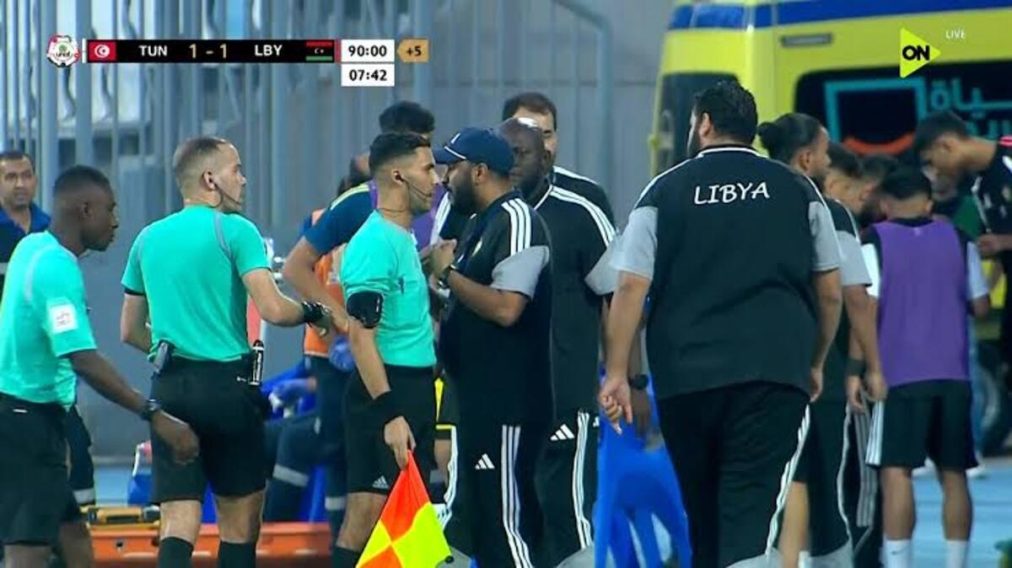
A controversial offside decision in the final moments of Tunisia’s 1-1 draw with Libya in the 2027 Africa U20 Championship qualifiers has attracted international attention after footage of the incident spread beyond Africa.
The match, played in Egypt, saw the Libyan players and technical staff protest an assistant referee’s decision during stoppage time, despite the call being consistent with the laws of the game.
The unusual nature of the incident has since drawn coverage from major international sports newspapers, including France’s L’Equipe, Portugal’s Record, England’s Sun and Spain’s Marca and Sport.
Goalkeeper’s attacking move creates unusual scene
With Tunisia searching for a late winner, goalkeeper Selim Bouaskar moved into the Libyan penalty area to join his teammates for a corner.
The set-piece failed to produce a goal, and Libya immediately launched a counter-attack, with four Libyan players racing towards the Tunisian goal against just one opponent.
The attack appeared to present Libya with a clear chance to score, but the assistant referee raised his flag for offside, bringing the move to an end.
Several Libyan players and members of the technical staff reacted angrily to the decision, which initially appeared difficult to understand because Bouaskar, Tunisia’s goalkeeper, was still inside Libya’s penalty area.
Why the offside decision was correct
A review of the situation, however, showed why the assistant referee’s decision was valid under the laws of the game.
The Libyan attacker had crossed the halfway line by around a metre when the ball was played towards him. With Bouaskar the only Tunisian player ahead of him, the attacker was closer to the goal line than both the ball and the second-last opponent.
Under the offside law, a player can be in an offside position when any part of the head, body or feet is inside the opponents’ half, excluding the halfway line, and closer to the opponents’ goal line than both the ball and the second-last opponent.
The presence of another Tunisian player behind the Libyan attacker would have kept him onside. Alternatively, the attack could have remained legal if the ball had been played before he crossed the halfway line.
Libya miss chance to strengthen position
The decision proved particularly dramatic because it came so late in the match, with Libya having a genuine opportunity to snatch all three points.
The game had earlier seen Tunisia take the lead through Dhirar Brik in the 24th minute before Moussa Ibrahim equalised for Libya in the 64th.
The 1-1 draw ended Tunisia’s hopes of competing for a qualifying place, while Libya missed the chance to strengthen their position ahead of their final match against Morocco on Tuesday.
Despite the legality of the offside call, the unusual image of a goalkeeper inside the opposition penalty area helped turn the incident into one of the most widely discussed moments of the qualifying campaign.
-
 Tunisia-Libya U20 draw sparks global debate over unusual offside decision Oct 4, 2026
 -
Salah Eddine Chehab marks 100th MAS Fes appearance with victory Oct 4, 2026
-
Morocco U23 turn attention to Ethiopia qualifiers after Tanzania friendly cancellation Oct 4, 2026
-
Raja boss Paco Jémez targets Moroccan title after winning league debut Oct 4, 2026



-
AFCON 2025: Fixtures, Results, Scores and Standings Jan 18, 2026
-
Match hero Taiwo Awoniyi reflects on team effort after Chelsea triumph May 5, 2026
-
Leadership and long-term vision key to rescuing Zamalek and inspiring Egyptian football – Hany Abou Rida Nov 5, 2025
-
South African giants Orlando Pirates set to lose influential forward Monnapule Saleng Mar 19, 2025




-
AFCON 2027 Qualifiers: McCarthy warns South Africa to expect tough test against Eritrea Sep 29, 2026
-
Denmark v Portugal: Nations League kick-off time, TV channel and match prediction Sep 29, 2026
-
South Sudan vs Egypt: Where to watch AFCON 2027 qualifier Sep 29, 2026
-
Spain and Croatia name experienced line-ups for Nations League clash Sep 28, 2026