FIFA’s post-tournament report has identified the tactical innovations and evolving player roles that influenced the 2026 World Cup, drawing on analysis of all 104 matches.
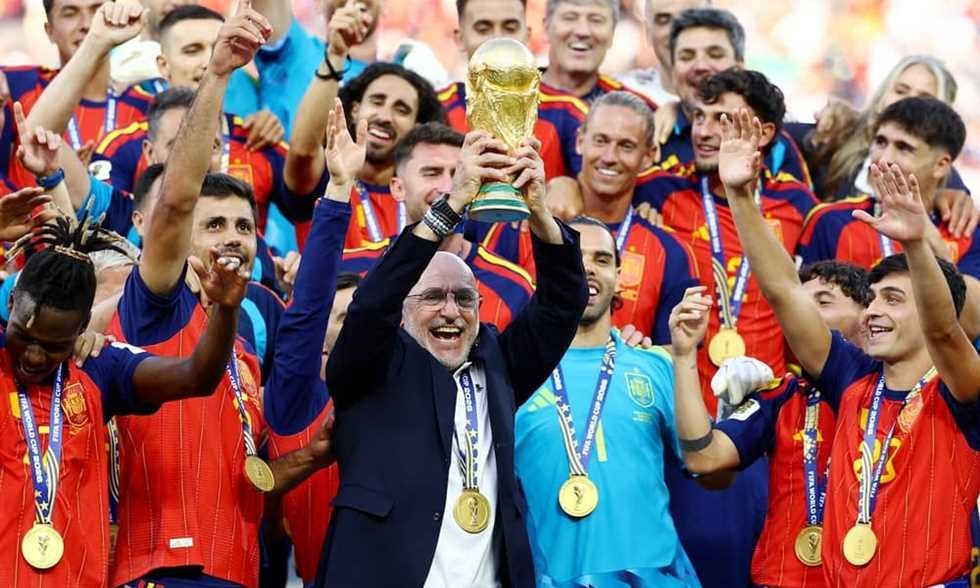
Spain won the tournament after Ferran Torres scored the only goal in a 1-0 final victory over Argentina. FIFA’s Technical Study Group and Football Performance Analysis team combined extensive football expertise with data and video analysis to examine how the leading teams and players are reshaping the modern game.
Counter-pressing emerged as one of the defining features of the competition. Top sides repeatedly turned possession losses into immediate attacking opportunities, with champions Spain particularly effective at using their shape in possession to win the ball back and attack before opponents could reorganise.
The report also found that there was no single formula for success. High-intensity pressing, disciplined defensive blocks and rapid transitions all provided effective routes to winning. Cape Verde demonstrated how compact defending, collective organisation and the proactive involvement of the goalkeeper could help a team compete with technically superior opponents.
Goalkeepers were identified as having an increasingly important role in the build-up, offering an additional solution when opponents applied pressure and contributing actively to possession.
Arsene Wenger, FIFA’s Chief of Global Football Development, said the World Cup provided “a unique opportunity to observe the game, learn from it and consider where it may go next”, because it brought together the world’s best players, coaches and football cultures.
He added that FIFA’s analysts had studied every match in detail, combining expert intuition with technical and statistical analysis. The aim, he said, was not simply to describe what happened, but to understand why: how teams created and controlled space, attacked and defended, how individual roles developed and how decisions by players and coaches affected matches.
Nine tactical themes under review
The report examines nine areas: playing out with three defenders, rotations and positional exchanges in wide areas, using the inside channels, progressing through key players, high pressing, counter-pressing, defensive blocks, attacking transitions and the changing role of the goalkeeper.
It considers how three-man defensive structures helped teams build and advance, how wide rotations created space and disrupted defensive organisation, and how the areas between central and wide zones were used to progress the ball and create chances.
It also analyses the players and roles that became central to breaking through opponents’ defensive lines, when high pressing was applied and the opportunities created by winning possession in advanced areas.
The study assesses how teams responded immediately after losing the ball, organised themselves without possession, protected key spaces and adapted their defensive structures. It also explores the factors behind successful attacks launched directly after regaining possession, alongside the goalkeeper’s positioning and influence throughout different phases of play.
FIFA said observations made during the tournament were later tested using data and video, then compared where possible with findings from previous FIFA competitions. The resulting analysis is now available on the FIFA Training Centre.
Wenger said football continued to evolve at the highest level, with new ideas and adaptations capable of influencing the game beyond one tournament. He hoped the report would encourage coaches, players and others involved in football to question, discuss and learn from the findings, using the World Cup’s lessons to help shape future developments.
-
 Former Nigeria coach Jose Peseiro hails Osimhen’s work ethic and fierce competitiveness Oct 2, 2026
 -
Marseille extend contract of Algerian midfielder Yanis Sellami until 2029 Oct 2, 2026
-
Football icon Lionel Messi arrives in Argentina ahead of Burkina Faso friendly Oct 2, 2026
-
Burkina Faso’s friendly against Argentina in doubt over travel crisis Oct 2, 2026


-
AFCON 2025: Fixtures, Results, Scores and Standings Jan 18, 2026
-
Match hero Taiwo Awoniyi reflects on team effort after Chelsea triumph May 5, 2026
-
Leadership and long-term vision key to rescuing Zamalek and inspiring Egyptian football – Hany Abou Rida Nov 5, 2025
-
South African giants Orlando Pirates set to lose influential forward Monnapule Saleng Mar 19, 2025




-
AFCON 2027 Qualifiers: McCarthy warns South Africa to expect tough test against Eritrea Sep 29, 2026
-
AFCON 2027 qualifiers: Algeria, Morocco and Nigeria among winners on opening matchday Sep 26, 2026
-
AFCON 2027 qualifiers: Burkina Faso held by Benin in Group F Sep 25, 2026
-
Denmark v Portugal: Nations League kick-off time, TV channel and match prediction Sep 29, 2026