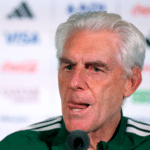
Pitso Mosimane has returned as South Africa head coach, 14 years after his first spell ended in controversy, with the 62-year-old determined to complete what he believes is unfinished business with Bafana Bafana.
Mosimane was officially unveiled at SAFA House in Nasrec on Tuesday, walking back into the headquarters of the organisation that dismissed him after a difficult period between 2010 and 2012.
His first tenure ended following a disappointing result against Sierra Leone in Mbombela and a draw with Ethiopia eight months later. Across 23 matches, Mosimane recorded nine wins, 10 draws and four defeats, giving him a 39.1% win rate before his departure left his reputation badly damaged.
The questions surrounding his return are unavoidable. Can football offer genuine redemption, or does it simply preserve old failures until the next setback brings them back into focus?
Mosimane believes his subsequent career has provided the answer. Since leaving the national team, he has built a reputation as one of Africa’s most successful coaches, winning major honours under intense pressure in several countries.
As Lebanese-American poet Kahlil Gibran wrote, “To be able to look back upon one’s life in satisfaction is to live twice”.
Mosimane did not need the Bafana Bafana job for financial security or personal validation. With opportunities available in North Africa, the Gulf and Asia, including lucrative contracts and significant resources, he could have chosen a different path.
Instead, he has elected to return to South Africa because he wants to succeed at the highest level with his national team. For a coach who has dominated domestic and regional competitions, establishing his country as a sustainable international force represents the biggest remaining challenge of his career.
His immediate focus will be the 2027 Africa Cup of Nations qualifying campaign. South Africa are in a three-team group featuring Guinea, Eritrea and co-hosts Kenya, who qualify automatically. Only one team will progress from the group, leaving little room for error.
Beyond that lies the expanded qualification process for the 2030 FIFA World Cup, which will be staged across Morocco, Portugal, Spain and South America.
Mosimane’s argument for returning is built on the progress he made after his first dismissal. In 2012, as his position came under growing pressure, he warned that South African football risked falling behind the rest of the world.
“We don’t want to accept that the world is catching up with us… We need to accept reality.”
He subsequently spent the next decade and a half working across Africa and beyond, gaining experience of elite football structures and collecting major trophies.
At Mamelodi Sundowns, Mosimane created a dominant domestic side before leading the club to the continental title in 2016. He then took charge of Al Ahly, winning the CAF Champions League in 2020 and 2021, reaching three successive finals and securing two FIFA Club World Cup bronze medals.
His later work in Saudi Arabia, the United Arab Emirates and Iran added further international experience.
When he addressed the media on Tuesday, Mosimane highlighted the distance between the coach who left Bafana Bafana in 2012 and the decorated manager now returning to the role. He noted that he had not won a domestic cup competition during his first spell, but now has 21 major medals to his name.
He also pointed to involvement in four FIFA World Cups at club and international level, saying the experience and tactical understanding required to operate at the highest level are now in place.
There is also a wider argument in favour of appointing a coach from the country he represents. Every manager who has won the FIFA World Cup since the tournament began in 1930 has been a coach from the winning nation.
Only two foreign managers have reached a World Cup final in almost a century of international football. At its highest level, the game demands an understanding of a country’s identity, culture and mentality that an outsider may struggle to reproduce.
That does not mean South Africa are expected to challenge for the World Cup immediately. But the appointment of the man known affectionately as “Jingles” follows a long-established pattern in international football.
Mosimane inherits a strong foundation
The new coach is returning to a national setup that remains troubled away from the pitch. SAFA House has been affected by public disputes over government-ringfenced development grants, unspent VAR funding and administrative delays that have attracted close scrutiny from the ministry.
Those are the same structural concerns Mosimane warned about almost a decade and a half ago, when he said the global game was advancing faster than South African football administration.
His challenge will be to establish a modern, high-performance environment on the training ground that can function despite the noise around the national governing body. That will be difficult, but his experience of demanding football environments could prove vital.
Mosimane is inheriting a squad that has made significant progress under Hugo Broos. The Belgian left after five productive years in charge, having guided Bafana Bafana to the bronze medal at AFCON 2023 in Cote d’Ivoire and into the Round of 32 at the 2026 World Cup in North America.
Broos restored South Africa’s credibility on the international stage. Mosimane’s task is to turn that platform into trophies and consistent qualification for the World Cup.
He has made clear that he does not intend to discard the existing squad. Key players such as Ronwen Williams and Teboho Mokoena remain central, while Relebohile Mofokeng, Sphephelo Sithole and Mbekezeli Mbokazi are among the other prominent talents available to him.
Mosimane will, however, bring in his own trusted technical staff rather than retain the interim assistants. He defended that decision by referring to the way leading coaches build teams around people they know and trust, citing Carlo Ancelotti’s work alongside his son.
For Mosimane, the only measure that ultimately matters is the performance of the team, not the make-up of the bench.
He has also acknowledged that criticism remains a powerful source of motivation.
His connection with Bafana Bafana goes back further than his coaching career. Mosimane won four international caps and scored on his debut against Gabon in 1993. Having played for South Africa and later managed at the highest levels of world football, he returns with both personal knowledge of the national team and a developed tactical philosophy.
His appointment has already prompted scepticism on social media, with some supporters questioning whether revisiting a controversial past is the right decision. But Mosimane’s record since 2012 has given him a strong case for another opportunity.
Short-term results will determine whether he survives the pressure of the job. His longer-term reputation will depend on whether he can turn Bafana Bafana into a consistent international force.
The return offers Mosimane a chance to reshape South African football and ensure that the coach who once departed after the disappointment of Mbombela leaves behind a lasting legacy.
-
 Senegal’s Diomansy Kamara calls for respect for African players after failed move for Ismaila Sarr and Lamine Camara Sep 2, 2026
 -
FIFA accepts Ibrahim Gusau-led mass resignations as Nigeria begins football reforms Sep 2, 2026
-
Dortmund reject Newcastle United swap deal for Felix Nmecha Sep 2, 2026
-
Egypt FA renew contract of coach Hossam Hassan until 2030 after history World Cup run Sep 2, 2026


-
AFCON 2025: Fixtures, Results, Scores and Standings Jan 18, 2026
-
Leadership and long-term vision key to rescuing Zamalek and inspiring Egyptian football – Hany Abou Rida Nov 5, 2025
-
South African giants Orlando Pirates set to lose influential forward Monnapule Saleng Mar 19, 2025
-
Full schedule for 2025 Africa Cup of Nations in Morocco confirmed Feb 12, 2025




-
Hugo Broos reveals emotional cost of Bafana Bafana exit Aug 27, 2026
-
Equatorial Guinea legend Emilio Nsue announces retirement from football Aug 26, 2026
-
FC Barcelona partner with Egypt’s EGYPTAIR in three-season deal Aug 27, 2026
-
Sporting CP sign Moroccan teenage sensation Moncef Zekri from Mechelen Aug 26, 2026