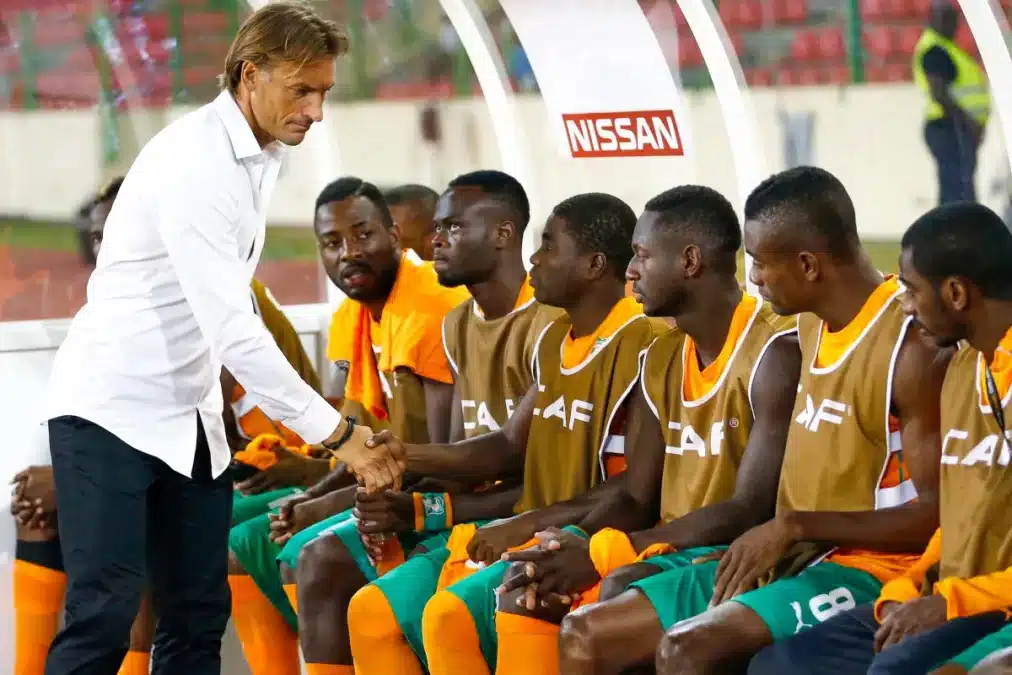
Herve Renard has faced an unexpectedly sceptical reaction from supporters after returning to lead Cote d’Ivoire, with almost seven in 10 respondents to an online poll expressing doubts about his appointment.
A survey conducted by Abidjan.net, involving 1,457 internet users, found that 41.94% viewed Renard’s appointment as a bad choice. A further 29.03% described it as a risky decision, despite the French coach’s strong record and recognised knowledge of African football.
The findings should be treated with some caution because the poll reflects only the views of visitors to the website. Even so, the result is striking given Renard’s previous success with Cote d’Ivoire and the close association between the coach and the national team.
Much of the unease appears to stem from the departure of Emerse Fae. Appointed during the 2023 Africa Cup of Nations, former Cote d’Ivoire international Fae guided the Elephants to a dramatic and unexpected triumph on home soil.
He subsequently led the team back to the FIFA World Cup after Cote d’Ivoire had gone 12 years without qualifying. His achievements, together with his status as a home-grown coach, made Fae a figure with whom supporters could readily identify.
His exit therefore immediately raised the prospect of Renard returning to the post. However, the appointment has not been embraced as warmly as some had anticipated.
Renard’s record offers substantial grounds for optimism. He led the Elephants to victory at the 2015 Africa Cup of Nations, ending a 23-year wait for a second continental title after Cote d’Ivoire’s first success in 1992.
Three years earlier, he had guided Zambia to a historic Africa Cup of Nations triumph. Few coaches have comparable experience of the demands and realities of African international football.
Several former Cote d’Ivoire football figures had welcomed the prospect of Renard taking charge again. The coach, known for his white shirts, has also spoken enthusiastically about the challenge ahead.
Renard has signed a two-year contract and believes he inherits a squad with considerable quality. His stated ambition is to develop the team from a good national side into a truly outstanding one.
He also intends to monitor emerging players, including those eligible to represent Cote d’Ivoire through dual nationality, while making use of a generation that already has significant international experience.
Renard’s attachment to the country appears genuine. By his own account, he did not need much time to consider the opportunity when the Ivorian Football Federation contacted him.
The poll does not amount to a final verdict on his second spell. Supporters’ opinions can change quickly, particularly at international level, and a small run of convincing results would probably be enough to shift the mood.
Renard understands the importance of winning in African international football better than most. In 2015, he became an important part of Cote d’Ivoire’s history within only a few weeks.
Eleven years on, he must once again earn the trust of the Ivorian public. This time, however, he begins his assignment in a climate that is considerably less favourable than might have been expected.
Naim Beneddra has followed football since childhood and has worked as a journalist for more than 20 years. He writes and analyses the game, while maintaining a particular interest in Algerian football and the Fennecs.
-
 Senegal’s Diomansy Kamara calls for respect for African players after failed move for Ismaila Sarr and Lamine Camara Sep 2, 2026
 -
FIFA accepts Ibrahim Gusau-led mass resignations as Nigeria begins football reforms Sep 2, 2026
-
Dortmund reject Newcastle United swap deal for Felix Nmecha Sep 2, 2026
-
Egypt FA renew contract of coach Hossam Hassan until 2030 after history World Cup run Sep 2, 2026



-
AFCON 2025: Fixtures, Results, Scores and Standings Jan 18, 2026
-
Leadership and long-term vision key to rescuing Zamalek and inspiring Egyptian football – Hany Abou Rida Nov 5, 2025
-
South African giants Orlando Pirates set to lose influential forward Monnapule Saleng Mar 19, 2025
-
Full schedule for 2025 Africa Cup of Nations in Morocco confirmed Feb 12, 2025




-
Hugo Broos reveals emotional cost of Bafana Bafana exit Aug 27, 2026
-
Equatorial Guinea legend Emilio Nsue announces retirement from football Aug 26, 2026
-
FC Barcelona partner with Egypt’s EGYPTAIR in three-season deal Aug 27, 2026
-
Sporting CP sign Moroccan teenage sensation Moncef Zekri from Mechelen Aug 26, 2026