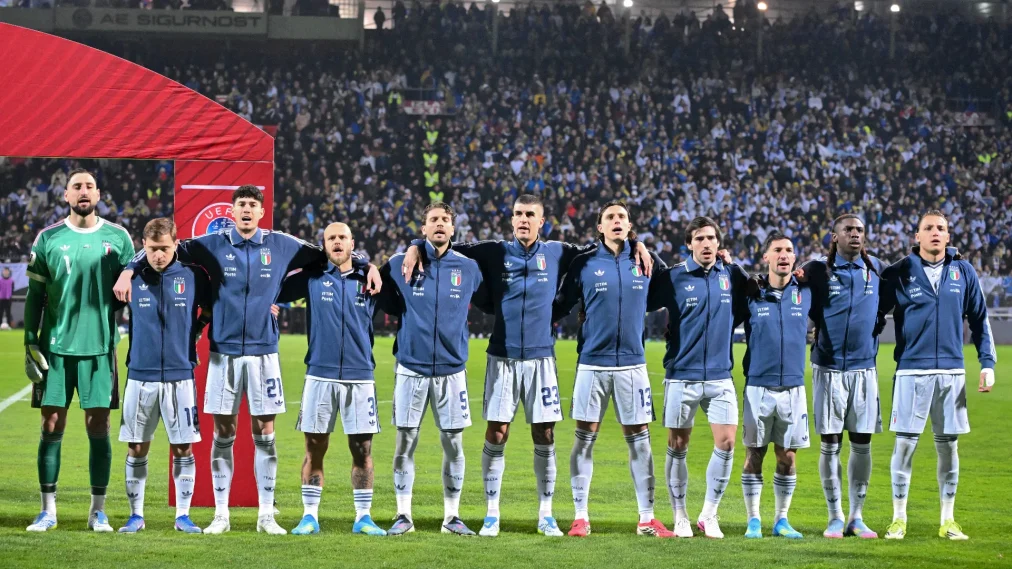
The Italian Football Federation (FIGC) has withdrawn its support for Gianni Infantino’s bid to remain FIFA president at the election scheduled for March 2027.
In a statement issued on Wednesday, the FIGC said the decision represented its position “clearly and transparently” and was fully aligned with UEFA and its president Aleksander Ceferin.
Italy said its stance reflected objections to recent proposals put forward by Infantino in relation to FIFA’s governance and the development of international competitions.
FIGC president Giovanni Malago said the federation would continue working with UEFA and other European associations to promote a model of football based on sporting merit, solidarity, sustainability and the central role of supporters.
“We will continue to work alongside UEFA and the other European federations to strengthen the idea of football based on merit, solidarity, sustainability and the centrality of fans,” Malago said.
He added: “We believe in a model based on dialogue, listening and shared responsibility, which has so far allowed football to grow and innovate while, at the same time, defending its fundamental principles.”
The decision places Italy alongside growing opposition to Infantino among European members of FIFA, particularly over the way major decisions are made and the organisation’s approach to governance.
Tensions increased after FIFA proposed, before later withdrawing the idea, selling part of the future commercial rights to the World Cup. The proposal added to concerns among some European associations about transparency and the processes used to determine FIFA’s long-term strategy.
Italy’s announcement comes shortly after six Nordic football associations said they had lost confidence in Infantino. They called for reforms designed to guarantee greater independence and accountability, as well as clearer procedures for decision-making within FIFA.
Infantino, who holds both Italian and Swiss citizenship, has led FIFA since 2016 and is due to face the next presidential election in March 2027. Italy had previously been among the associations supporting his candidacy, making Wednesday’s announcement a significant change in position.
The FIGC did not announce an alternative candidate in its statement. Instead, it stressed its intention to coordinate with UEFA and other European football bodies as debate continues over FIFA’s governance and international competition plans.
The dispute illustrates a widening divide between Infantino’s FIFA leadership and parts of the European football establishment. UEFA and its president Ceferin have increasingly been identified with calls for a more consultative approach, while national associations opposing FIFA’s recent initiatives have demanded stronger safeguards around accountability and institutional independence.
Italy’s move therefore adds weight to the European challenge facing Infantino before the 2027 election, although the statement focused on principles and governance rather than endorsing a rival candidate.
-
 RS Berkane set for $700,000 CAF reward after reaching Champions League group stage Oct 26, 2026
 -
Ethiopia Bunna 0-1 Mebrat Hayl: visitors claim narrow win in Ethiopia Premier League Round 4 Oct 26, 2026
-
Mbappe double gives Real Madrid victory over Barcelona in thrilling Clasico Oct 26, 2026
-
CAF Confederation Cup: 16 clubs set for 2026-27 group-stage draw Oct 26, 2026




-
AFCON 2025: Fixtures, Results, Scores and Standings Jan 18, 2026
-
Match hero Taiwo Awoniyi reflects on team effort after Chelsea triumph May 5, 2026
-
Leadership and long-term vision key to rescuing Zamalek and inspiring Egyptian football – Hany Abou Rida Nov 5, 2025
-
South African giants Orlando Pirates set to lose influential forward Monnapule Saleng Mar 19, 2025




-
Barcelona v Real Madrid: Catalans backed at 1.65 to win October Clasico Oct 23, 2026
-
Barcelona and Real Madrid meet in pivotal 265th Clasico Oct 23, 2026
-
Champions League: PSG beat Barcelona as Liverpool complete comeback against Villarreal Oct 20, 2026
-
Inter Milan v Fiorentina: probable line-ups for San Siro clash Oct 24, 2026