Mourinho keeps faith in Real Madrid plan after Rodri misses out
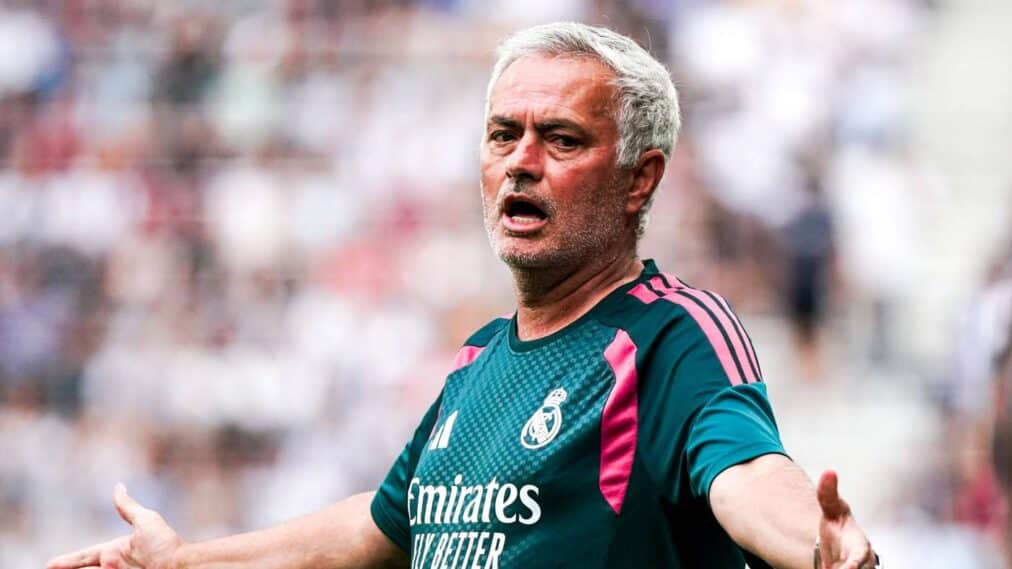
Jose Mourinho remains fully aligned with Real Madrid’s hierarchy despite the club failing to sign Rodri, with the Portuguese manager confident the squad can still be built into a strong and competitive team during the current summer transfer window.
Mourinho is said to be happy at the club, where he is working in the environment he wanted, under his preferred conditions and with the players he believes can form the basis of his next project.
Since Real Madrid president Florentino Perez decided in late April that Mourinho’s return was the best option for the club, there has reportedly been a strong relationship between the manager and the board.
That unity continued last week during the uncertainty surrounding Rodri’s proposed move, according to Spanish newspaper AS. The situation appeared more serious from outside the club than it was inside Valdebebas.
A meeting at the Santo Mauro Hotel in Madrid, attended by Jose Angel Sanchez, Juni Calafat and Mourinho, established a clear and direct channel between the three parties. Discussions about squad planning have continued openly since then.
Mourinho identified several players he wanted to sign and also told some current members of the squad personally that they would not be part of his plans. However, those decisions were made in agreement with the club’s senior officials and did not lead to any genuine tension between the manager and the board.
Among the matters discussed were a possible move for Denzel Dumfries, Bernardo Silva’s versatility and his suitability for several positions, as well as the need to strengthen central defence and midfield. The manager also emphasised the importance of adding greater pace and power to the attack.
Mourinho did not impose demands on Real Madrid. Instead, he set out the positions he believed needed strengthening and discussed the players who could provide the required qualities. Rodri emerged as one of those targets and, particularly after his performances at the World Cup, was viewed by everyone involved as a potentially valuable addition.
Real Madrid subsequently made an offer for the midfielder. Rodri, however, chose another proposal – from Barcelona – and the Spanish club was unable to reach an agreement with him. Crucially, Real Madrid did not enter into negotiations with Manchester City over the transfer.
The club’s board understood the situation and accepted it, while Mourinho also agreed with the decision. That is presented as evidence that the manager was not responsible for the initial controversy surrounding the deal and that Rodri’s failure to join did not create a dispute inside the club.
Three weeks remain before the summer transfer window closes, and officials at Valdebebas are continuing to work at full capacity to assemble a team capable of competing on all fronts. The process is being managed through open communication, with Mourinho and the board maintaining regular contact over the squad’s needs and future.
The manager would have liked to see Rodri in a Real Madrid shirt and accepts that the player could have made a significant contribution. Even so, the collapsed move has not developed into a major internal problem.
Mourinho’s alternative thinking was already evident from the Santo Mauro meeting, when he proposed Bernardo Silva as a player capable of operating as a playmaker while also contributing in midfield and attack. Two months after that meeting, Silva is considered able to fulfil that role, giving Mourinho another important tactical option.
Rodri’s failed move has not completely closed the door on a future transfer. The possibility will remain open until the summer market shuts, although that does not mean Real Madrid will pursue another midfielder at any cost.
Mourinho and the club do not believe the current market contains another player with exactly the qualities they are seeking. Real Madrid are therefore continuing to assess their options without rushing into a decision that might not suit the new sporting project.
The squad already includes players who can provide balance and variety in midfield, including Bernardo Silva, Arda Guler and Aurelien Tchouameni. The club is also waiting for greater clarity over Eduardo Camavinga’s situation.
The coaching staff and hierarchy believe that group can form a strong and adaptable midfield, especially because several players can operate in different positions and alter their roles depending on the opponent and the demands of each match.
Mourinho’s work has also gone beyond recruitment. He has begun imposing his own methods at Real Madrid, including the rules governing daily life at the training ground, according to reports in recent days.
Organisation, discipline and complete control are central to his approach. Mourinho is said to be particularly satisfied by what he regards as a return home after several years away from the club.
His communication with the players has been direct, leaving little uncertainty over their roles or their prospects. That clarity is appreciated even by those who understand that Mourinho may not rely on them once the transfer window closes, potentially leading to changes in the current squad.
Those decisions, however, are being handled through personal discussions rather than through dressing-room conflict.
Mourinho recognises that the most difficult stage lies ahead, with the real test beginning when competitive fixtures start and the pressure increases. For now, the manager and Real Madrid’s hierarchy appear united over how they want the team to be developed.
While the Rodri affair generated considerable debate outside the club, the mood within Real Madrid remains calm. The manager knows what he wants, the board understands his requirements and recruitment work is continuing without haste or panic.
Rodri’s move to Barcelona is therefore viewed at present not as a crisis, but as an unresolved option in a wider squad-building process. Mourinho remains confident in the choices available to him as Real Madrid work towards creating a team capable of challenging for every major honour.
-
 Morocco: FRMF bans private academies from using foreign club names Aug 9, 2026
 -
WAFCON 2026: Cameroon stun defending champions Nigeria to reach semi-finals Aug 9, 2026
-
Morocco goalkeeper Munir El Kajoui extends RS Berkane contract until 2028 Aug 9, 2026
-
Paris FC weigh €10m move for versatile Nice defender Antoine Mendy Aug 9, 2026




-
AFCON 2025: Fixtures, Results, Scores and Standings Jan 18, 2026
-
Leadership and long-term vision key to rescuing Zamalek and inspiring Egyptian football – Hany Abou Rida Nov 5, 2025
-
South African giants Orlando Pirates set to lose influential forward Monnapule Saleng Mar 19, 2025
-
Full schedule for 2025 Africa Cup of Nations in Morocco confirmed Feb 12, 2025




-
WAFCON 2026: Fixtures, results, scores and standings Aug 9, 2026
-
Liverpool slam door shut on Cody Gakpo exit as Tottenham circle forward Aug 4, 2026
-
EXCLUSIVE: Bubista set to be appointed as RS Berkane head coach on a two-year deal Aug 3, 2026
-
Exclusive: Four CAF insiders shortlisted for permanent General Secretary position Aug 4, 2026