CAF calls urgent executive meeting to assess FIFA plan to sell World Cup stake to private investors
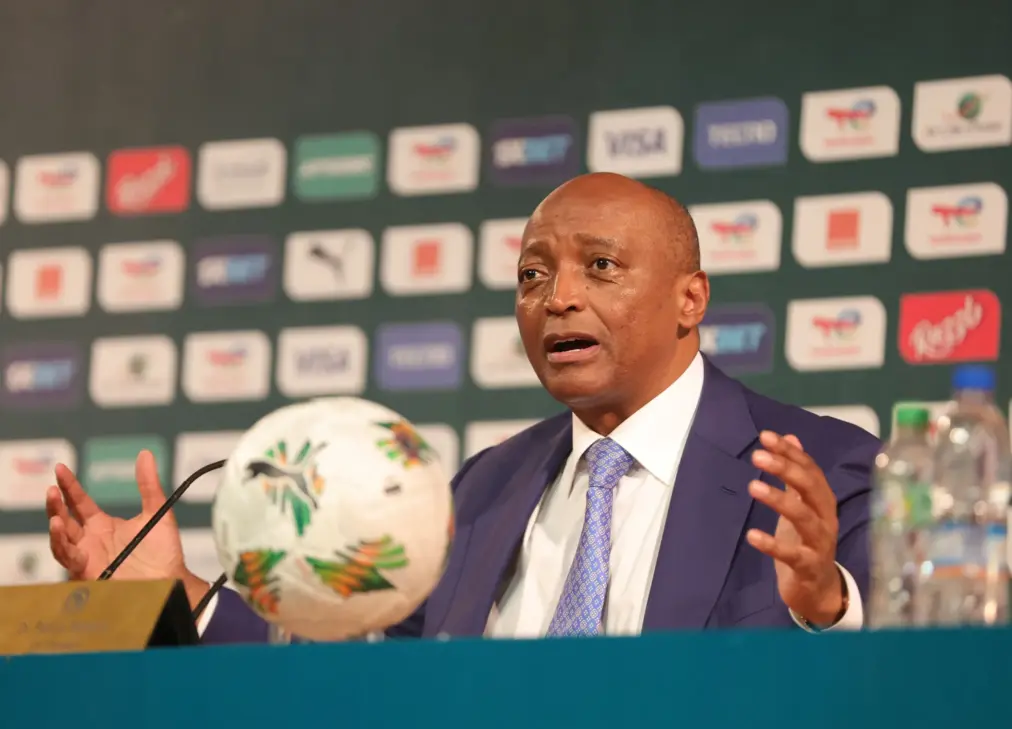
The Confederation of African Football (CAF) will convene an emergency meeting of its Executive Committee next week to examine a highly contentious FIFA project that could reshape how football’s world governing body finances its member associations.
CAF confirmed on Wednesday that it has received an official communication from FIFA outlining the “FIFA Forward Enterprise” proposal, an initiative driven by FIFA president Gianni Infantino. The plan would see up to 20% of the commercial rights to the World Cup opened up to private investors, effectively amounting to a partial privatisation of the competition.
CAF president Patrice Motsepe will bring together the Executive Committee to “examine and evaluate” the project in detail. At the same time, the African body has urged each of its 54 member associations to study the proposal carefully and to engage fully with the consultation process launched by FIFA.
Pressure grows as deadline looms
According to British newspaper The Times, FIFA has given national associations a 55‐day window in which to state their position on the scheme.
Associations that agree to participate could receive up to €35m each. In return, they would be required to hand over shares or certain commercial rights to the new enterprise structure that would manage part of FIFA’s future revenues.
The financial scale of the proposal is particularly striking for African federations, many of which are already heavily reliant on funds distributed by FIFA. While the prospect of a substantial one-off payment is likely to attract interest, it has also sparked debate about the long‐term implications.
Mixed global reaction
Some confederations, notably UEFA in Europe and CONCACAF in North and Central America and the Caribbean, have already signalled their opposition to the plan.
CAF, however, has adopted a more cautious public stance. The organisation has said it wants to work with all parties involved in order to increase the resources available for the development of African football, rather than rejecting the proposal outright at this early stage.
On paper, the additional money could be used to improve infrastructure, build or upgrade training centres, and support the growth of women’s and grassroots football across the continent.
Concerns over control and autonomy
Yet significant questions remain over how the scheme would operate in practice. The precise structure of the “FIFA Forward Enterprise” project, and the exact nature of the rights that federations would be expected to cede, have not been fully clarified.
The prospect of selling stakes linked to future revenues raises concerns about who would ultimately control those income streams, how independent national associations would remain, and what long‐term contractual commitments they might have to accept.
For many African federations, the decision will involve weighing immediate financial gains against potential constraints on their autonomy and future earning power.
Key moment for African football
Next week’s Executive Committee meeting is therefore expected to be pivotal for CAF. The organisation will need to decide whether the FIFA initiative represents a genuine opportunity to accelerate the development of the game in Africa, or a move whose financial and institutional consequences require far stronger guarantees before it can be endorsed.
CAF’s deliberations, and the responses of its 54 member associations during the consultation period, are likely to play a central role in determining whether FIFA proceeds with a project that could fundamentally alter its relationship with the global football community.
Louis Mukoma Fargues
-
 Morocco’s AFCON 2025 generated $1.8bn economic impact – CAF boss Patrice Motsepe Sep 18, 2026
 -
Hamza Belasri: Moroccan winger joins CM El Marsa on a free transfer Sep 18, 2026
-
Europa League: Juventus, Besiktas and Crystal Palace begin with big wins Sep 17, 2026
-
Gambia beat Liberia to reach UFOA-A U17 final and qualify for 2027 AFCON Sep 17, 2026




-
AFCON 2025: Fixtures, Results, Scores and Standings Jan 18, 2026
-
Leadership and long-term vision key to rescuing Zamalek and inspiring Egyptian football – Hany Abou Rida Nov 5, 2025
-
South African giants Orlando Pirates set to lose influential forward Monnapule Saleng Mar 19, 2025
-
Match hero Taiwo Awoniyi reflects on team effort after Chelsea triumph May 5, 2026




-
African Stars choose Botswana’s Lucas Moripe Stadium to host Orlando Pirates in CAF Champions League Sep 16, 2026
-
Europa League: AC Milan, Benfica and Lyon begin new league phase Sep 16, 2026
-
Mohamed Fathi emerges as potential PSL option amid South Africa coaching shake-up Sep 11, 2026
-
Besiktas and Marseille reveal probable line-ups for Europa League opener Sep 15, 2026