World Cup 2026 analysis: How Ivory Coast took out Ecuador

For long stretches of the evening, it appeared Group E’s meeting between Ivory Coast and Ecuador would finish exactly as many had predicted: tight, tense and devoid of the clinical edge needed to separate two of the competition’s most disciplined sides.
Then came Amad Diallo.
Introduced to inject energy and urgency into a contest drifting towards a stalemate, the Manchester United winger produced the decisive moment in the dying seconds to hand Ivory Coast a dramatic 1-0 victory over Ecuador in their opening match of the 2026 FIFA World Cup.
With regulation time almost exhausted at Philadelphia Stadium, Wilfried Singo surged forward with purpose and picked out a clever square pass inside the penalty area. Arriving at precisely the right moment, Amad guided a composed first-time finish beyond Hernán Galíndez and into the far corner.
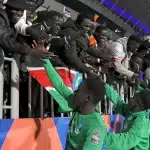
It was a strike that transformed the mood entirely. What had threatened to become a forgettable tactical battle suddenly became a memorable night for the Elephants, whose celebrations reflected the significance of securing three priceless points at the start of their campaign.
The goal also ended Ecuador’s remarkable 19-match unbeaten run and strengthened Ivory Coast’s belief that progression to the knockout rounds is a realistic objective.
Ecuador’s early authority
The statistics before kick-off pointed towards caution rather than entertainment.
Ivory Coast had navigated the African qualifying section without conceding a single goal, while Ecuador built their own World Cup ticket on defensive resilience, allowing just five goals throughout CONMEBOL qualification and recording eight scoreless draws.
Those trends were evident from the opening whistle.
Ecuador looked the more settled of the two sides during the first half. Their midfield, marshalled impressively by Moisés Caicedo after his overturned suspension allowed him to feature, controlled possession and dictated the rhythm of play.
Although La Tri enjoyed greater composure in central areas, Ivory Coast fashioned the first genuine openings.
Bazoumana Touré nearly caught Galíndez out with a dangerous low delivery that was heading inside the post before the Ecuador goalkeeper reacted sharply to push it away. Moments later, Elye Wahi failed to trouble the goalkeeper with an effort that lacked conviction.
Ecuador, however, soon demonstrated why they had arrived in the United States carrying such momentum.
John Yeboah unleashed a sweeping left-footed effort that beat Yahia Fofana but crashed against the crossbar. Before Ivory Coast could fully recover, Alan Minda also struck the woodwork with a first-time effort, leaving the Ivorians grateful to escape unpunished.
Those moments underlined Ecuador’s growing threat and highlighted the fine margins often associated with World Cup football.
Fine margins define the contest
Despite Ecuador’s control in midfield, neither side consistently managed to unlock organised defensive structures.
Ivory Coast remained dangerous in transition, with Nicolas Pépé’s direct running posing occasional problems. Yet Ecuador’s defensive discipline stood firm.
Alan Franco produced one of the game’s defining defensive actions in the 35th minute, timing a superb sliding intervention to deny Pépé a sight of goal just as the winger prepared to pull the trigger.
The contest became increasingly physical and tactical, with every challenge carrying added significance.
After the interval, Ivory Coast emerged with renewed attacking intent.
Yan Diomande, lively throughout, repeatedly occupied dangerous areas and stretched Ecuador’s back line. Seven minutes into the second period, his inviting delivery found Wahi inside the box, but the striker’s effort cannoned off the crossbar.
For the third time in the match, the woodwork preserved parity.
It was another reminder that the encounter was balanced precariously between frustration and breakthrough.
Ivory Coast find another gear
As the second half progressed, Ivory Coast gradually wrestled momentum away from their opponents.
Diomande’s influence grew, his willingness to attack defenders creating uncertainty within Ecuador’s defensive shape. According to Opta, he recorded 12 touches inside the opposition penalty area, matching the second-highest tally by an Ivory Coast player in World Cup history. Only Aruna Dindane’s 13 against Serbia in 2006 stands higher, while Didier Drogba managed the same number against DPR Korea in 2010.
Ecuador still threatened sporadically.
Their first effort on target did not arrive until midway through the second half, but it almost proved decisive. Gonzalo Plata drove forward and unleashed a fierce strike from 20 yards that forced Fofana into an important save.
Yet the momentum had subtly shifted.
Recognising the need for greater pace and unpredictability, Ivory Coast turned to their bench. The introduction of Amad added exactly that.
His movement stretched tired defenders, while his willingness to run beyond the back line altered the dynamic of the contest.
What had been lacking for much of the evening was a moment of imagination and composure in the final third.
Amad eventually supplied both.
A goal with potentially huge consequences
As the clock ticked towards stoppage time, Ecuador seemed on course to extend their unbeaten sequence with another hard-earned draw.
Instead, Singo embarked on one final surge into the attacking third. Spotting Amad’s intelligent run, he squared the ball across the area, and the substitute’s first-time finish nestled into the far corner.
Philadelphia erupted.
The strike, timed at 89 minutes and 32 seconds, became the latest winning goal scored by a substitute in a 1-0 World Cup match since Francesco Totti’s famous penalty for Italy against Australia in 2006.
Amad also joined an exclusive list of Ivory Coast substitutes to score at the World Cup, following Salomon Kalou in 2010, Bonaventure Kalou in 2006 and Wilfried Bony in 2014.
Beyond the records, the goal may carry enormous significance in the wider context of Group E.
Ivory Coast had never previously defeated South American opposition at the World Cup, having lost to Argentina, Brazil and Colombia in past editions. This victory finally ended that sequence and handed the Elephants a psychological boost ahead of their remaining fixtures.
For Ecuador, the defeat was cruel. Their organisation, discipline and control deserved reward, yet their inability to convert promising moments proved costly.
Ivory Coast, meanwhile, demonstrated another quality often required at major tournaments: resilience.
They survived difficult spells, adapted as the match evolved and trusted the depth of their squad to provide inspiration.
In a game defined by caution and inches, one substitute’s composure made all the difference. Amad’s late intervention not only delivered a dramatic opening victory, but may ultimately prove to be the moment that shapes Ivory Coast’s World Cup journey.
-
Sundowns seek MTN8 revenge as Pirates chase historic fifth straight title Oct 3, 2026
-
 Former Nigeria defender Brian Idowu backs Russia goalkeeper to become Krasnodar’s next export Oct 3, 2026
 -
Rayan Ait-Nouri’s father reveals how Man City playing time sparked Algeria row Oct 3, 2026
-
Super Eagles begin preparations for Russia friendly in Nizhny Novgorod Oct 3, 2026


-
AFCON 2025: Fixtures, Results, Scores and Standings Jan 18, 2026
-
Match hero Taiwo Awoniyi reflects on team effort after Chelsea triumph May 5, 2026
-
Leadership and long-term vision key to rescuing Zamalek and inspiring Egyptian football – Hany Abou Rida Nov 5, 2025
-
South African giants Orlando Pirates set to lose influential forward Monnapule Saleng Mar 19, 2025




-
AFCON 2027 Qualifiers: McCarthy warns South Africa to expect tough test against Eritrea Sep 29, 2026
-
AFCON 2027 qualifiers: Algeria, Morocco and Nigeria among winners on opening matchday Sep 26, 2026
-
Denmark v Portugal: Nations League kick-off time, TV channel and match prediction Sep 29, 2026
-
South Sudan vs Egypt: Where to watch AFCON 2027 qualifier Sep 29, 2026