How Visit Rwanda wins even before the Champions League final is decided

Rwanda’s decision to align its national tourism brand with elite European football has long stood out as one of the most ambitious sports marketing strategies in global sport.
Partnerships with Arsenal, Paris Saint-Germain and Atlético Madrid were never designed as conventional sponsorships.
They were conceived as a long-term visibility project, placing the country at the centre of global sporting conversation while linking its identity to elite performance, ambition and modernity.
From the outset, the approach divided opinion. Supporters viewed it as a bold leap for a nation seeking to redefine its global image.
Critics questioned the logic of investing heavily in European football branding rather than focusing solely on traditional tourism promotion channels. Yet, nearly a decade on, the strategy has matured into one of the most visible nation-branding exercises in sport.
From scepticism to Champions League prominence
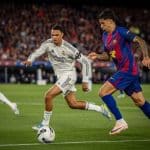
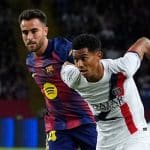
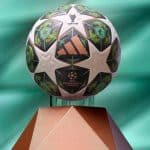
What was once met with uncertainty has now reached a moment of striking validation. All three clubs carrying the “Visit Rwanda” branding are competing at the semi-final stage of the 2025 to 2026 UEFA Champions League. Their progression has placed Rwanda’s tourism identity in front of hundreds of millions of viewers at one of the most watched sporting stages in the world.
When the branding first appeared on Arsenal sleeves in 2018, followed by PSG and later Atlético Madrid, expectations were high but outcomes were unproven. Questions centred on whether visibility alone could translate into measurable tourism growth and whether football audiences would meaningfully connect with a destination brand during high intensity competition.
Those doubts now appear less pronounced. With all three partners operating at the pinnacle of European football in the same season, Rwanda’s presence has become structurally embedded in elite competition coverage rather than occasional exposure.
Global visibility at unmatched scale
The UEFA Champions League semi-final stage delivers one of the most powerful global broadcasting platforms in sport. Matches are distributed across continents, reaching audiences measured in the hundreds of millions per fixture week. Within this environment, Rwanda’s branding sits alongside clubs with deeply entrenched global fan bases and commercial reach.
The visibility extends beyond match broadcasts. Training kits, digital content, pre match media, and stadium activations ensure that the “Visit Rwanda” identity circulates continuously across club ecosystems. Each touchpoint reinforces a consistent message: Rwanda is positioning itself not only as a tourism destination, but as a modern, globally engaged nation.
This integration into club communication channels has effectively transformed the partnership model. Rather than static advertising, Rwanda benefits from repeated narrative association with elite performance, discipline and sporting success.
Tourism impact and shifting perceptions
Beyond visibility, the key question has always been conversion. According to figures from the Rwanda Development Board, tourism growth has shown steady improvement since the launch of the partnerships, particularly from European markets where the clubs hold significant influence.
Between 2018 and 2025, Rwanda recorded consistent increases in visitor numbers from key markets such as the United Kingdom and France. The UK market, strongly associated with Arsenal’s global reach, has shown notable year on year growth, while France continues to serve as a strong entry point for PSG’s international audience base.
While it is difficult to isolate football branding as the sole driver, the timing and consistency of growth suggest a meaningful contribution. Rwanda has also strengthened its presence at international tourism fairs and investment forums, reinforcing messaging that extends beyond sport.
The country’s appeal has increasingly been framed around premium eco tourism experiences, including gorilla trekking in Volcanoes National Park, lake tourism, and its expanding conference and hospitality infrastructure. Football has served as the entry point; destination storytelling has followed.
Kagame’s symbolic presence at key moments
The visibility strategy has been reinforced at the highest political level. President Paul Kagame has maintained a visible presence at key Champions League fixtures involving Rwanda’s partner clubs, including recent semi-final matches in Paris and Madrid.
His attendance has been interpreted as more than ceremonial. A known football enthusiast, Kagame has consistently argued that sport is a strategic instrument for national branding, investment attraction and international engagement. His presence at elite fixtures signals continuity between national policy and global marketing execution.
It also reinforces the perception of commitment. The partnerships are not treated as passive sponsorship arrangements but as active diplomatic and commercial relationships embedded within Rwanda’s broader development strategy.
President Kagame attended the UEFA Champions League semi final first leg in Paris where Visit Rwanda partner PSG defeated Bayern Munich. pic.twitter.com/90Xtc2gbch
— Presidency | Rwanda (@UrugwiroVillage) April 28, 2026
A campaign already defined as successful
As the semi-finals unfold, the competitive outcome remains uncertain for Arsenal, Paris Saint-Germain and Atlético Madrid. Yet from Rwanda’s perspective, the strategic objective has already been achieved.
The country has secured sustained global visibility at the highest level of club football. It has strengthened its association with elite performance environments. It has entered mainstream sporting conversation in markets that would otherwise be difficult and costly to reach through traditional tourism marketing alone.
Whether or not any of its partner clubs lift the trophy at the end of the UEFA Champions League season, the structural outcome remains unchanged. Rwanda has already established itself as a permanent presence within elite football storytelling.
In that sense, the campaign has produced its own verdict. For Rwanda, the result is not measured only in silverware, but in sustained global recognition, and on that measure, victory is already secured.
-
 Tottenham linked with Real Madrid defender Antonio Rudiger Oct 24, 2026
 -
CAF Confederation Cup: Raja Casablanca progress as Kaizer Chiefs lose on penalties Oct 24, 2026
-
Raja Casablanca reach CAF Confederation Cup group stage Oct 24, 2026
-
Niger beat Cote d’Ivoire on penalties to win UFOA-B U17 final Oct 24, 2026


-
AFCON 2025: Fixtures, Results, Scores and Standings Jan 18, 2026
-
Match hero Taiwo Awoniyi reflects on team effort after Chelsea triumph May 5, 2026
-
Leadership and long-term vision key to rescuing Zamalek and inspiring Egyptian football – Hany Abou Rida Nov 5, 2025
-
South African giants Orlando Pirates set to lose influential forward Monnapule Saleng Mar 19, 2025




-
Barcelona v Real Madrid: Catalans backed at 1.65 to win October Clasico Oct 23, 2026
-
PSG v Barcelona: fiery attacks set up Champions League classic at Parc des Princes Oct 18, 2026
-
Barcelona and Real Madrid meet in pivotal 265th Clasico Oct 23, 2026
-
Champions League: PSG beat Barcelona as Liverpool complete comeback against Villarreal Oct 20, 2026