AFCON 2025: Senegal fans face increased sentences on appeal
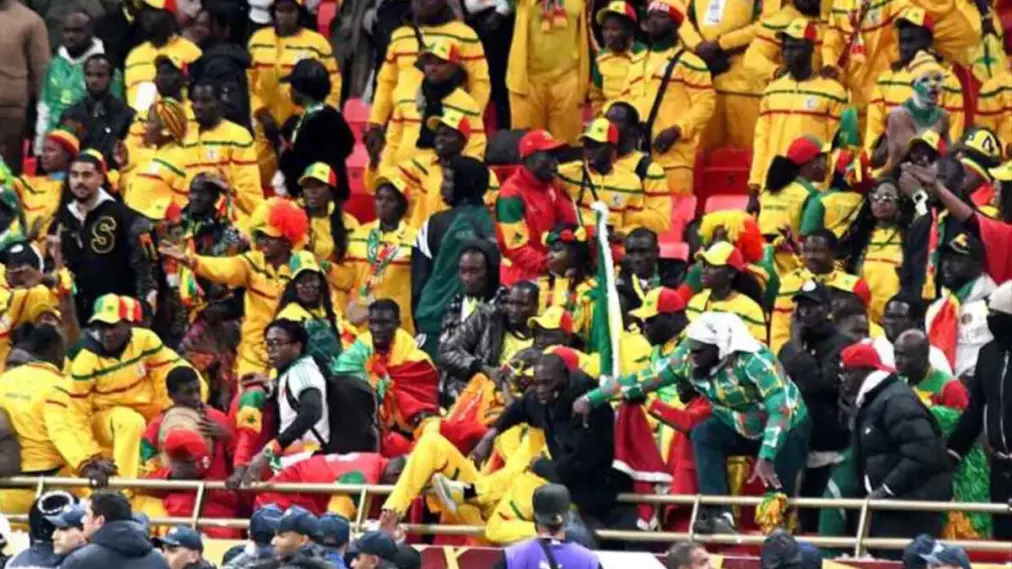
Prosecutors in Morocco have requested prison sentences of up to two years for 18 Senegalese supporters convicted following incidents at the 2025 Africa Cup of Nations final, as their appeal trial continues in Rabat.
The case returned to court on Monday, with the defendants challenging earlier rulings that saw them sentenced to between three months and one year in prison.
The appeal proceedings mark a significant escalation, with the prosecution seeking harsher penalties than those imposed at first instance.
The men were arrested after the final, which took place on January 18 in Morocco, and were subsequently charged with offences linked to crowd disturbances.
The accusations include “hooliganism”, with specific allegations of pitch invasion, throwing projectiles, damaging sports equipment and acts of violence against law enforcement.
Despite these charges, the defendants have consistently denied any involvement in the violence.
During the hearing, they addressed the court through interpreters, speaking in Wolof before their statements were translated into French and then Arabic.
According to the defence, the supporters insist that they were not responsible for the unrest and had no intention of engaging in disorder.
Their lawyers presented an alternative account of events, suggesting that the accused were caught up in a situation beyond their control.
“They explained that they got off the bus to flee a crowd surge or to escape projectiles being thrown and being spat on,” the defense reports.
This version of events has been central to the defence’s argument, which aims to demonstrate that the defendants were reacting to a chaotic environment rather than actively participating in it.
The claim challenges the prosecution’s portrayal of the group as responsible for the disturbances.
A key point of contention during the hearing has been the use of video evidence.
Defence lawyer Naïma El Guellaf requested that footage cited by the prosecution be presented in court, arguing that it was necessary to verify whether the accused individuals could be clearly identified in the images.
The prosecution opposed this request, maintaining that the evidence was already sufficient. “The whole world saw these images live,” the prosecution argued, suggesting that further examination was unnecessary.
The court has yet to decide whether the footage will be reviewed during the proceedings, leaving uncertainty over how this aspect of the case will develop.
The issue is expected to play a crucial role in determining the outcome of the appeal.
Another major element of the defence strategy involves questioning the identification of those responsible for the incidents.
Lawyer Patrick Kabou argued that the individuals on trial may not be the true perpetrators.
“Those responsible for the incidents are in Senegal and are not present here,” he stated.
This claim introduces further complexity to a case that has already drawn significant attention.
The suggestion that responsibility may lie elsewhere raises questions about the accuracy of the charges and the broader handling of the situation.
The trial comes against the backdrop of heightened tensions surrounding the final, which Senegal won 1-0.
🇸🇳 Des peines alourdies demandées en appel contre les 18 supporters du Sénégal jugés au Marochttps://t.co/YNEJCPmJbB
— RMC Sport (@RMCsport) April 13, 2026
The events that followed the match have remained a subject of debate, both in terms of the conduct of supporters and the response of authorities.
Beyond the immediate legal implications for the defendants, the case has also sparked discussion about security measures at major football tournaments.
Incidents involving large crowds often present challenges, particularly in high-pressure environments such as continental finals.
The proceedings in Rabat are therefore being closely watched, not only for their outcome but also for what they may reveal about the management of such events.
The balance between maintaining order and ensuring fair treatment of individuals remains a central issue.
For the 18 supporters, the appeal represents an opportunity to contest the original verdict and seek a different outcome.
However, the prosecution’s request for increased sentences highlights the seriousness with which the case is being treated.
As the trial continues, the court’s decisions on key matters, including the admissibility of evidence, are likely to shape the final judgement.
Until then, the case remains unresolved, with both sides presenting sharply contrasting accounts of what occurred.




-
 AFCON 2025: Fixtures, Results, Scores and Standings Jan 18, 2026
 -
Match hero Taiwo Awoniyi reflects on team effort after Chelsea triumph May 5, 2026
-
Leadership and long-term vision key to rescuing Zamalek and inspiring Egyptian football – Hany Abou Rida Nov 5, 2025
-
South African giants Orlando Pirates set to lose influential forward Monnapule Saleng Mar 19, 2025




-
AFCON 2027 Qualifiers: McCarthy warns South Africa to expect tough test against Eritrea Sep 29, 2026
-
AFCON 2027 qualifiers: Algeria, Morocco and Nigeria among winners on opening matchday Sep 26, 2026
-
Denmark v Portugal: Nations League kick-off time, TV channel and match prediction Sep 29, 2026
-
South Sudan vs Egypt: Where to watch AFCON 2027 qualifier Sep 29, 2026