World Cup 2026: Extreme weather could present major challenge
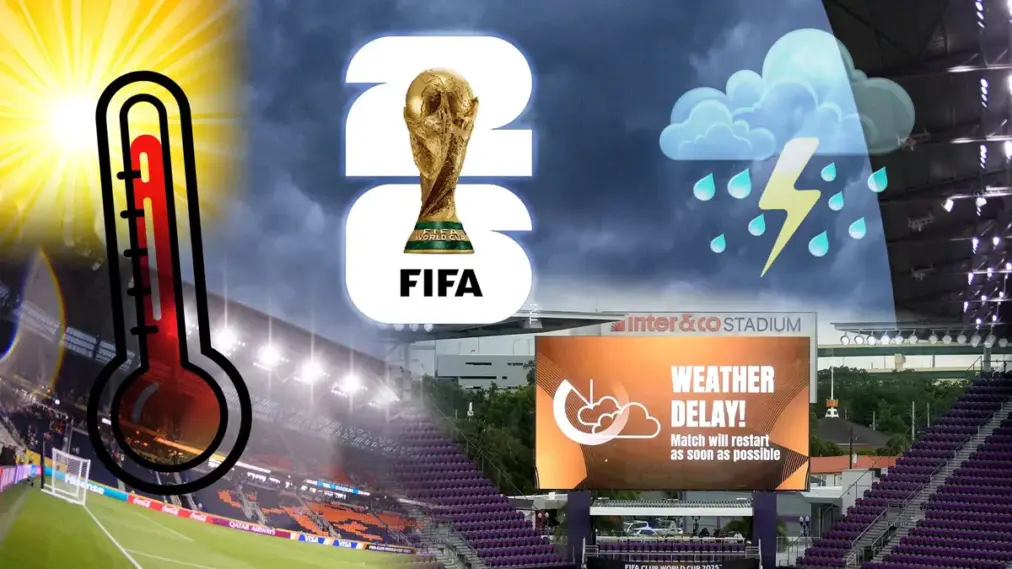
The 2026 World Cup could face significant disruptions from extreme weather conditions, with thunderstorms and lightning among the factors that may affect matches during the tournament in the United States, Canada and Mexico.
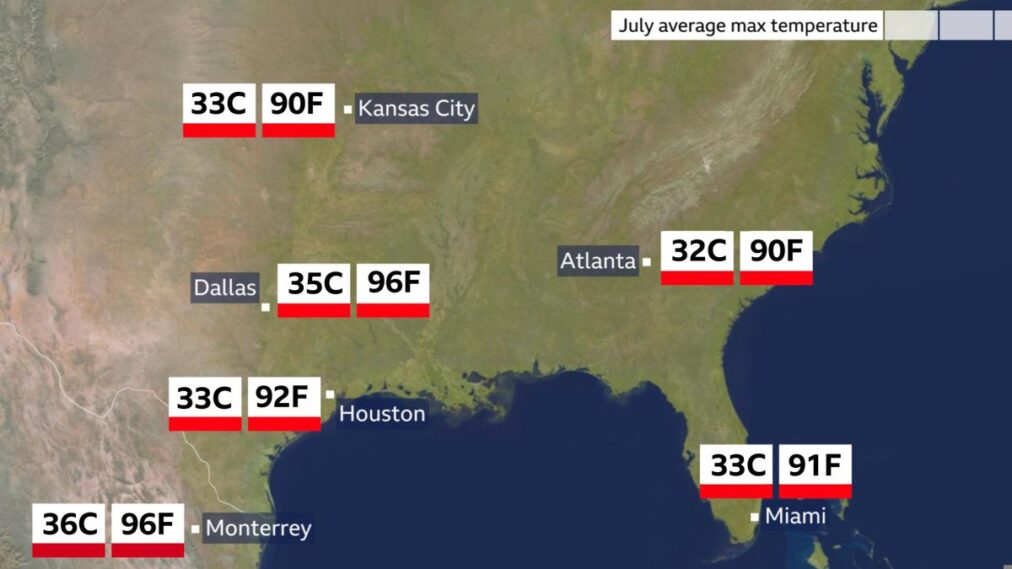
The competition is scheduled to take place in June and July, a period that coincides with some of the hottest months of the year across parts of North America and a season frequently associated with thunderstorms in several host regions.
Concerns have centred particularly on the United States, where strict safety regulations govern sporting events when lightning is detected near venues.
Those measures are designed to protect players, officials and spectators, but they also have the potential to cause lengthy interruptions during matches.
Under existing regulations used for sporting competitions in the United States, a match must be suspended immediately if lightning is detected within a radius of approximately 13 kilometres of a stadium.
When such a situation occurs, players are instructed to leave the field and return to the dressing rooms.
Spectators are also required to seek shelter in covered areas within the venue until conditions are considered safe.
The protocol does not allow play to resume immediately after the storm appears to have moved away.
Instead, organisers must wait at least 30 minutes without any further electrical activity in the area before a match can restart.
The process becomes more complicated if additional lightning is detected during that waiting period.
Every new lightning strike automatically resets the countdown, meaning the delay can be extended repeatedly.
As a result, interruptions can last far longer than the initial half-hour period and, in some cases, continue for well over an hour.
The possibility of such delays has become a growing topic of discussion ahead of the tournament.
The World Cup will be staged across a vast geographical area covering three countries, but a number of host cities are located in regions where summer thunderstorms are common.
High temperatures and unstable weather conditions frequently occur during June and July, creating circumstances in which lightning-related delays are possible.
Tournament organisers therefore face the challenge of preparing for weather-related disruptions while maintaining a demanding competition schedule.
The issue is not merely theoretical.
Competitions previously held in the United States have already experienced similar situations.
Several international matches played in recent years have been interrupted because of thunderstorms and lightning activity near stadiums.
In some cases, those interruptions lasted for extended periods, forcing players and supporters to wait while weather conditions improved and safety protocols were completed.
Those experiences have highlighted the practical difficulties that severe weather can create during major sporting events.
For teams, lengthy stoppages can affect concentration, physical preparation and match rhythm.
For supporters inside stadiums, delays can create uncertainty regarding when play will resume.
Broadcasters, tournament officials and event organisers can also face logistical complications when matches are suspended for prolonged periods.
The 2026 World Cup, which will bring together teams and supporters from around the globe, could encounter similar challenges if thunderstorms affect host venues during the competition.
Because the safety rules are mandatory, organisers would have little flexibility in how they respond to lightning threats.
Any decision would need to prioritise the welfare of those inside the stadium rather than the demands of the schedule.
This means that even a single storm system moving through a host city could have a significant impact on a matchday programme.
Potential consequences include delayed kick-offs, temporary suspensions during games and adjustments to operational plans around affected venues.
As preparations continue for the tournament, weather management is increasingly viewed as one of the important logistical issues facing organisers.

The World Cup is expected to attract enormous global attention, and ensuring that matches can be completed safely and efficiently remains a key objective.
However, weather conditions remain one factor that cannot be controlled.
With thunderstorms a regular feature of summer in parts of North America, officials may need to be prepared for interruptions and delays throughout the tournament.
Observers believe that the ability to manage such situations effectively could play an important role in the overall success of the competition.
While the tournament promises to be one of the biggest sporting events ever staged across the continent, weather conditions may emerge as an unexpected challenge.
The combination of high temperatures, seasonal thunderstorms and strict lightning safety protocols means organisers could face difficult decisions during the competition.
As a result, the impact of weather is likely to remain a closely watched issue as the countdown to the 2026 World Cup continues.
-
 Aston Villa make approach for AC Milan defender Fikayo Tomori Oct 24, 2026
 -
CAF Champions League: Colombe Sportive take 2-0 lead into Teungueth return Oct 24, 2026
-
Napoli and Arsenal tracking Monza striker Gustavo Varela Oct 24, 2026
-
Romaric N’Dri tips Barcelona to beat Real Madrid in Sunday’s Clasico Oct 24, 2026




-
AFCON 2025: Fixtures, Results, Scores and Standings Jan 18, 2026
-
Match hero Taiwo Awoniyi reflects on team effort after Chelsea triumph May 5, 2026
-
Leadership and long-term vision key to rescuing Zamalek and inspiring Egyptian football – Hany Abou Rida Nov 5, 2025
-
South African giants Orlando Pirates set to lose influential forward Monnapule Saleng Mar 19, 2025




-
Barcelona v Real Madrid: Catalans backed at 1.65 to win October Clasico Oct 23, 2026
-
Barcelona and Real Madrid meet in pivotal 265th Clasico Oct 23, 2026
-
PSG v Barcelona: fiery attacks set up Champions League classic at Parc des Princes Oct 18, 2026
-
Champions League: PSG beat Barcelona as Liverpool complete comeback against Villarreal Oct 20, 2026